
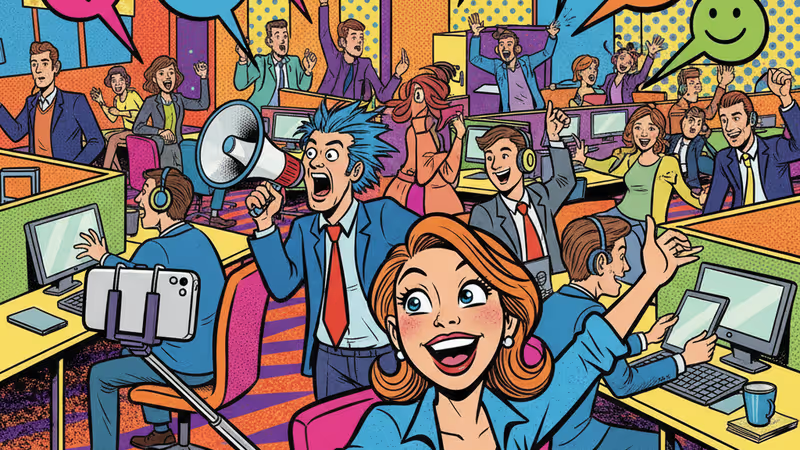
The Workplace Unfiltered: How Your Employees Became Your Most Powerful Storytellers
Viral 'day at work' photos are more than just entertainment. They're a powerful shift in corporate branding, talent acquisition, and the future of authentic marketing.
The Lede: Beyond the Viral Photo
An Air Force pilot's sunrise from the cockpit. A vet tech's heartwarming photo of a patient. A NASA employee’s casual snapshot of a rocket launch. These images, flooding social media feeds, seem like fleeting, feel-good content. But for the savvy executive, they represent one of the most significant and underleveraged shifts in corporate communications: the rise of the employee as the primary brand storyteller. This isn't just about cute animals or cool views; it's about the decentralization of your corporate narrative. Your brand's most authentic—and most effective—voice is no longer in the marketing department. It's on the factory floor, in the cockpit, and at the lab bench.
Why It Matters: The Authenticity Moat
In an era saturated with AI-generated content and polished corporate messaging, authenticity has become the ultimate currency. Consumers, and especially prospective talent, are increasingly cynical towards top-down communication. This employee-generated content (EGC) cuts through the noise with undeniable credibility.
- The New Front in the War for Talent: A stock photo on a careers page is meaningless. A wind turbine technician's breathtaking photo from the top of a nacelle is a recruitment ad that money can't buy. It sells a reality, not a pitch. The mother-daughter pilot crew for Delta does more for its employer brand than a multi-million dollar ad campaign.
- Brand Humanization at Scale: These posts provide an unvarnished look inside a company's culture. The police dog getting retirement gifts isn't a corporate initiative; it's a testament to a community-focused work environment. This is how brands build emotional connection and loyalty from the inside out.
- Zero-Cost, High-Impact Marketing: The dog that followed the Google Earth car generated millions of impressions for Google, born from a moment of pure, unscripted serendipity. This organic reach is impossible to replicate with paid media and is infinitely more trusted.
The Analysis: From Press Release to Personal Post
We've witnessed a dramatic evolution in how companies communicate. For decades, the model was top-down and rigorously controlled: the official press release, the vetted spokesperson. The first wave of social media forced a dialogue, but it was often still managed by a central team. We have now entered the third wave: decentralized, employee-led narrative creation.
This is the 'Glassdoor Effect' made visual. While review sites gave employees a textual platform, social media gives them a visual one, which is far more immediate and emotionally resonant. This shift presents both a massive opportunity and a critical challenge for leadership. Companies that foster a culture of trust and pride empower their teams to become an army of brand ambassadors. Those with toxic or uninspiring environments will find their internal realities exposed with the same unfiltered immediacy.
The competitive dynamic is no longer about which company has the biggest marketing budget, but which has the most engaged and empowered workforce. Your employees' social feeds have become a real-time, distributed audit of your company culture.
PRISM Insight: The Employee Advocacy Tech Stack
This trend is fueling a new category of enterprise software. The next frontier isn't just encouraging employees to share, but creating systems to harness this organic content stream.
Key Tech Trends to Watch:
- Advocacy Platforms: Companies like GaggleAMP, EveryoneSocial, and Clearview are building platforms that help organizations curate and amplify the best EGC, turning organic moments into strategic assets.
- AI-Powered Curation: The future involves AI tools that scan public social media for brand-relevant content posted by employees, using sentiment analysis to flag high-potential posts for the marketing team to boost.
- Internal Content Hubs: Smart companies will move beyond the external-facing blog and create internal platforms that encourage employees to share these 'day in the life' moments, creating a rich repository for both internal morale and external marketing.
PRISM's Take
Leaders must fundamentally shift their mindset from content control to culture creation. The instinct to lock down social media policies and control the narrative is an artifact of a bygone era. The risk is no longer an employee posting something unapproved; the real risk is creating a workplace so uninspiring that no one wants to post anything at all.
The most powerful stories about your organization are already being told every day, not in boardrooms, but in Instagram stories, LinkedIn posts, and Reddit threads. Your job is not to write the script. It's to build a company where your employees are proud to share the unfiltered reality of their 'just another Tuesday'.
Related Articles

Viral stories about life changes are more than inspiration—they're a critical signal about the future of work, talent retention, and non-linear career paths.
Beyond the controversy, Barack Obama's annual list is a strategic masterclass in soft power, brand relevance, and disrupting algorithmic culture. Here's why it matters.
The TikTok Awards are more than a party; they're a strategic move to solidify the platform as a new cultural institution, challenging Hollywood and YouTube.
Analysis of the 'MELANIA' documentary reveals a strategic pivot, turning the First Lady into a DTC media brand and signaling a new era for political power.