
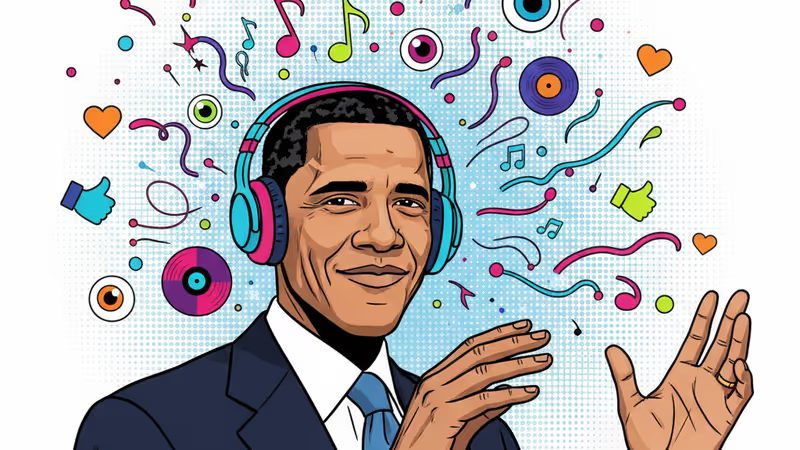
Obama's Annual List Isn't About Music—It's a Masterclass in Hacking the Attention Economy
Beyond the controversy, Barack Obama's annual list is a strategic masterclass in soft power, brand relevance, and disrupting algorithmic culture. Here's why it matters.
The Lede: The Ultimate Soft Power Play
When former President Barack Obama drops his annual 'Best Of' list, the internet predictably ignites with debate, praise, and criticism. But for leaders and strategists, the key takeaway isn't whether his music taste is genuinely cool. The real story is observing one of the world's most sophisticated personal brands execute a flawless annual maneuver to maintain cultural relevance, command the news cycle, and wield influence far beyond the political sphere. This isn't a hobby; it's a masterclass in soft power for the digital age.
Why It Matters: The Economics of Curation
In a world saturated by algorithmic recommendations, a curated list from a globally trusted figure carries immense economic and cultural weight. This goes far beyond a simple celebrity endorsement.
- The 'Obama Bump': Artists, authors, and filmmakers included on the list see a tangible and immediate spike in sales, streams, and public interest. For emerging creators like Laufey or Jay Som, this co-sign acts as a powerful discovery engine, bypassing traditional gatekeepers and marketing budgets. It's a direct injection of cultural capital that algorithms can't replicate.
- Algorithmic Disruption: The list is a powerful counter-narrative to the passive consumption model of platforms like Spotify and Netflix. It reasserts the value of human curation, creating an 'event' around discovery that feels personal and authentic, even if meticulously planned. It successfully hacks the attention economy by creating a moment of focused, shared conversation.
- Brand Resilience: For Obama, the list reinforces his post-presidency brand identity: intellectually curious, culturally attuned, and effortlessly 'cool'. This keeps him relevant to younger demographics who may have no memory of his time in office, ensuring his long-term influence and the viability of his foundation and media projects.
The Analysis: The Evolution of Presidential Influence
Historically, presidents have used cultural engagement to shape their legacy—think the Kennedys' 'Camelot' or Clinton's saxophone on Arsenio Hall. Obama has updated this playbook for the 21st century. His list is a decentralized, direct-to-consumer broadcast that achieves several strategic goals simultaneously.
The annual controversy, such as the resurfacing of a critical tweet from Boygenius member Lucy Dacus, is not a bug; it's a feature. The friction and debate generated by his picks—like including rap rivals Drake and Kendrick—only amplify the list's reach and prove its relevance. A list that pleases everyone would be forgotten instantly. By creating a text that invites argument, he ensures it dominates social media feeds, making his cultural opinion a central talking point of the year-end conversation.
PRISM Insight: The 'Influence-as-a-Service' Model
Obama's annual list is the quintessential blueprint for what we call 'Influence-as-a-Service' (IaaS). It demonstrates how high-profile individuals can decouple their influence from their former institutional roles and build a sustainable personal platform. For CEOs, retired executives, and public figures, this model provides a clear path to maintaining relevance and authority.
The core technology at play is not an app, but a sophisticated understanding of brand, distribution, and authenticity. The list's power lies in its perceived authenticity. While likely assembled with a team, its eclectic and specific nature makes it feel like a personal recommendation from a trusted peer. This is a critical lesson for brands: in the creator economy, the most valuable asset is a direct, trusted relationship with your audience, built on a foundation of perceived authenticity and consistent value.
PRISM's Take: The New Frontier of Power
Do not mistake Barack Obama's year-end list for a simple holiday tradition. It is a highly strategic, low-cost, high-impact asset that solidifies his status as a global cultural tastemaker. It's a reminder that in the modern era, power is not solely wielded through political office or corporate boardrooms. True, lasting influence is cultivated in the cultural sphere. By consistently shaping the conversation around 'what's good,' Obama ensures his voice remains essential, demonstrating a potent new model of post-career influence that will be emulated by leaders for decades to come.
Related Articles
Online roasting isn't just memes. It's a complex social signal that reveals the current limits of AI and points to the future of authentic digital engagement.

An analysis of why genuine, off-camera celebrity encounters are the most valuable asset in the digital economy, outperforming traditional PR and marketing.
The TikTok Awards are more than a party; they're a strategic move to solidify the platform as a new cultural institution, challenging Hollywood and YouTube.
Analysis of the 'MELANIA' documentary reveals a strategic pivot, turning the First Lady into a DTC media brand and signaling a new era for political power.