
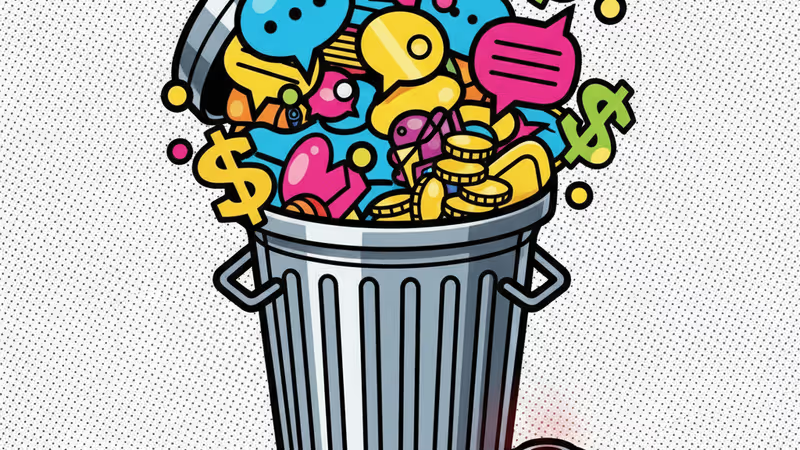
The 'Trashy Text' Economy: Why Unfiltered Content is Social Media's Next Goldmine—And Minefield
Viral 'trashy texts' signal a major shift in the digital economy. Discover why unfiltered authenticity is the next big challenge for brands, platforms, and AI.
The Lede
While seemingly just digital noise, the viral spread of "unhinged" user-generated content—like the text messages proliferating on Reddit—signals a critical pivot in the digital economy. This isn't about memes; it's about the market's rewarding of raw, unfiltered authenticity. For leaders in tech, media, and marketing, understanding this shift is crucial for navigating the next wave of platform competition, brand risk, and the AI-driven content moderation wars.
Why It Matters
The dominance of polished, aspirational content that defined Instagram's first decade is over. The new engagement currency is radical transparency, even when it's messy. This has profound second-order effects:
- Platform Disruption: Platforms that thrive on this unfiltered chaos (TikTok, BeReal, even X) are pulling engagement and cultural relevance away from more curated environments like Meta's Instagram. Their algorithms favor spontaneity over production value, fundamentally altering the creator landscape.
- Brand Safety Paradox: Audiences, particularly Gen Z, crave relatable, authentic content from brands. Yet, embracing this trend means engaging with unpredictable, often edgy user content. This creates a high-wire act for CMOs: how to tap into the authenticity zeitgeist without incurring significant brand damage.
- Regulatory Fuel: The proliferation of this type of content provides regulators with a steady stream of ammunition. As noted in the source, governments are already acting (e.g., Australia's under-16 social media ban), using the harmful effects of chaotic, addictive content as justification for sweeping new rules that will impact platform operations globally.
The Analysis
We are witnessing the third major phase of digital self-expression. Understanding this evolution provides critical context for strategic planning.
Phase 1: The Aspirational Era (c. 2010-2016)
The age of the perfect Instagram grid. Value was derived from high-production quality, flawless aesthetics, and a carefully constructed, idealized online persona. This was the golden age of the macro-influencer and the brand-safe, manicured feed.
Phase 2: The Performative Authenticity Era (c. 2017-2021)
A backlash to the perfection of Phase 1. Led by TikTok and the rise of the "photo dump," the focus shifted to feigned casualness. It was authenticity, but still curated—the messy room was art-directed, the vulnerability was packaged for engagement. The goal was to *appear* real.
Phase 3: The Unfiltered Reality Era (c. 2022-Present)
Exemplified by phenomena like "goblin mode" and the content found on r/TrashyText, this phase is a rebellion against all forms of curation. The lack of a filter is the content. Value is found in the chaotic, the questionable, and the deeply human. It's a rejection of both the aspirational and the performatively authentic, favoring raw, unedited digital streams of consciousness.
PRISM Insight
The primary technological and investment trend emerging from this shift is the AI Moderation Arms Race. The sheer volume and contextual nuance of "unfiltered" content make manual human moderation obsolete. The next unicorns in the enterprise SaaS space will not be social listening tools, but contextual AI platforms. These systems will need to go beyond simple keyword flagging to understand sarcasm, cultural slang, and the fine line between edgy humor and genuine harm. Companies that can successfully build and deploy this AI will hold the keys to brand safety and platform viability in the Unfiltered Era.
PRISM's Take
The core challenge for the next decade of the social web is not a lack of content, but a crisis of context. The 'trashy text' phenomenon is a market signal that users are tired of being sold a story. They want reality, warts and all. For platforms, this means the focus must evolve from content moderation to content contextualization—providing users and advertisers the tools to navigate this new, messy landscape. For brands, the playbook must shift from controlling the message to skillfully participating in the chaos. The future belongs not to the most polished brand, but to the most resilient and context-aware.
Related Articles
Viral 'disaster' photos signal a shift to an authenticity economy. This creates a new frontier for AI in marketing, redefining content strategy for brands.
Uncover how the historical influence of the Arabic language offers a strategic roadmap for AI, tech investment, and unlocking the 400M-strong MENA market.
The rise of affordable luxury honeymoons isn't about saving money. It's a strategic shift in consumer values, redefining the future of travel and hospitality.
Wordle is more than a game. It's a masterclass in user acquisition and the NYT's secret weapon in the attention economy. PRISM breaks down the strategy.