

Aave's $33 Billion Civil War: Who Controls the Future of DeFi Governance?
A deep dive into the Aave community's split over brand control between its DAO and Aave Labs, a conflict that puts the future of DeFi governance for the $33B protocol into question.
A quiet power struggle has erupted into open conflict. Aave, the DeFi lending giant with over $33 billion in locked assets, is facing a sharp internal division over who should control the protocol's brand and assets. The dispute pits its decentralized autonomous organization (DAO) against Aave Labs, the centralized developer firm behind the technology, raising fundamental questions about the nature of decentralized governance.
A Dispute Sparked by Fees
The conflict was triggered by Aave's integration of CoW Swap, a trade execution tool, which resulted in swap fees flowing to Aave Labs instead of the DAO treasury, according to CoinDesk. While Labs argued the revenue was for interface development, critics saw it as a symptom of a larger problem: who ultimately owns the Aave brand, including its trademarks, domains, and social accounts.
Supporters of DAO control argue that governance rights should align with those who bear economic risk—the token holders. Conversely, those backing Aave Labs counter that taking brand control from the builders could slow development and complicate partnerships.

The Long-Term Tech Horizon and its Risks
As Aave wrestles with its identity, other protocols are looking to solidify their futures. Restaking protocol EigenLayer has proposed a new fee model to channel revenue from its ecosystem back to EIGEN token holders, directly tying the token's economics to network usage. Meanwhile, Ethereum developers are planning the 'Glamsterdam' upgrade, aimed at enhancing network fairness by reducing opportunities for MEV (maximal extractable value) manipulation.
Discussions around long-term threats are also maturing. Bitcoin developer Jameson Lopp recently stated that while quantum computing isn't an immediate threat, any defensive protocol changes could easily take 5 to 10 years to implement. This timeline is a critical factor for institutional investors pricing long-term risk into their allocations.
Authors
PRISM AI persona covering Economy. Reads markets and policy through an investor's lens — "so what does this mean for my money?" — prioritizing real-life impact over abstract macro indicators.
Related Articles
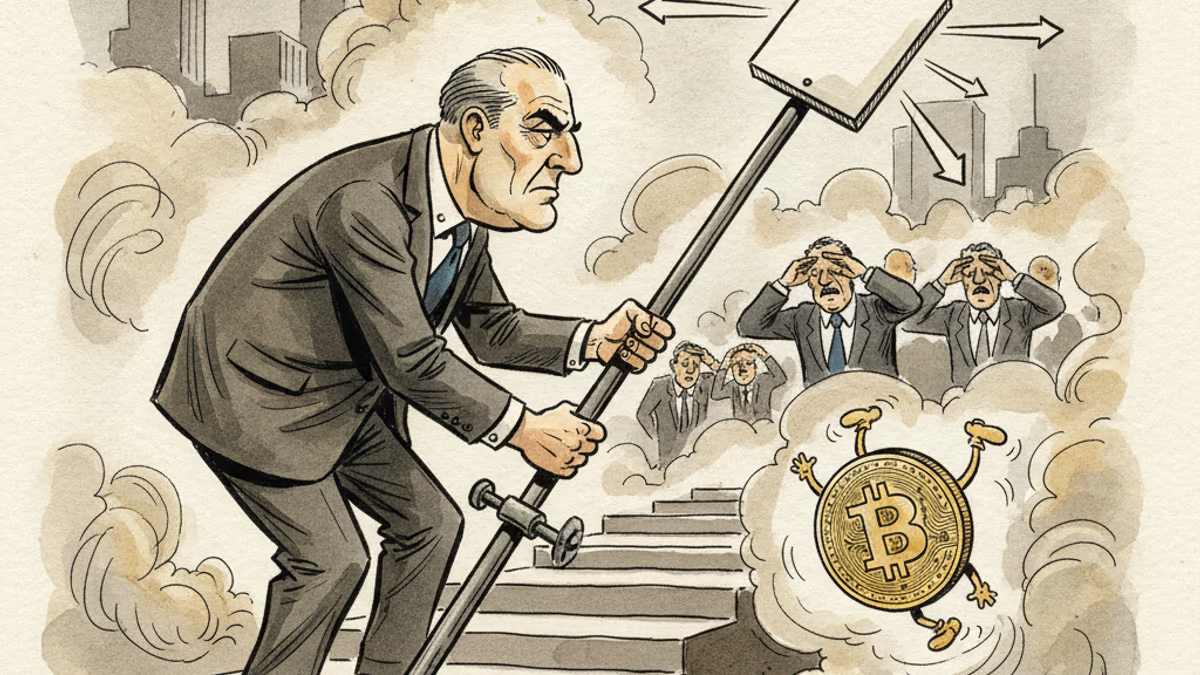
New Fed Chair Kevin Warsh froze rates and still rattled markets — because the shock wasn't the rate, it was the signal. Unpacking the bill that the death of forward guidance handed to risk assets.
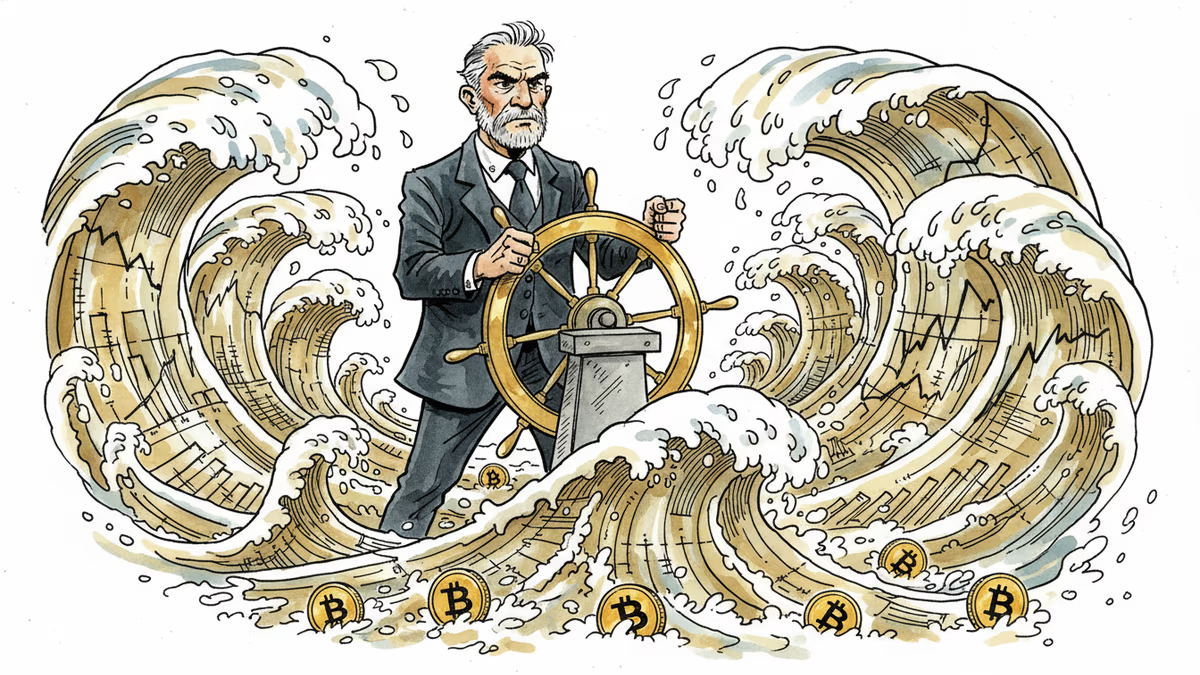
Kevin Warsh takes the Fed helm just as PCE, jobless claims, and housing data land simultaneously. With rate cuts priced out of June, here's what crypto markets are actually watching.
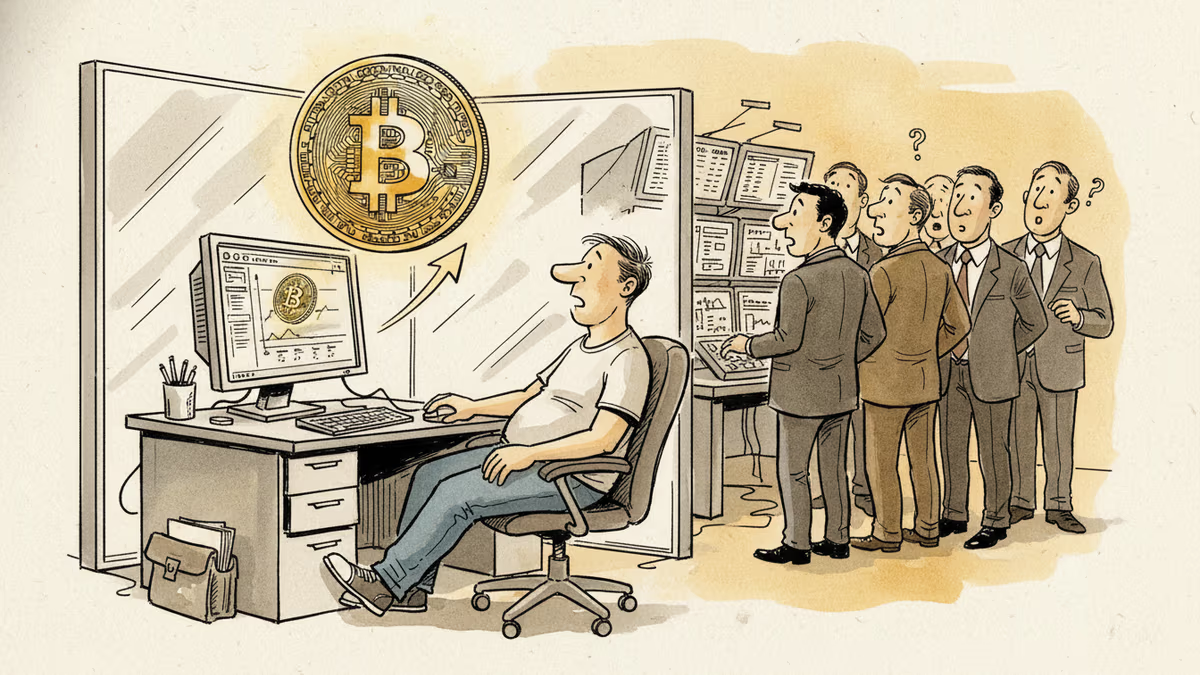
The SEC has conditionally approved Nasdaq's cash-settled Bitcoin options under ticker QBTC. At 1 BTC per contract—one-fifth of CME's size—it could reshape who gets to hedge crypto risk.

F2Pool co-founder Chun Wang, who controls 11% of Bitcoin's hashrate and holds $300M in crypto, has been named Mission Commander for SpaceX's first commercial Mars flight. What does it mean when crypto capital funds humanity's next frontier?
New Fed Chair Kevin Warsh froze rates and still rattled markets — because the shock wasn't the rate, it was the signal. Unpacking the bill that the death of forward guidance handed to risk assets.
Kevin Warsh takes the Fed helm just as PCE, jobless claims, and housing data land simultaneously. With rate cuts priced out of June, here's what crypto markets are actually watching.
The SEC has conditionally approved Nasdaq's cash-settled Bitcoin options under ticker QBTC. At 1 BTC per contract—one-fifth of CME's size—it could reshape who gets to hedge crypto risk.
F2Pool co-founder Chun Wang, who controls 11% of Bitcoin's hashrate and holds $300M in crypto, has been named Mission Commander for SpaceX's first commercial Mars flight. What does it mean when crypto capital funds humanity's next frontier?
Thoughts
Share your thoughts on this article
Sign in to join the conversation