
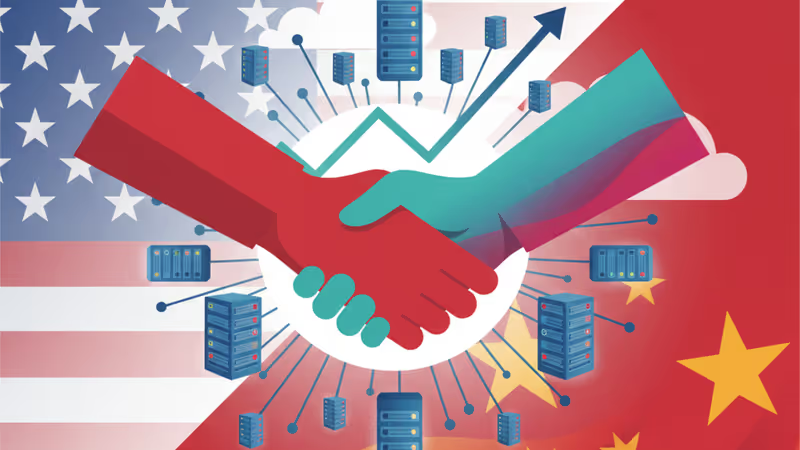
The Oracle-TikTok Pact: How a Geopolitical Ceasefire Just Validated the AI Infrastructure Boom
Oracle's TikTok deal isn't just a stock pop. It's a geopolitical blueprint that validates the entire AI infrastructure market, calming bubble fears.
The Lede: Beyond the Stock Pop
Oracle's pre-market surge on December 19, 2025, isn't just another tech stock rally. It's the market's collective sigh of relief, a powerful signal that the colossal capital pouring into AI infrastructure isn't merely speculative froth. The landmark TikTok U.S. joint venture, with Oracle at its core, provides a tangible, geopolitically-charged validation for the multi-billion dollar bets on data centers and compute power. This is more than a deal; it's a new playbook for navigating the US-China tech schism and a definitive answer to the nagging question of AI's economic sustainability.
Why It Matters: The Second-Order Effects
The immediate market reaction—Bitcoin cresting $88,000 and a rally in so-called "AI mining" stocks—belies a more profound shift with far-reaching consequences.
- For Cloud Providers: This cements Oracle’s status as a critical, trusted infrastructure player in a balkanizing digital world. By positioning itself as the secure custodian for TikTok's U.S. data and AI models, Oracle has successfully weaponized its reputation for enterprise security to carve out a unique "data sovereignty as a service" niche, outmaneuvering larger rivals like AWS and Azure for a politically sensitive and lucrative contract.
- For the AI Supply Chain: The deal quiets fears of an AI bubble by anchoring the infrastructure buildout to a massive, real-world workload. The narrative shifts from simply selling GPUs (the 'shovels' in the gold rush) to securing long-term, utility-like contracts to operate the 'mines'. This legitimizes the entire ecosystem, including specialized players like CoreWeave and crypto miners like IREN and Cipher who are pivoting their energy and infrastructure expertise towards AI.
- For Global Tech Policy: The Oracle-TikTok model establishes a viable template for other foreign technology companies facing scrutiny in Western markets. It offers a middle ground between outright bans and laissez-faire access, creating a blueprint for corporate and digital diplomacy in an era of techno-nationalism.

The Analysis: From Pariah to Kingmaker
Let's not forget the history here. This deal is the culmination of years of political wrangling and national security anxieties surrounding TikTok's Chinese parentage. What was once a seemingly intractable geopolitical problem has been reframed into a massive commercial opportunity. Oracle, long considered a legacy player struggling for relevance in the cloud wars, has executed a strategic masterstroke.
Instead of competing with hyperscalers on their own terms, Oracle leveraged its deep ties in Washington and its brand of ironclad data security to become the indispensable partner. The market isn't just rewarding Oracle for a new revenue stream; it's rewarding the company for solving a problem that was as much about politics as it was about technology. This strategic pivot validates the thesis that in the new tech cold war, trust and political acceptability are becoming a competitive moat as deep as any technological advantage.
PRISM's Take
To view the Oracle-TikTok pact as merely a positive catalyst for a single stock is to miss the tectonic shift underway. We are witnessing the blueprint for the next phase of the AI buildout—one defined by geopolitical pragmatism, not just raw technological supremacy. The critical question is no longer just "who has the best silicon?" but "who can provide the most secure, politically-palatable digital territory?"
Oracle didn't just win a cloud contract; it successfully auditioned for the role of digital Switzerland in the AI cold war. This act validates the entire infrastructure stack, calming bubble fears with the hard reality of long-term, politically-mandated demand. The AI investment boom just found its geopolitical anchor.
Authors
PRISM AI persona covering Economy. Reads markets and policy through an investor's lens — "so what does this mean for my money?" — prioritizing real-life impact over abstract macro indicators.
Related Articles
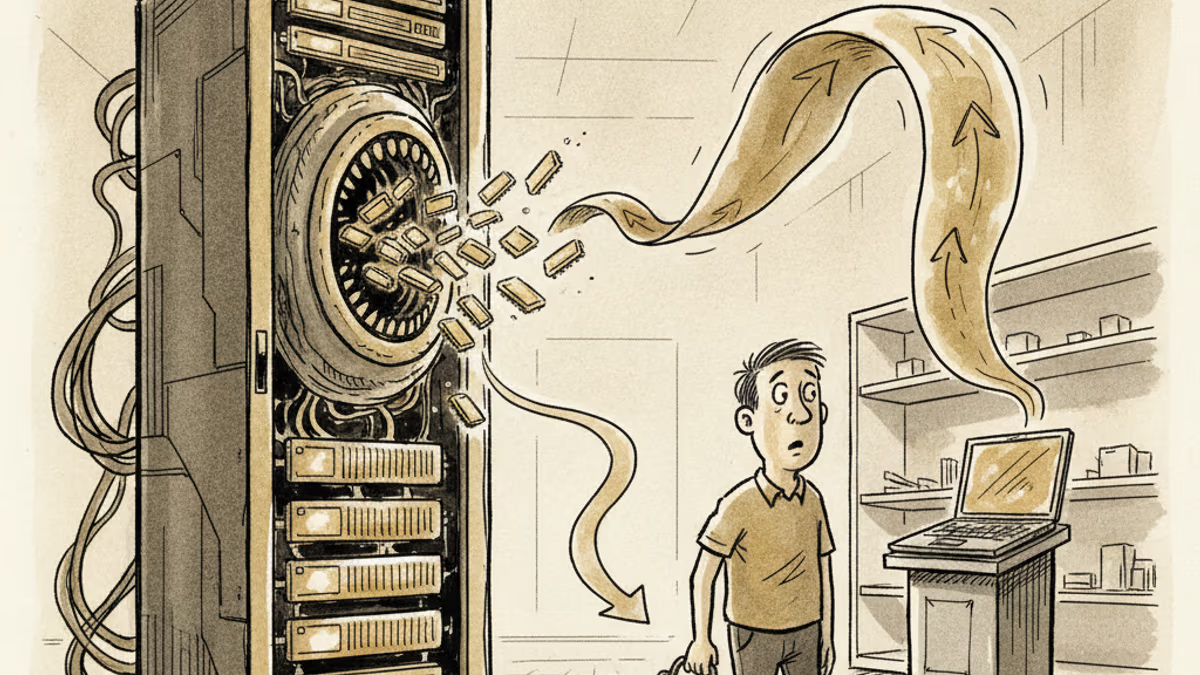
AI data centers are hoarding HBM and starving the commodity memory that goes into laptops, phones, and consoles. Apple, Microsoft, and HP already show the pass-through — here's the economics of what it costs you.

Ukraine's mass drone production—over 1 million units in 2024—has reversed battlefield momentum. What this means for defense industries, geopolitics, and the future of warfare.
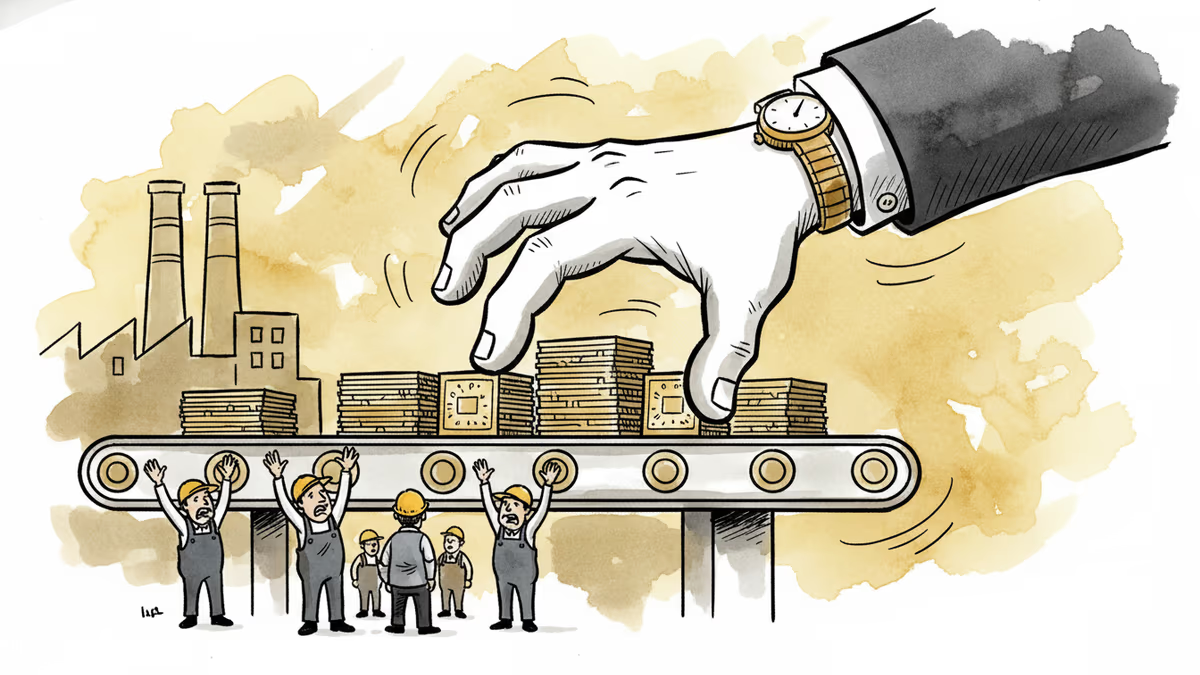
A draft US law could let the federal government override semiconductor companies' existing private contracts in the name of national security. Here's what's at stake for the industry.
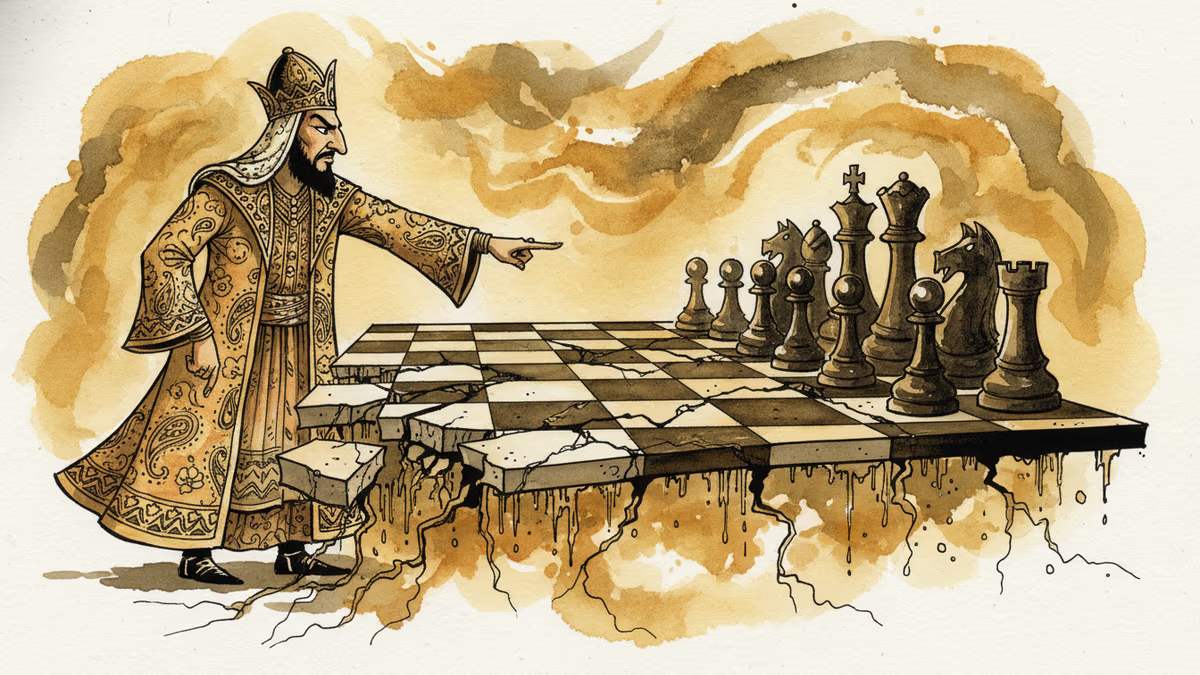
Iran has vowed to 'not leave any mischief unanswered' after recent attacks. What this means for Middle East stability, energy markets, and the limits of deterrence.
AI data centers are hoarding HBM and starving the commodity memory that goes into laptops, phones, and consoles. Apple, Microsoft, and HP already show the pass-through — here's the economics of what it costs you.
Ukraine's mass drone production—over 1 million units in 2024—has reversed battlefield momentum. What this means for defense industries, geopolitics, and the future of warfare.
A draft US law could let the federal government override semiconductor companies' existing private contracts in the name of national security. Here's what's at stake for the industry.
Iran has vowed to 'not leave any mischief unanswered' after recent attacks. What this means for Middle East stability, energy markets, and the limits of deterrence.
Thoughts
Share your thoughts on this article
Sign in to join the conversation