
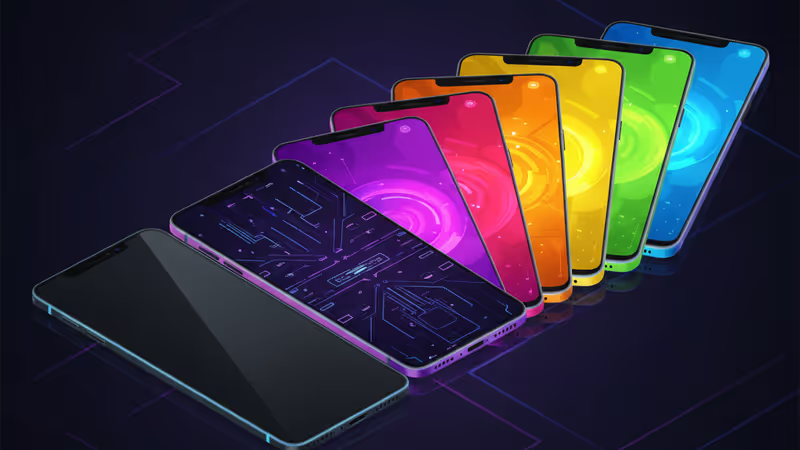
The End of the Black Slab: Why Your Phone's Color is the New Spec War
The return of colorful phones isn't a fad. It's a strategic shift from specs to style, signaling a new battle for profit and market share in tech.
The Lede: Beyond the Spec Sheet
The sudden explosion of color and premium materials in the 2025 smartphone market isn't a nostalgic design fad; it's a calculated strategic pivot in a saturated industry. For executives and investors, this signals the end of the raw performance era—where processing power was the key differentiator—and the dawn of a new battleground fought over aesthetics, personalization, and high-margin ecosystems. The black slab is dead; long live the fashion-forward personal computer in our pockets.
Why It Matters: The Ripple Effects of a Color Revolution
This shift from utilitarian design to expressive hardware has significant second-order effects that will reshape the mobile value chain:
- The Accessory Gold Rush: A phone's color is merely the anchor for a new, highly profitable ecosystem. Color-matched magnetic wallets, crossbody straps, and charging docks are not just add-ons; they are becoming integral to the product experience, creating high-margin, recurring revenue streams that decouple profitability from the device upgrade cycle itself.
- Supply Chain Reinvention: Delivering a consistent 'Deep Blue' finish or a real wood grain back at scale is profoundly more complex than producing millions of black or gray units. This elevates the importance of materials science, advanced coatings, and agile manufacturing. Companies that master this complexity gain a significant competitive moat.
- Marketing's New Playbook: The conversation is moving from gigahertz and megapixels to lifestyle and self-expression. Expect marketing budgets to shift towards collaborations with fashion houses, design influencers, and cultural tastemakers, targeting demographics that view technology as an extension of their personal identity.
The Analysis: From RAZR Pink to 'Pro' Gray and Back Again
The smartphone industry's journey with color is cyclical. The early 2000s, with the iconic pink Motorola RAZR and Nokia's interchangeable faceplates, celebrated personalization. However, the smartphone boom, led by Apple's iPhone, standardized a minimalist, 'professional' aesthetic. This was driven by economies of scale and the desire to position these powerful devices as serious tools for productivity.
So, what changed? The market hit peak commoditization. With processing power and camera quality reaching a point of diminishing returns for the average user, hardware manufacturers are desperately seeking new ways to stand out and justify premium pricing. Google's Pixel line has long used subtle, unique colorways as a key brand differentiator, but it was the aggressive design-led strategies from challengers like Nothing and various Chinese OEMs that forced the entire market to respond. In a sea of sameness, design is no longer a feature; it is the feature.
PRISM Insight: The Rise of 'Phygital' Identity
This trend is more than skin deep. It's a physical manifestation of our increasingly digital lives. As consumers curate their digital identities with avatars and custom profiles, they now demand the same level of personalization for their most-used physical object. The phone is becoming the primary bridge between our physical and digital selves—a 'phygital' totem.
Investment Angle: The value is shifting from the silicon inside to the shell outside. Watch for innovation and investment in companies specializing in:
- Advanced Materials: Firms developing durable, lightweight, and aesthetically unique materials (e.g., recycled composites, advanced ceramics, smart textiles).
- Customization Tech: Platforms that enable at-scale personalization and on-demand manufacturing.
- Ecosystem-Native Accessory Brands: The next billion-dollar consumer brand may not sell a phone at all, but rather the definitive, fashion-forward accessory ecosystem for a major hardware platform.
PRISM's Take: Style is the New Substance
For over a decade, the industry told us what was 'Pro'—and it was usually gray. That era is definitively over. In a mature market where internal specs have become table stakes, the battle for consumer hearts, minds, and wallets will be fought on the surface. This is not about frivolity; it's about leveraging design to communicate brand value, drive higher margins, and build defensible ecosystems. Manufacturers who continue to treat aesthetics as an afterthought will be relegated to the utility bargain bin. Those who master the art of the phone-as-fashion will command the next wave of consumer desire and define the future of personal technology.
Related Articles

Holiday gift guides reveal Big Tech's true strategy: using simple gadgets as Trojan Horses to win the long-term war for ecosystem dominance and data.
Riverside's 'Rewind' is more than a fun recap; it's a symptom of 'Feature AI' bloat. Discover why this trend matters for creators and the tech industry.
Roomba pioneered home robotics but now faces an existential crisis. Our analysis breaks down the strategic failures that led to its decline and the hard lessons for the tech industry.

Riot Games' new BIOS update requirement for Valorant marks a major escalation in the anti-cheat war, blurring the line between gaming and system-level security.