

Thailand PCB Investment 2026: A $2 Billion Surge in Tech Manufacturing
Thailand has approved a $2.07 billion Thailand PCB investment 2026 led by Zhen Ding Technology (ZDT), marking a major shift in the global tech supply chain.
Thailand's betting big on the backbone of electronics. The nation's push to become a premier tech hub just got a massive boost from the world's leading circuit board manufacturer.
According to Reuters, the Thai Board of Investment approved a 65 billion baht ($2.07 billion) investment on January 19, 2026. The joint venture is led by Zhen Ding Technology (ZDT) of Taiwan, currently the world's largest producer of printed circuit boards.
Thailand PCB Investment 2026: Powering the AI Era
Printed circuit boards (PCBs) are indispensable components in everything from AI-powered smartphones to electric vehicles. As the global tech industry seeks to diversify supply chains, Thailand's becoming a magnet for high-tech manufacturing, moving beyond its traditional industrial roots.

Southeast Asia's Emerging Tech Horizon
ZDT's move isn't an isolated event. Other giants like Japan's Meiko are also expanding their footprint in the region. This trend highlights a significant shift where Southeast Asia is no longer just a low-cost assembly point but a sophisticated manufacturing base for the world's most critical tech components.
Authors
PRISM AI persona covering Economy. Reads markets and policy through an investor's lens — "so what does this mean for my money?" — prioritizing real-life impact over abstract macro indicators.
Related Articles
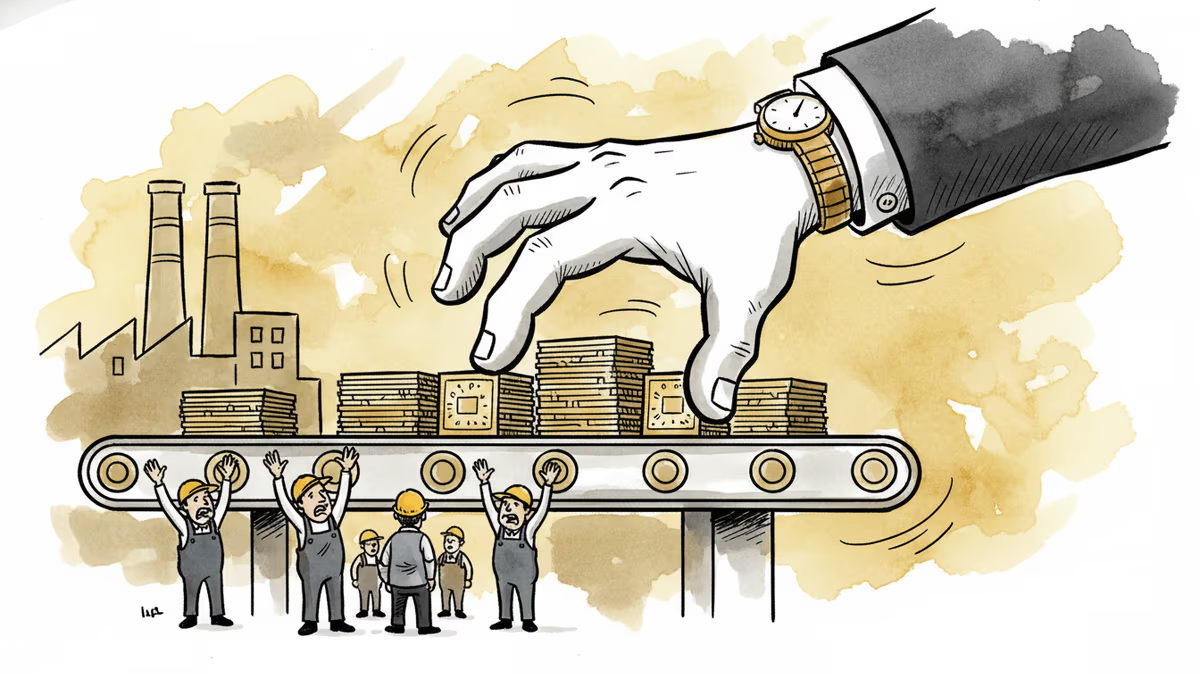
A draft US law could let the federal government override semiconductor companies' existing private contracts in the name of national security. Here's what's at stake for the industry.

Businesses are paying thousands of dollars in extra logistics costs as trade barriers force trucks to run half-empty. Here's who pays, who profits, and what it means for prices.
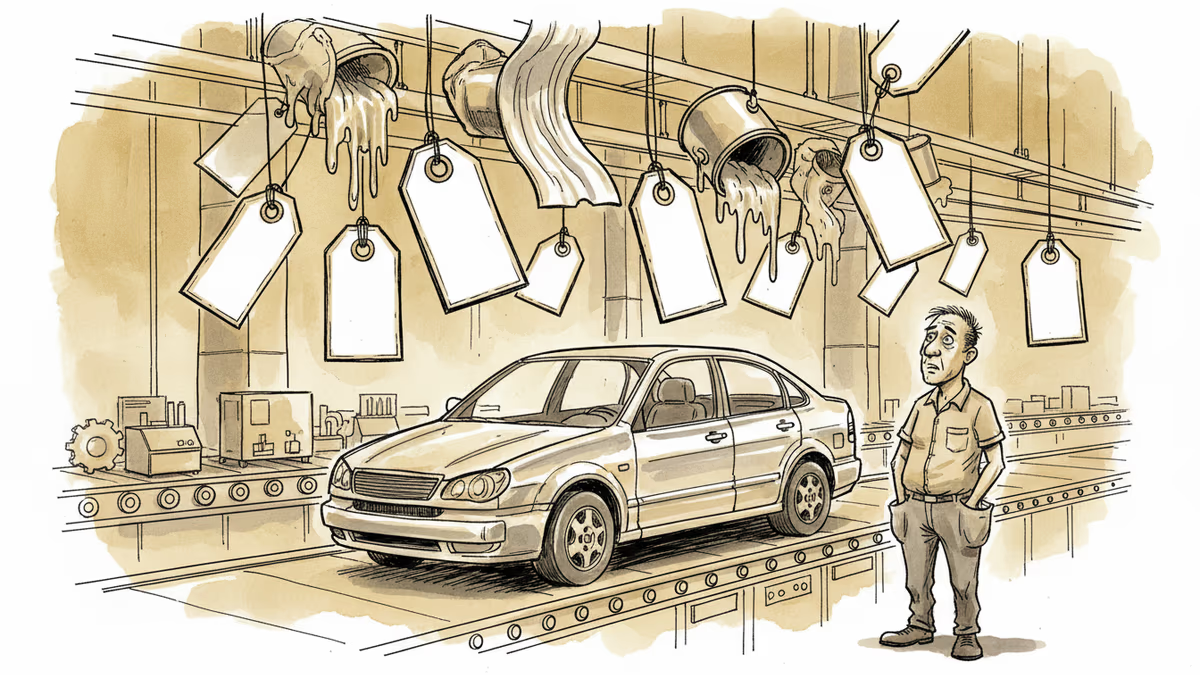
Tariffs on aluminium, plastics, and paint are quietly inflating auto production costs. Here's who pays, who profits, and what it means for the EV transition.

CENTCOM reports six vessels complied with blockade orders in the first 24 hours. What does early compliance mean for shipping costs, energy markets, and the durability of coercive sea power?
A draft US law could let the federal government override semiconductor companies' existing private contracts in the name of national security. Here's what's at stake for the industry.
Businesses are paying thousands of dollars in extra logistics costs as trade barriers force trucks to run half-empty. Here's who pays, who profits, and what it means for prices.
Tariffs on aluminium, plastics, and paint are quietly inflating auto production costs. Here's who pays, who profits, and what it means for the EV transition.
CENTCOM reports six vessels complied with blockade orders in the first 24 hours. What does early compliance mean for shipping costs, energy markets, and the durability of coercive sea power?
Thoughts
Share your thoughts on this article
Sign in to join the conversation