
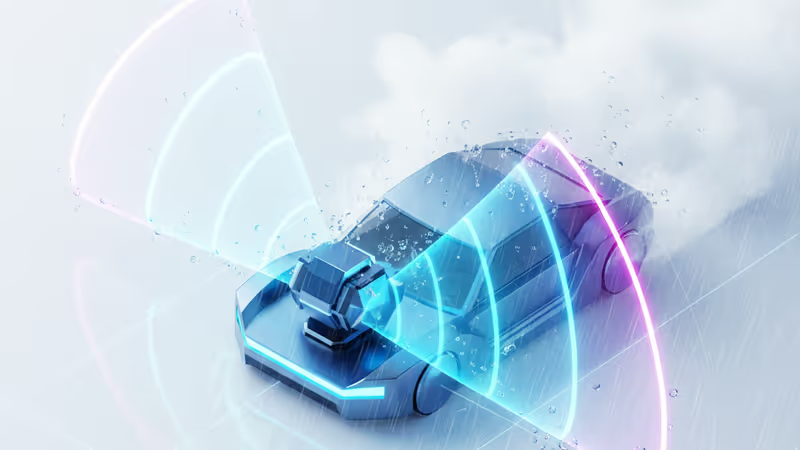
Teradar Summit Terahertz Sensor at CES 2026: A New Contender to Replace Lidar and Radar
Teradar unveils its Summit terahertz sensor at CES 2026, aiming to replace lidar and radar in autonomous vehicles with its high-resolution, all-weather performance.
The autonomous vehicle sensor market just got a serious wake-up call. Just two months after emerging from stealth with a $150 million Series B, Boston-based Teradar is showcasing its first flagship terahertz sensor at CES 2026. The company claims its new hardware fills a "critical gap" that legacy lidar and radar sensors have failed to address for years.
Inside the Teradar Summit Terahertz Sensor Technology
The Summit sensor operates on the relatively untapped terahertz band—sitting between microwaves and infrared. It's a solid-state device, meaning it has no moving parts, which promises higher reliability and lower costs than traditional lidar. Teradar says the sensor provides high-resolution data regardless of weather conditions, a major hurdle for current autonomous systems. If contracts with automakers are secured, the company expects to begin shipping units by 2028.

Market Turmoil: Lidar's Loss is Teradar's Gain
Teradar’s entry arrives as the lidar industry faces an existential crisis. Industry leader Luminar filed for bankruptcy in December 2025 after high-profile deals with Volvo and Mercedes-Benz collapsed. Meanwhile, Chinese competitors like Hesai have flooded the market, producing over 1 million units in 2025 alone. By positioning the Summit as a more robust and affordable alternative, Teradar is aiming for the sweet spot that established players missed.
Authors
Related Articles
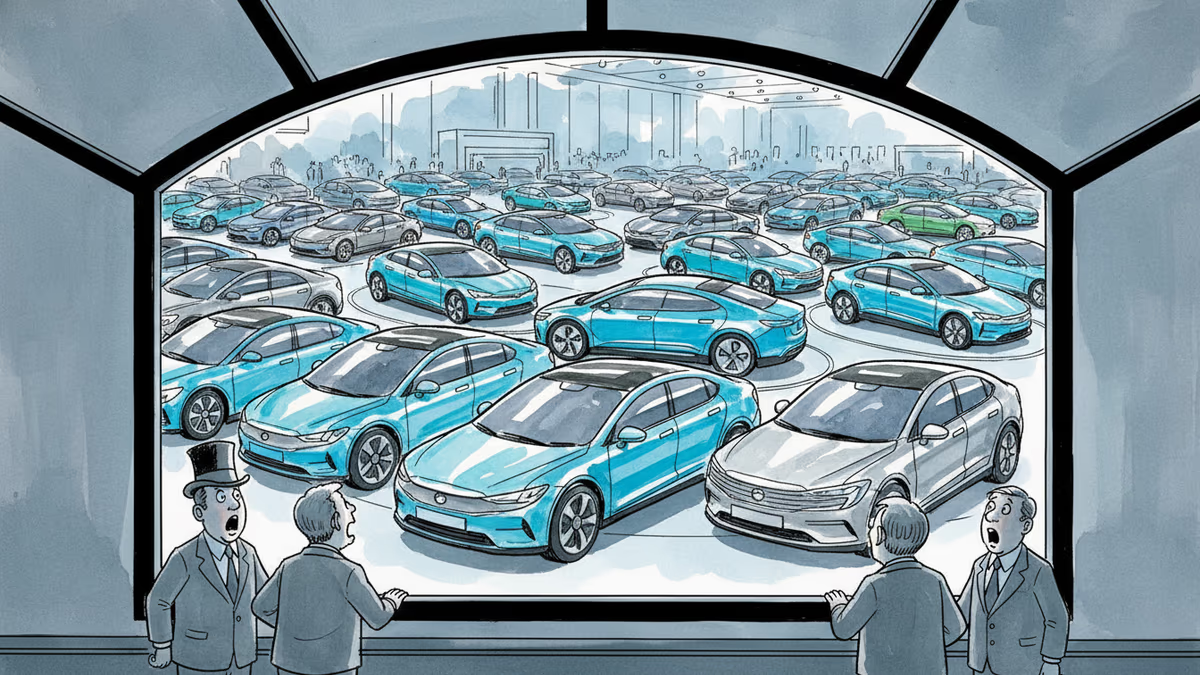
Auto China 2026 set records with 1,451 vehicles and 181 world premieres. But the real story isn't the size—it's how Chinese automakers stopped competing on price and started competing on brains.
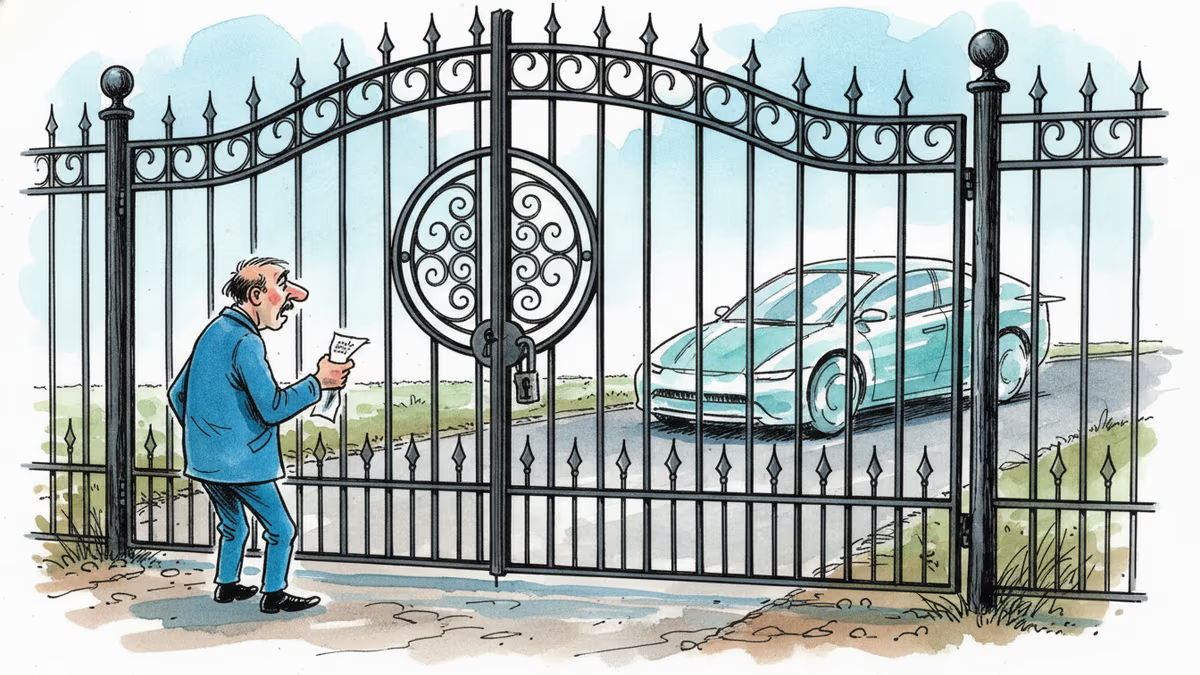
Elon Musk confirmed on Tesla's Q1 2026 earnings call that Hardware 3 vehicles will never receive unsupervised Full Self-Driving — locking out millions who paid for the feature.
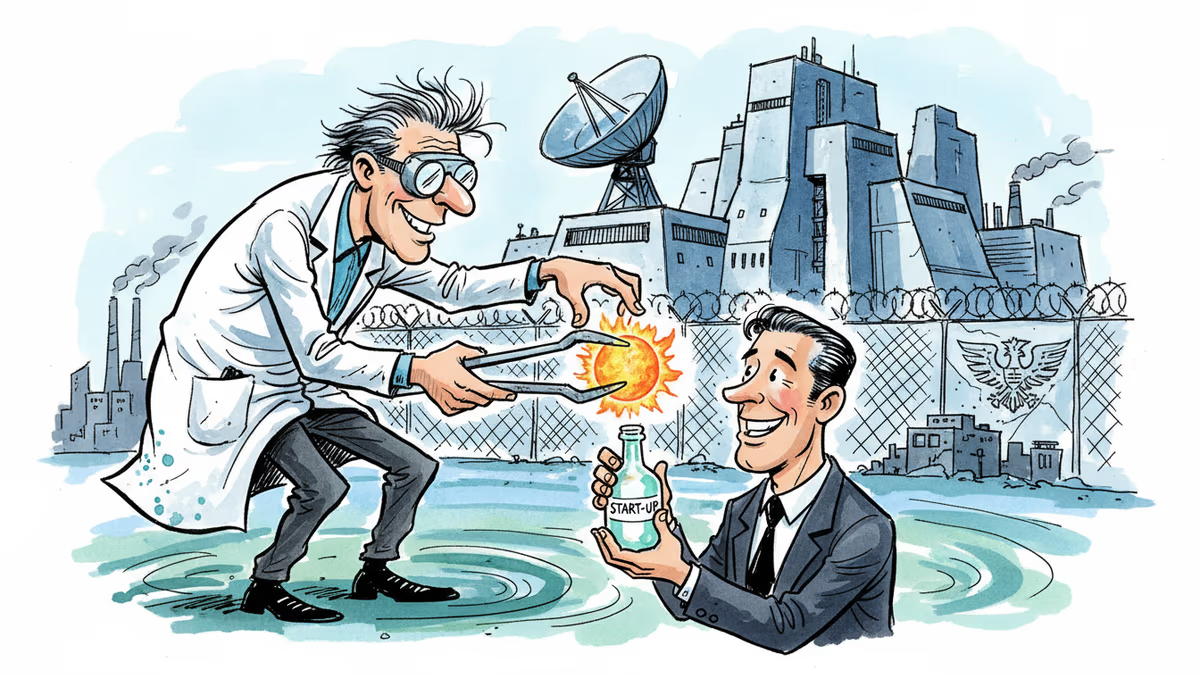
Inertia Enterprises just signed three agreements with Lawrence Livermore National Laboratory, licensing nearly 200 patents. Is this the moment laser fusion gets serious about the grid?
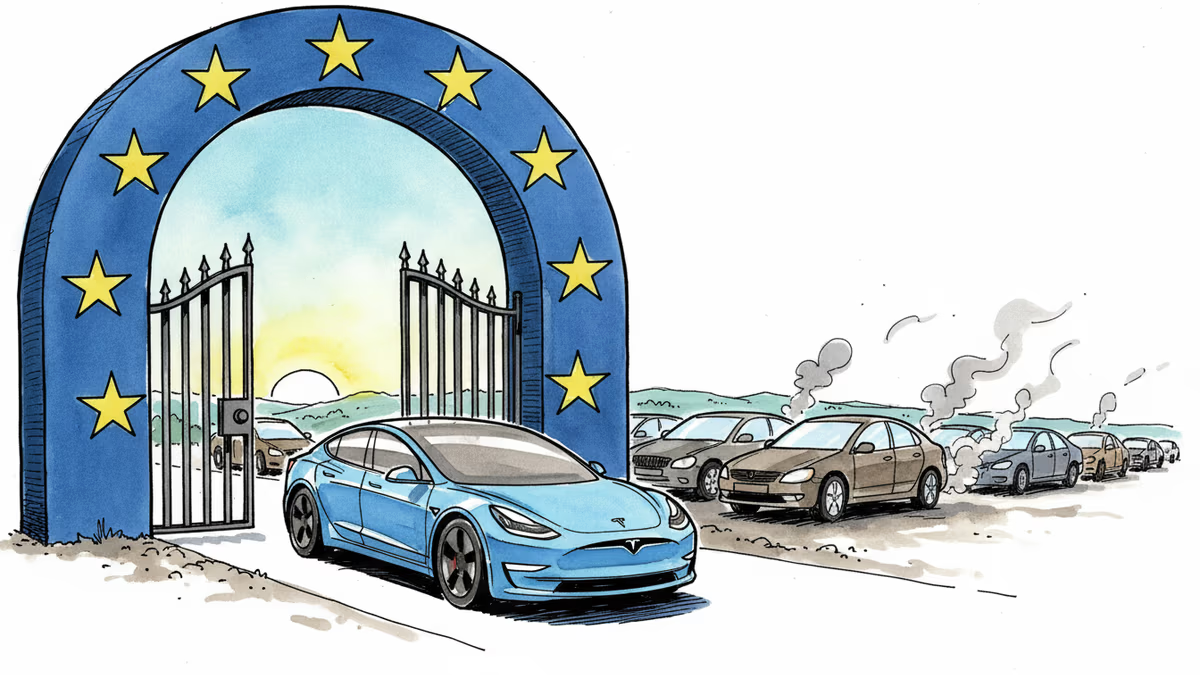
The Netherlands became the first European country to officially approve Tesla's FSD Supervised. With EU's type-approval framework, this could ripple across 27 member states fast.
Auto China 2026 set records with 1,451 vehicles and 181 world premieres. But the real story isn't the size—it's how Chinese automakers stopped competing on price and started competing on brains.
Elon Musk confirmed on Tesla's Q1 2026 earnings call that Hardware 3 vehicles will never receive unsupervised Full Self-Driving — locking out millions who paid for the feature.
Inertia Enterprises just signed three agreements with Lawrence Livermore National Laboratory, licensing nearly 200 patents. Is this the moment laser fusion gets serious about the grid?
The Netherlands became the first European country to officially approve Tesla's FSD Supervised. With EU's type-approval framework, this could ripple across 27 member states fast.
Thoughts
Share your thoughts on this article
Sign in to join the conversation