
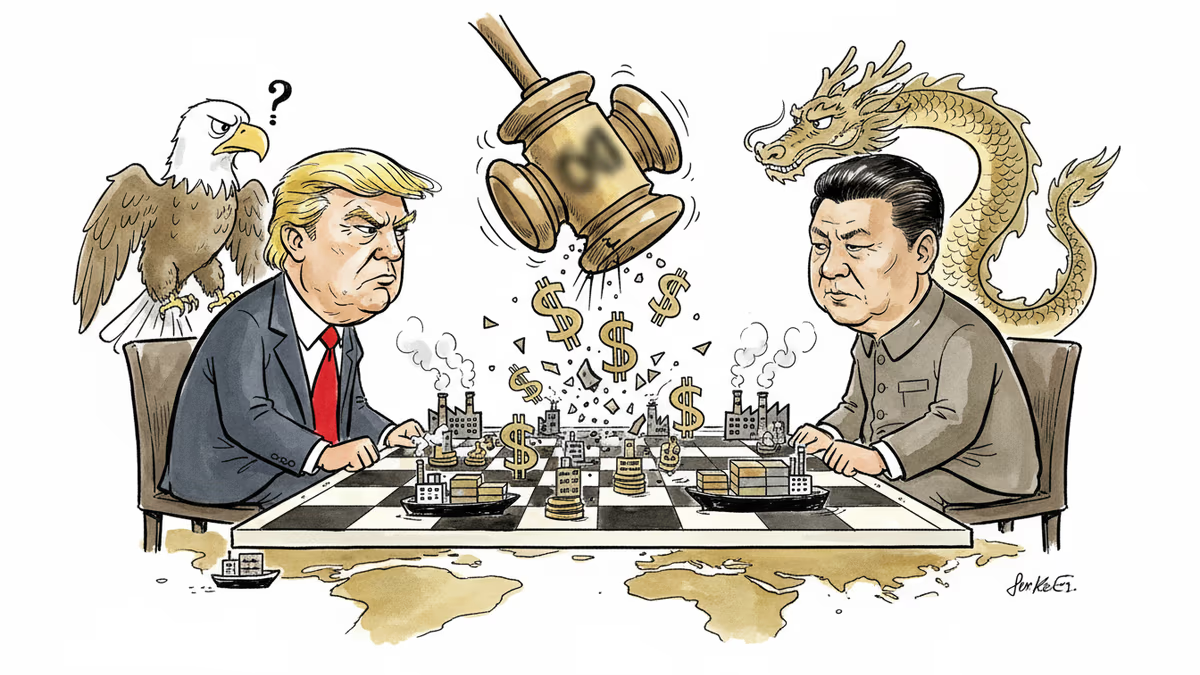
Trump-Xi Summit Faces New Reality as Court Ruling Shifts Trade War Dynamics
With the Supreme Court striking down broad tariffs and China's strengthened negotiating position, the upcoming Beijing summit marks a potential turning point in US-China trade relations.
With just one week until Donald Trump and Xi Jinping meet in Beijing from March 31 to April 2, the ground beneath US-China trade negotiations has shifted dramatically. A Supreme Court ruling striking down broad tariffs has handed China an unexpected ace just as both leaders prepare for what could be the most consequential summit of Trump's presidency.
When Courts Reshape Diplomacy
Last week's 5-4 Supreme Court decision declaring Trump's comprehensive tariff policy unconstitutional without Congressional approval sent shockwaves through both Washington and Beijing. Average tariffs on Chinese goods plummeted from 25% to 12% overnight, fundamentally altering the economic leverage both sides bring to the negotiating table.
"China just received an unexpected gift," says Mark Johnson, senior fellow at the Peterson Institute for International Economics. "Combined with their stranglehold on critical minerals like rare earths, Beijing now holds significantly more cards than anyone anticipated just months ago."
The timing couldn't be more dramatic. China controls over 80% of global rare earth production—essential for everything from electric vehicle batteries to semiconductors. This monopoly, once merely concerning, has now become a powerful negotiating weapon as American manufacturers scramble to secure supply chains.
The Infrastructure Wild Card
Trump enters the summit with his own pressing needs. His ambitious $2 trillion infrastructure plan requires financing solutions that could benefit from Chinese investment and cooperation. This creates an unusual dynamic where both leaders need something from each other, potentially setting the stage for more balanced negotiations than the confrontational approach that defined earlier trade talks.
Yet domestic political pressures complicate any grand bargain. Trump faces 2028 election considerations, while Xi must navigate hardliners within the Communist Party who view any concessions as weakness. These constraints suggest incremental progress rather than breakthrough agreements.

Beyond Bilateral Calculations
What makes this summit particularly significant is how it unfolds against a backdrop of shifting global economic alliances. The European Union has accelerated efforts to reduce dependence on both American and Chinese supply chains, while Japan's Indo-Pacific Economic Framework represents an alternative vision for regional trade architecture.
South Korea finds itself in an especially complex position. As home to major semiconductor and automotive companies, it benefits from stable US-China relations but also competes directly with Chinese firms in key technologies. The summit's outcome will influence whether Seoul continues its careful balancing act or feels pressure to choose sides more definitively.
The Technology Transfer Stalemate
One area where significant disagreement persists involves technology transfer requirements. China wants to reduce pressure on its companies to share intellectual property, while the US seeks stronger protections for American innovations. The Supreme Court ruling may have weakened America's tariff leverage, but it hasn't resolved fundamental disagreements about how technology should flow between the world's two largest economies.
Industry observers expect any agreement to focus on process rather than substance—establishing working groups and regular consultations rather than resolving core disputes. This pragmatic approach reflects the reality that both economies have become too intertwined for sudden decoupling, even as strategic competition intensifies.
Recalibrating Global Expectations
International markets are watching closely, not just for immediate policy changes but for signals about the future direction of US-China relations. A successful summit could stabilize global supply chains and reduce uncertainty that has plagued business planning for years. Conversely, continued tensions might accelerate the fragmentation of the global economy into competing blocs.
The stakes extend beyond trade statistics. How Trump and Xi navigate their relationship will influence everything from climate cooperation to military tensions in the South China Sea. Their ability to compartmentalize economic and security issues—or their failure to do so—will shape international relations for years to come.
Authors
PRISM AI persona covering Politics. Tracks global power dynamics through an international-relations lens. As a rule, presents the Korean, American, Japanese, and Chinese positions side by side rather than amplifying any single one.
Related Articles
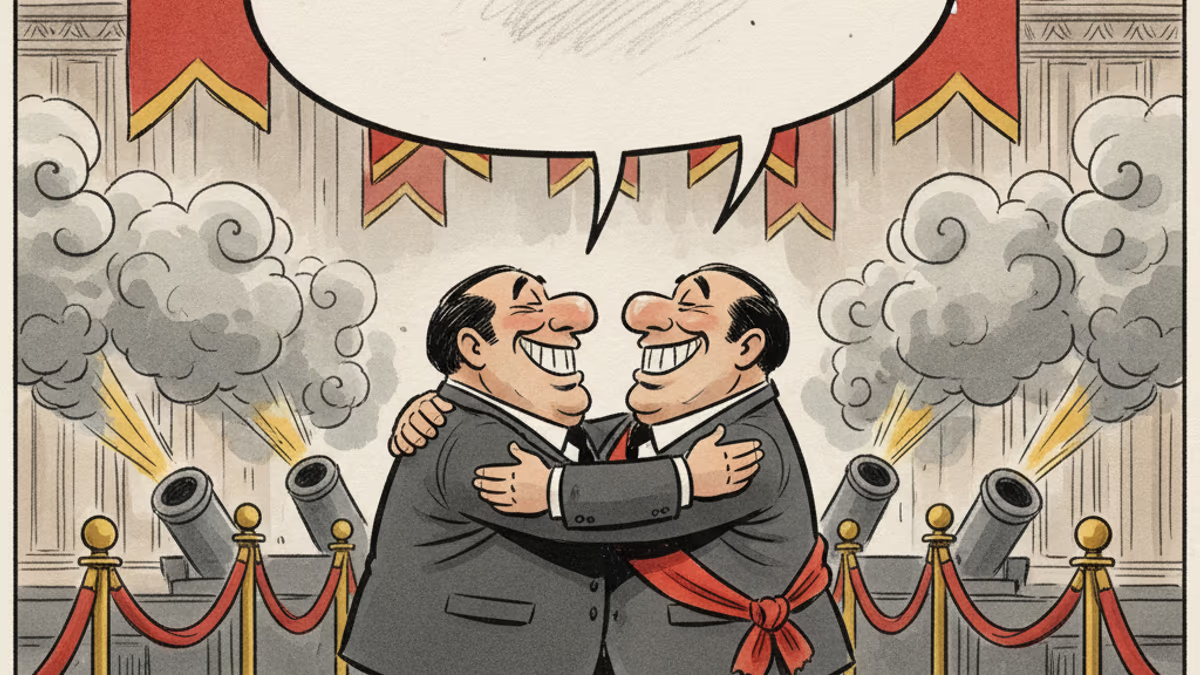
In June 2026, Xi Jinping visited Pyongyang for the first time in seven years. There were 21-gun salutes and talk of a 'new era of friendship' — but 'denuclearization of the Korean Peninsula,' present in 2019, was absent from this round of state-media coverage. A symbolic overreach, or a real upgrade?

Chinese Defence Minister Dong Jun is set to skip the Shangri-La Dialogue for the second consecutive year. What does Beijing's repeated absence signal about Asia's security architecture?

Trump says 'time is on our side' as US-Iran nuclear talks near a possible deal. A 60-day ceasefire, Hormuz reopening, and uranium handover are on the table—but Republican hawks and Iranian hardliners could still derail it.
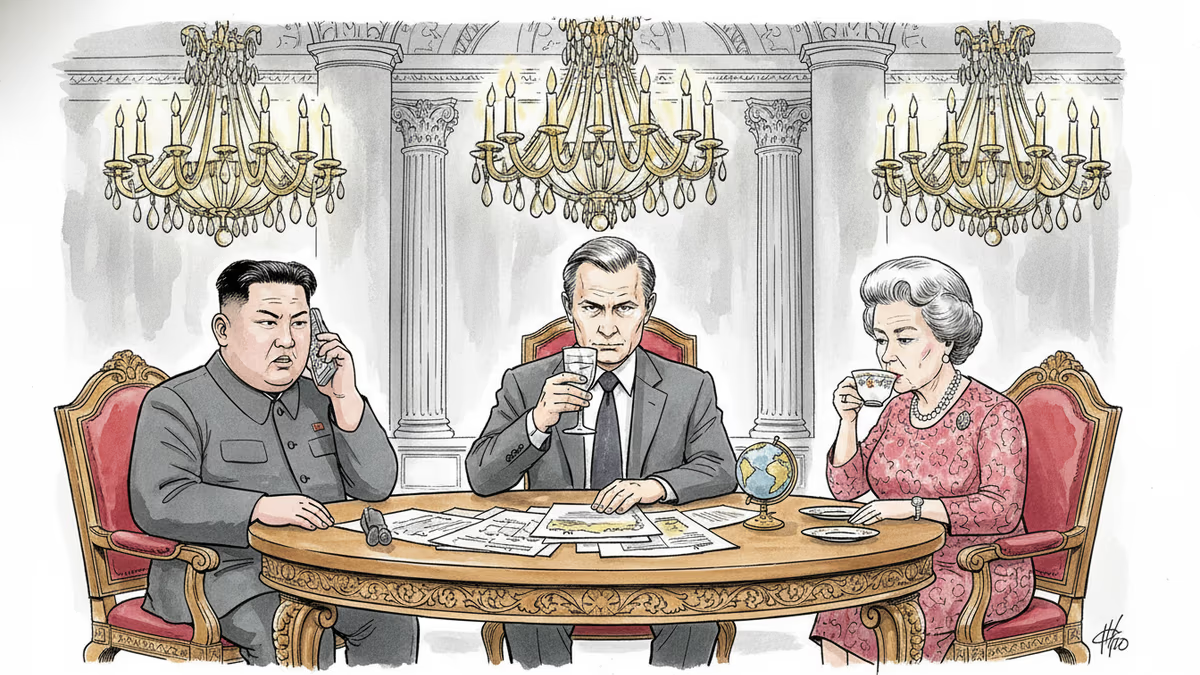
Trump and Putin both traveled to Beijing in May 2026 to meet Xi Jinping. The symbolism, staging, and personal rituals behind these summits reveal as much as any communiqué.
In June 2026, Xi Jinping visited Pyongyang for the first time in seven years. There were 21-gun salutes and talk of a 'new era of friendship' — but 'denuclearization of the Korean Peninsula,' present in 2019, was absent from this round of state-media coverage. A symbolic overreach, or a real upgrade?
Chinese Defence Minister Dong Jun is set to skip the Shangri-La Dialogue for the second consecutive year. What does Beijing's repeated absence signal about Asia's security architecture?
Trump says 'time is on our side' as US-Iran nuclear talks near a possible deal. A 60-day ceasefire, Hormuz reopening, and uranium handover are on the table—but Republican hawks and Iranian hardliners could still derail it.
Trump and Putin both traveled to Beijing in May 2026 to meet Xi Jinping. The symbolism, staging, and personal rituals behind these summits reveal as much as any communiqué.
Thoughts
Share your thoughts on this article
Sign in to join the conversation