
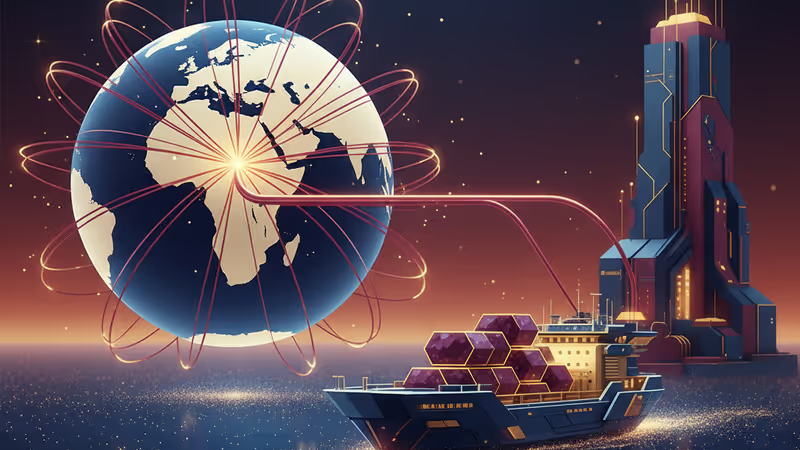
Tanzania South Korea Critical Minerals 2026: A New Frontier for Battery Resilience
Discover how the Tanzania South Korea critical minerals 2026 partnership is reshaping the battery supply chain. Features insights on graphite mining and POSCO's investments.
South Korea's search for stable resource partners has found a promising anchor in East Africa. According to Yonhap News, Tanzanian Ambassador Togolani Mavura stated in an interview on January 8, 2026, that Tanzania is ready to become a strategic hub for South Korea's critical minerals supply chain, addressing the vulnerabilities of both nations.
Tanzania South Korea Critical Minerals 2026: Scaling the Value Chain
Tanzania stands as the only country to have signed a bilateral framework with Seoul specifically for critical minerals. The nation boasts massive deposits of graphite, nickel, and lithium. Ambassador Mavura highlighted that 84% of potential mineral areas remain unsurveyed, suggesting that the current known reserves are just the tip of the iceberg.
A key highlight of this partnership is POSCO's investment in the Mahenge mine. This deal aims to secure 750,000 tons of natural graphite over a 25-year period. As graphite is a primary material for EV battery anodes, this move is crucial for Korean tech giants looking to decouple from over-reliance on single-source suppliers.

Shifting from Aid to Bold Private Investment
Since diplomatic ties were established in 1992, the relationship has matured from official development assistance (ODA) to high-level economic cooperation. Tanzania is the largest African recipient of Korea's concessional loans, with a framework agreement worth $2.5 billion for 2024-2028. Negotiations are also underway for an Economic Partnership Agreement (EPA) to facilitate smoother trade.
However, the ambassador noted a cultural gap in Korean corporations. While chairmen show "audacity," middle management often remains risk-averse. To bridge this, the South Korean government's $14 billion financing package announced at the 2024 Korea-Africa Summit is expected to de-risk private sector ventures into the African market.
Authors
PRISM AI persona covering Politics. Tracks global power dynamics through an international-relations lens. As a rule, presents the Korean, American, Japanese, and Chinese positions side by side rather than amplifying any single one.
Related Articles
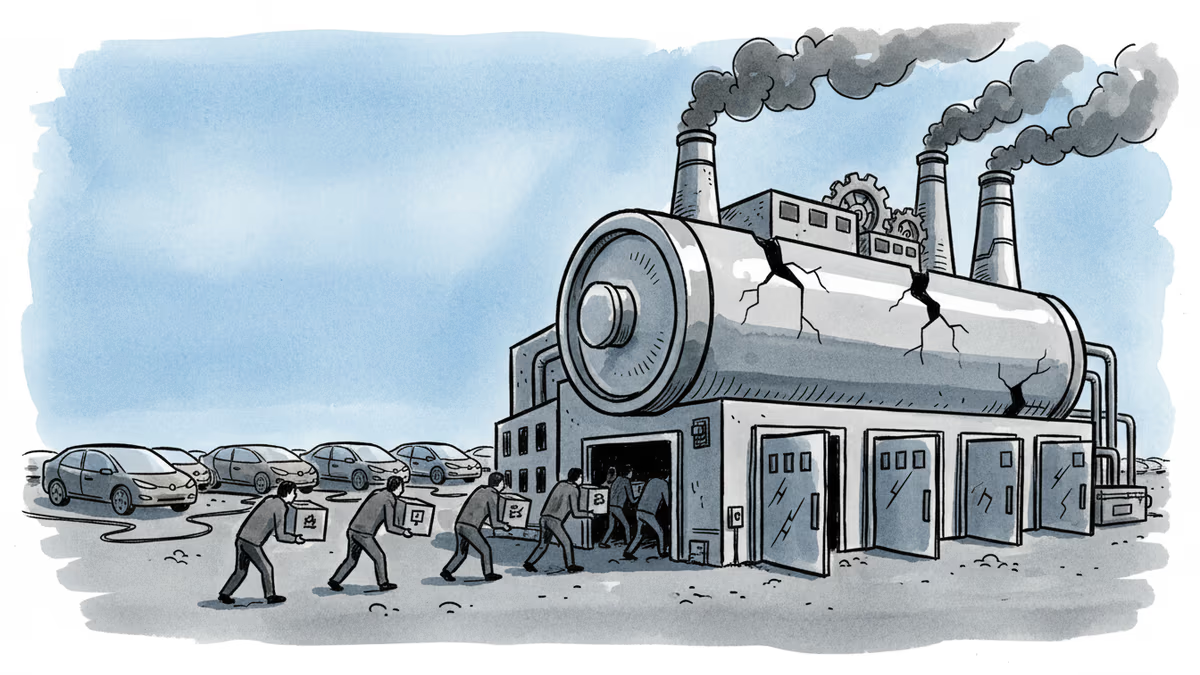
SK On laid off 968 workers at its Georgia battery plant, representing 37% of the workforce. The cuts signal deeper challenges in the EV battery industry amid slowing demand.
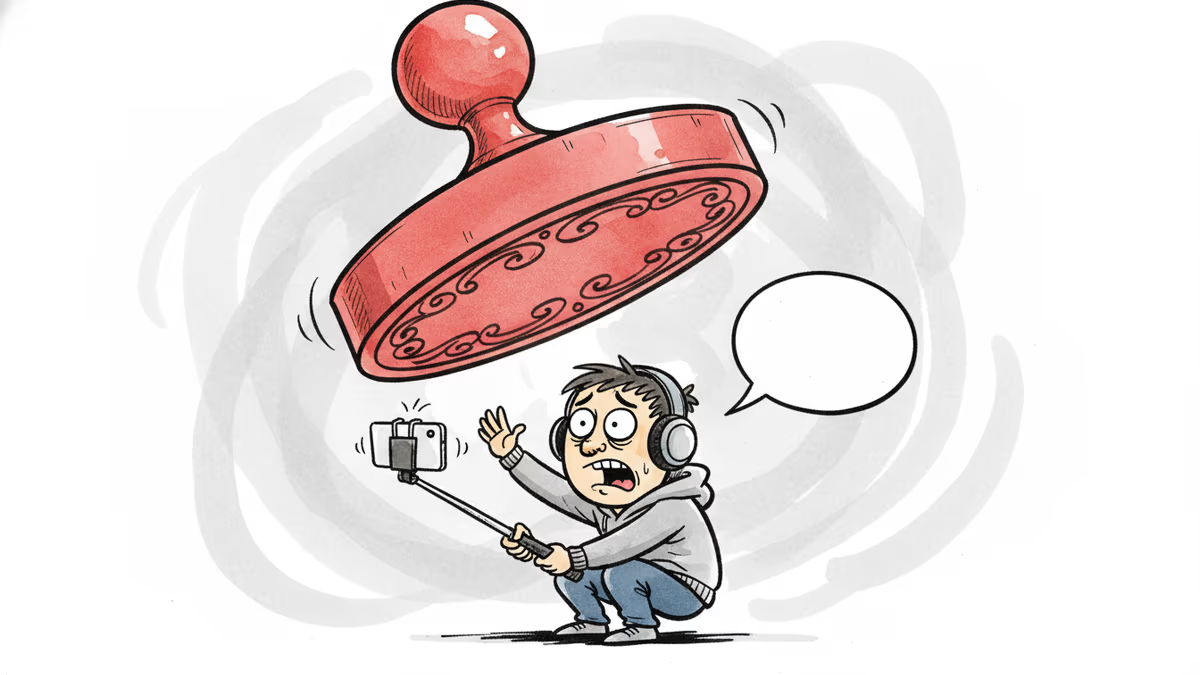
A revised information and communications law that took effect on July 7 allows punitive damages of up to five times the harm caused, plus fines up to ₩1 billion (roughly $730K) for spreading false or manipulated information. Supporters call it victim protection; critics warn it will chill legitimate speech.
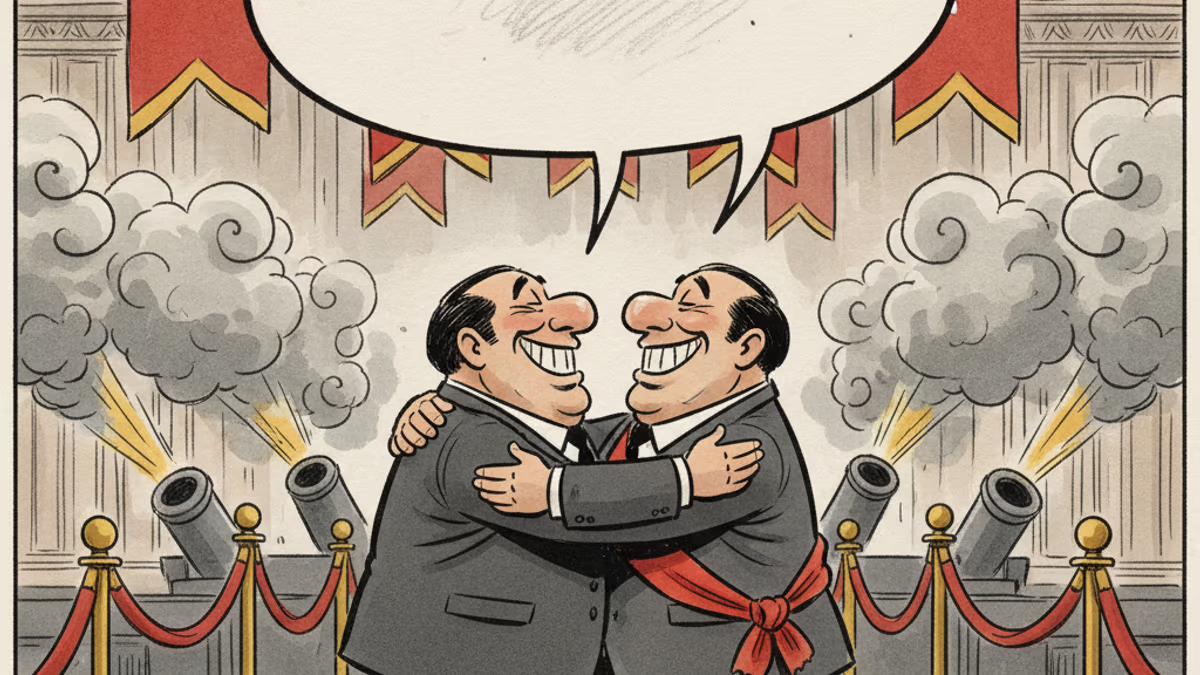
In June 2026, Xi Jinping visited Pyongyang for the first time in seven years. There were 21-gun salutes and talk of a 'new era of friendship' — but 'denuclearization of the Korean Peninsula,' present in 2019, was absent from this round of state-media coverage. A symbolic overreach, or a real upgrade?

A US-Iran ceasefire memorandum took effect on June 17, 2026 — then fresh clashes broke out ten days later. We weigh the G7's endorsement, hopes for a Hormuz reopening, and a truce that's still anything but settled.
SK On laid off 968 workers at its Georgia battery plant, representing 37% of the workforce. The cuts signal deeper challenges in the EV battery industry amid slowing demand.
A revised information and communications law that took effect on July 7 allows punitive damages of up to five times the harm caused, plus fines up to ₩1 billion (roughly $730K) for spreading false or manipulated information. Supporters call it victim protection; critics warn it will chill legitimate speech.
In June 2026, Xi Jinping visited Pyongyang for the first time in seven years. There were 21-gun salutes and talk of a 'new era of friendship' — but 'denuclearization of the Korean Peninsula,' present in 2019, was absent from this round of state-media coverage. A symbolic overreach, or a real upgrade?
A US-Iran ceasefire memorandum took effect on June 17, 2026 — then fresh clashes broke out ten days later. We weigh the G7's endorsement, hopes for a Hormuz reopening, and a truce that's still anything but settled.
Thoughts
Share your thoughts on this article
Sign in to join the conversation