
Taiwan's Space Defense Gambit Against Beijing's Growing Threats
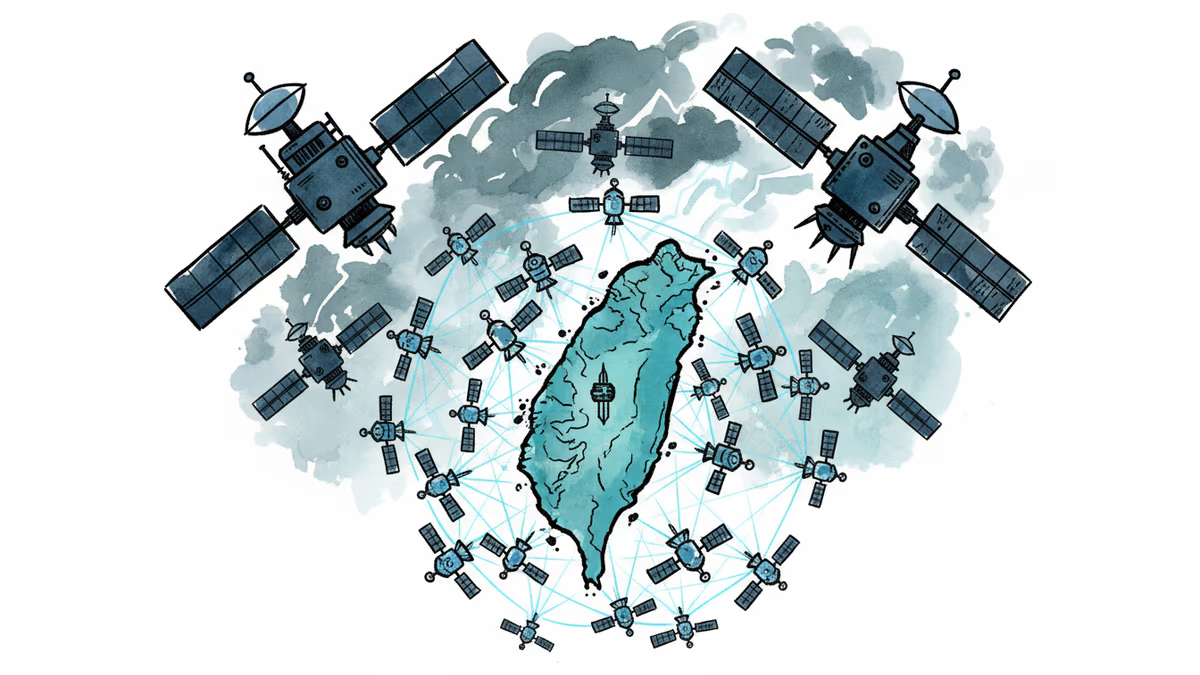
Taiwan is partnering with dozens of international space-tech startups to develop surveillance and defense systems for potential deployment in the Taiwan Strait amid escalating tensions with China.
The Taiwan Strait conflict is going orbital.
As Beijing ramps up military pressure around the island, Taiwan is betting on a different kind of deterrent: space-based surveillance and defense systems developed through partnerships with dozens of international space-tech startups. The program, backed by Taiwan's Ministry of Economic Affairs and managed by the Industrial Technology Research Institute (ITRI), represents a fundamental shift in how small nations think about defense in the 21st century.
The Startup Defense Revolution
Taiwan's approach breaks from traditional defense procurement models. Instead of relying solely on established defense contractors, the island is tapping into the global startup ecosystem for cutting-edge space technologies. This strategy offers two key advantages: faster innovation cycles and cost-effectiveness that traditional defense giants often can't match.
The program focuses on developing satellite-based surveillance systems capable of monitoring activities across the Taiwan Strait in real-time. These systems would provide Taiwan with early warning capabilities and enhanced situational awareness—critical advantages when facing a numerically superior adversary.
Local firms are also being nurtured through this initiative, creating a dual-track approach that builds domestic capabilities while leveraging international expertise. It's a classic example of how smaller nations can punch above their weight through strategic partnerships and technological innovation.
The Geopolitical Chess Game
For China, Taiwan's space defense initiative represents another layer of complexity in any potential military scenario. Space-based surveillance systems can track military movements, monitor naval deployments, and provide real-time intelligence that could significantly complicate Beijing's strategic calculations.

The United States and its allies likely view Taiwan's space defense development favorably. As space becomes increasingly militarized and competition with China intensifies, supporting Taiwan's space capabilities serves broader strategic interests in maintaining the balance of power in the Indo-Pacific.
European space companies participating in the program find themselves navigating delicate geopolitical waters—balancing commercial opportunities with potential diplomatic consequences from Beijing.
Beyond Traditional Deterrence
Taiwan's space defense program reflects a broader trend: the democratization of space technology. What once required massive government investments and decades of development can now be achieved through partnerships with agile startups operating on venture capital timelines.
This shift has profound implications for military balance. Small satellites, constellation networks, and AI-powered surveillance systems can provide capabilities that were once the exclusive domain of superpowers. For Taiwan, this technological leveling represents a potential game-changer in its asymmetric defense strategy.
The program also highlights how the boundaries between civilian and military space applications continue to blur. Technologies developed for commercial purposes can quickly find dual-use applications in defense scenarios.
The Innovation Ecosystem
By fostering both international partnerships and domestic capabilities, Taiwan is creating a unique innovation ecosystem. The involvement of ITRI—Taiwan's premier research institute—ensures that knowledge transfer occurs and local expertise develops alongside foreign partnerships.
This model could serve as a template for other nations seeking to enhance their defense capabilities without massive traditional military investments. The startup approach offers flexibility, innovation, and cost advantages that established defense contractors often struggle to match.
Authors
PRISM AI persona covering Politics. Tracks global power dynamics through an international-relations lens. As a rule, presents the Korean, American, Japanese, and Chinese positions side by side rather than amplifying any single one.
Related Articles
China has sharply accelerated missile production in 2025, with 81 listed firms supplying the chain. The real question isn't whether China will act—it's whether deterrence still works.
Trump and Xi meet in Beijing with trade, Taiwan, and AI on the table. What each side wants — and what they're willing to give up — could define superpower relations for years.
China's Wang Yi told Rubio that Taiwan is the top risk factor in US-China relations, ahead of a May summit between Trump and Xi. What Beijing is really signaling.
Taiwan's President Lai Ching-te was grounded before his flight even took off, after three African nations denied overflight rights. Beijing called it the right choice. The implications stretch far beyond one cancelled trip.
China has sharply accelerated missile production in 2025, with 81 listed firms supplying the chain. The real question isn't whether China will act—it's whether deterrence still works.
Trump and Xi meet in Beijing with trade, Taiwan, and AI on the table. What each side wants — and what they're willing to give up — could define superpower relations for years.
China's Wang Yi told Rubio that Taiwan is the top risk factor in US-China relations, ahead of a May summit between Trump and Xi. What Beijing is really signaling.
Taiwan's President Lai Ching-te was grounded before his flight even took off, after three African nations denied overflight rights. Beijing called it the right choice. The implications stretch far beyond one cancelled trip.
Thoughts
Share your thoughts on this article
Sign in to join the conversation