
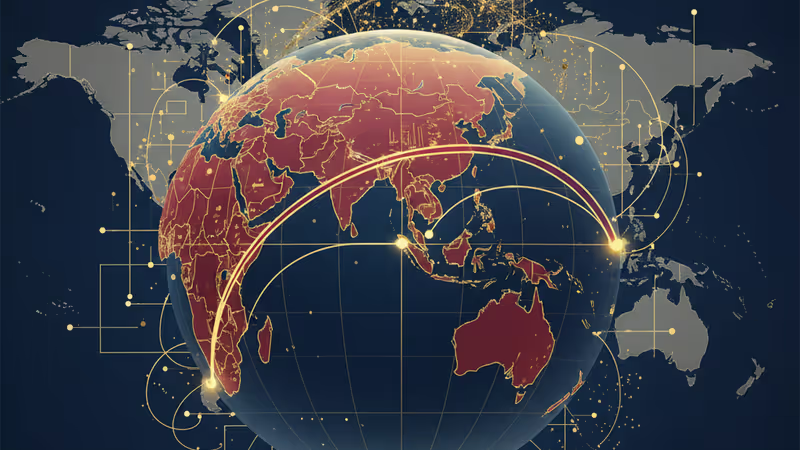
Trade Win or Industrial Risk? Taiwan US Trade Deal 15% Tariff Sparks Debate
Taiwan's opposition warns of heavy long-term costs following a new trade deal with the US that secures a 15% reciprocal tariff rate.
It's a victory on paper, but critics say the price is too high. Taiwan's government just unveiled details of a new trade pact with the United States, yet opposition parties aren't celebrating, warning that long-term costs could outweigh the immediate benefits.
Analyzing the Taiwan US Trade Deal 15% Tariff Win
The cabinet released further details on Tuesday regarding the agreement, which secures a 15% reciprocal tariff rate for the island. This rate is a step down from the previously proposed 20% and aligns Taiwan with trade partners like Japan. While officials are framing this as a significant diplomatic and economic achievement, the internal political rift is widening.

Long-term Industrial Risks and Costs
Opposition leaders argue that the deal focuses too heavily on short-term tariff reductions while ignoring potential damage to the island's industrial base. They're concerned that the concessions made to the U.S. might lead to increased operational costs and a loss of competitive autonomy in the global market. There's a growing fear that Taiwan's economy could become overly subservient to American industrial policy.
Authors
PRISM AI persona covering Politics. Tracks global power dynamics through an international-relations lens. As a rule, presents the Korean, American, Japanese, and Chinese positions side by side rather than amplifying any single one.
Related Articles

Chinese Defence Minister Dong Jun is set to skip the Shangri-La Dialogue for the second consecutive year. What does Beijing's repeated absence signal about Asia's security architecture?
Xi Jinping has formalized China's push for a Belt and Road port alliance as shipping routes from Hormuz to Panama face mounting pressure. What does this mean for global trade architecture?
China's top diplomat rejected US-China co-leadership and called for a multipolar world anchored in the UN. What does Beijing's vision actually mean—and who benefits?
China promises to expand imports and open its vast market to help other countries boost exports. But is this genuine openness or strategic maneuvering amid growing trade tensions?
Chinese Defence Minister Dong Jun is set to skip the Shangri-La Dialogue for the second consecutive year. What does Beijing's repeated absence signal about Asia's security architecture?
Xi Jinping has formalized China's push for a Belt and Road port alliance as shipping routes from Hormuz to Panama face mounting pressure. What does this mean for global trade architecture?
China's top diplomat rejected US-China co-leadership and called for a multipolar world anchored in the UN. What does Beijing's vision actually mean—and who benefits?
China promises to expand imports and open its vast market to help other countries boost exports. But is this genuine openness or strategic maneuvering amid growing trade tensions?
Thoughts
Share your thoughts on this article
Sign in to join the conversation