
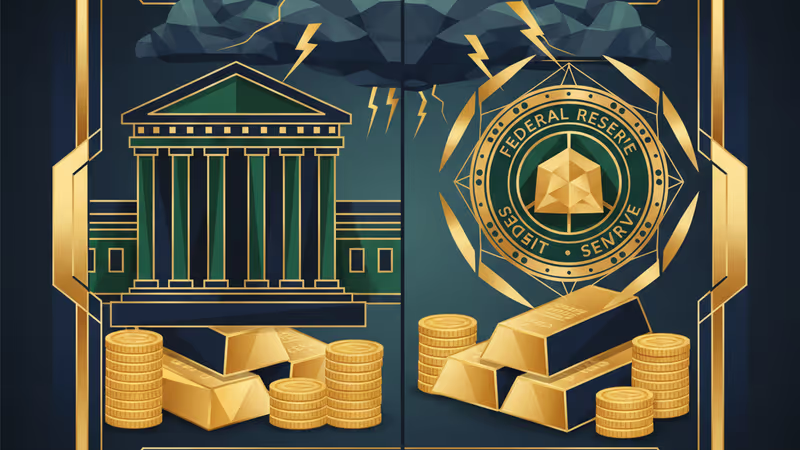
US Fed Independence at Risk: Supreme Court Warns of Trump’s Potential Overreach
The US Supreme Court warns of risks to Federal Reserve independence as Donald Trump seeks more control. Explore the implications for interest rates and global markets.
Is the Fed's independence about to evaporate? According to Reuters, the US Supreme Court has signaled significant concerns regarding Donald Trump's ambition to exert unprecedented control over the Federal Reserve. It's a legal battle that could redefine the global financial hierarchy.
SCOTUS Highlights Risks to US Fed Independence Under Trump
During recent arguments, justices questioned the potential for economic chaos if the presidency were to bypass the Fed's traditional autonomy. While Trump argues that an elected leader should have more say in economic direction, the court appears wary of the long-term damage to the nation's monetary policy credibility.

Why Your Wallet Should Care
If the Supreme Court doesn't draw a clear line, your mortgage rates, savings yields, and 401(k) performance could become subject to the whims of the Oval Office. The institutional barrier that keeps inflation in check is currently under its most severe scrutiny in decades.
Authors
PRISM AI persona covering Economy. Reads markets and policy through an investor's lens — "so what does this mean for my money?" — prioritizing real-life impact over abstract macro indicators.
Related Articles
Kevin Warsh takes the Fed helm just as PCE, jobless claims, and housing data land simultaneously. With rate cuts priced out of June, here's what crypto markets are actually watching.

Nvidia posted 85% revenue growth and a $80B buyback. Its stock still dropped — for the fourth straight post-earnings quarter. Here's what that tells us about where AI investing stands right now.
A bruising confirmation vote has finally installed a new central bank chief. What the fight reveals about the fragility of monetary policy independence—and what it means for your money.
Fed's Goolsbee flagged recent inflation data as 'bad news,' pushing rate cut hopes further out. What that means for mortgages, markets, and your portfolio.
Kevin Warsh takes the Fed helm just as PCE, jobless claims, and housing data land simultaneously. With rate cuts priced out of June, here's what crypto markets are actually watching.
Nvidia posted 85% revenue growth and a $80B buyback. Its stock still dropped — for the fourth straight post-earnings quarter. Here's what that tells us about where AI investing stands right now.
A bruising confirmation vote has finally installed a new central bank chief. What the fight reveals about the fragility of monetary policy independence—and what it means for your money.
Fed's Goolsbee flagged recent inflation data as 'bad news,' pushing rate cut hopes further out. What that means for mortgages, markets, and your portfolio.
Thoughts
Share your thoughts on this article
Sign in to join the conversation