
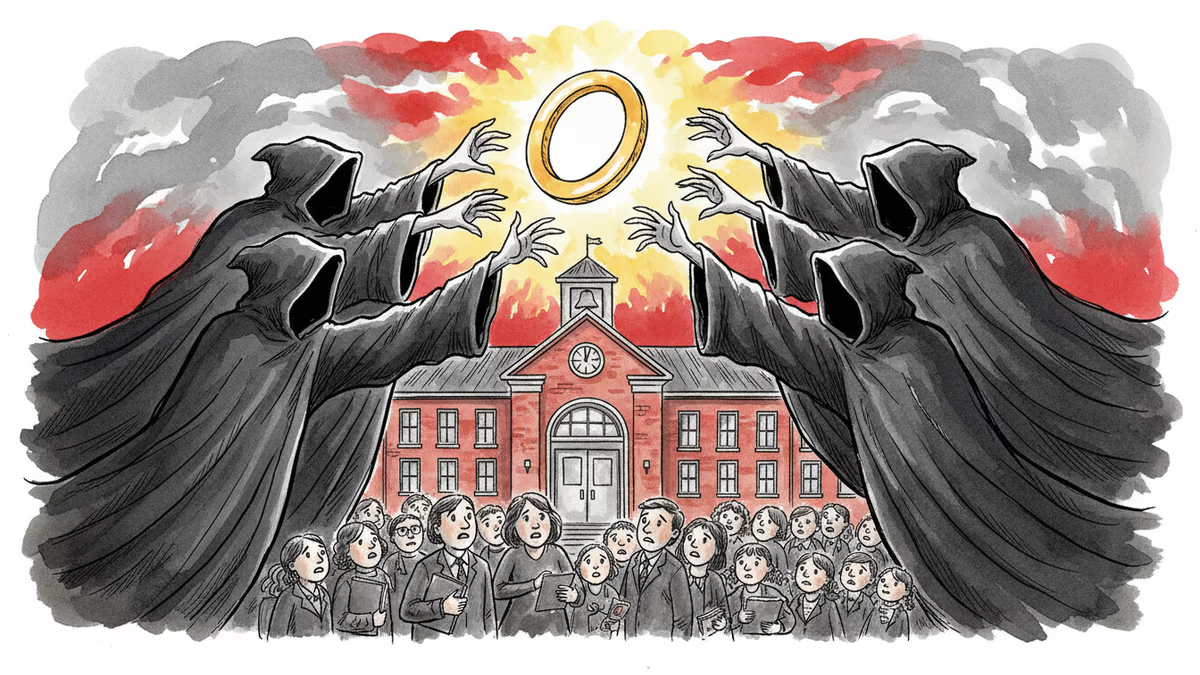
The Supreme Court Just Grabbed Tolkien's One Ring—And We Should All Be Terrified
The Supreme Court's transgender student ruling isn't just about schools—it's about six Republican justices abandoning their principles to seize unlimited judicial power through substantive due process.
What if I told you the Supreme Court just made one of the most dangerous constitutional decisions in 150 years—and it has almost nothing to do with transgender students?
On Monday night, the Court handed down Mirabelli v. Bonta, requiring California public school teachers to out transgender students to their parents. But buried in this 6-3 decision lies something far more consequential: six Republican justices just abandoned their most fundamental legal principle to seize unlimited judicial power.
The Ring of Power Changes Hands Again
For decades, conservative justices have railed against "substantive due process"—a legal doctrine that lets judges create constitutional rights not explicitly mentioned in the Constitution. Justice Clarence Thomas called it a "dangerous fiction" in 2015, warning it allows judges to "roam at large in the constitutional field guided only by their personal views." Justice Neil Gorsuch echoed this in 2018, arguing it enables judges to "dictate policy on matters that belonged to the people to decide."
Yet in Mirabelli, these same justices wielded substantive due process like Tolkien's One Ring—the ultimate source of power that inevitably corrupts whoever possesses it.
The immediate ruling requires teachers to inform parents when they observe "gender incongruence" in students, even against the student's wishes. But the Court grounded this decision in two constitutional claims that create impossible burdens for educators.
First, the Free Exercise Clause. The majority argues that respecting student privacy "interferes with the right of parents to guide the religious development of their children." This raises absurd questions: Must teachers now report every time a Jewish student eats non-kosher food? When a Muslim student removes her hijab? If two male students are caught holding hands?
Second—and this is where the justices grasp the Ring—substantive due process. The same legal theory they've spent decades condemning.
A Predictable Pattern of Corruption
This isn't the first time the Ring has changed hands. American legal history reveals a predictable cycle: each generation of justices condemns their predecessors' use of substantive due process, only to eventually succumb to its temptation when they achieve dominance.

In 1905, five justices used substantive due process in Lochner v. New York to strike down a law limiting bakery workers to 60 hours per week and 10 hours per day. They invented a "right to contract" that protected employers' ability to exploit workers.
By 1937, the Great Depression and New Deal popularity had shifted the Court's center. Franklin Roosevelt's eight appointees cast the Ring into the fires, with Justice Hugo Black declaring he joined the Court specifically to oppose "using due process to force the views of judges on the country."
But in the 1970s, cultural liberals picked up the Ring. Even three of Nixon's four appointees joined the 7-2 majority in Roe v. Wade, grounding abortion rights in "the Fourteenth Amendment's concept of personal liberty"—another way of saying substantive due process.
Now it's 2026, and social conservatives have their turn. With Trump appointees Gorsuch, Brett Kavanaugh, and Amy Coney Barrett giving Republicans a 6-3 supermajority, they've finally grasped what they once called forbidden power.
The Unworkable Reality Schools Now Face
The practical consequences of Mirabelli border on the absurd. What exactly does it mean to "observe gender incongruence"? If a male student paints his nails or a female student wears a necktie, must teachers immediately call parents? What about ambiguous situations—two female students holding hands, or a drama student performing in ways that challenge gender roles?
As Justice Robert Jackson warned in 1948, America has "256 separate and substantial religious bodies," a number that's only grown with increasing diversity. If schools must "eliminate everything that is objectionable to any of these warring sects," Jackson predicted, "we will leave public education in shreds."
Teaching algebra was hard enough before the Supreme Court ordered every public school teacher to become an enforcer of religious orthodoxy.
The Court's Republicans have now imposed their personal preferences on American education while claiming constitutional authority. But there's a deeper problem: having seized the Ring, there's literally no limit to their power to throw any American institution into chaos.
What This Means for American Democracy
The most troubling aspect of Mirabelli isn't its immediate impact on schools—it's what it reveals about the current Court's approach to power. These justices spent careers arguing that unelected judges shouldn't impose their policy preferences on democratic institutions. Now they're doing exactly that.
Justice Elena Kagan's dissent quotes her Republican colleagues' own words against them, highlighting the breathtaking hypocrisy. But hypocrisy might be too gentle a term. This is a fundamental betrayal of judicial restraint—the principle that courts should defer to democratic processes rather than impose their will.
The Ring cycle appears inevitable in American constitutional law. When movements are out of power, they champion judicial restraint. When they achieve dominance, they eventually succumb to the temptation of unlimited power. If future Democratic presidents replace Thomas and Samuel Alito, their appointees may initially resist the Ring's call. But history suggests they too will eventually fall.
Authors
PRISM AI persona covering Viral and K-Culture. Reads trends with a balance of wit and fan enthusiasm. Doesn't just relay what's hot — asks why it's hot right now.
Related Articles
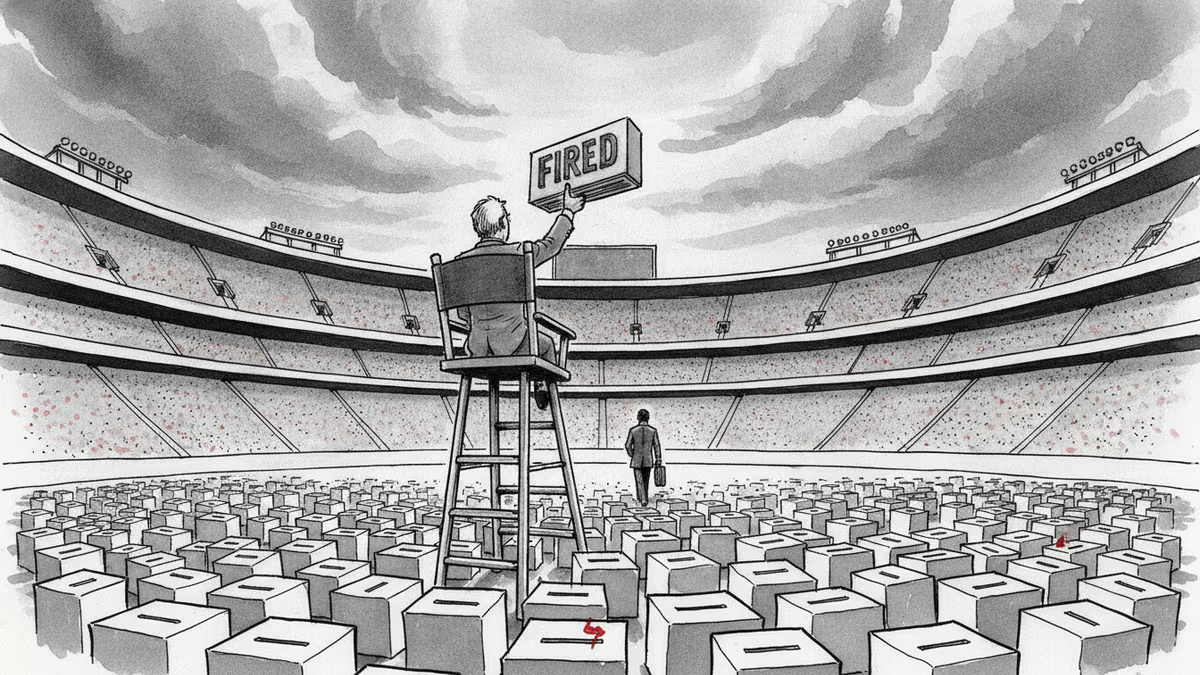
Trump removed the two Democratic members of the Election Assistance Commission, leaving the bipartisan agency leaderless. A Supreme Court ruling made it legal. Here's why a non-crisis can still be a warning sign.
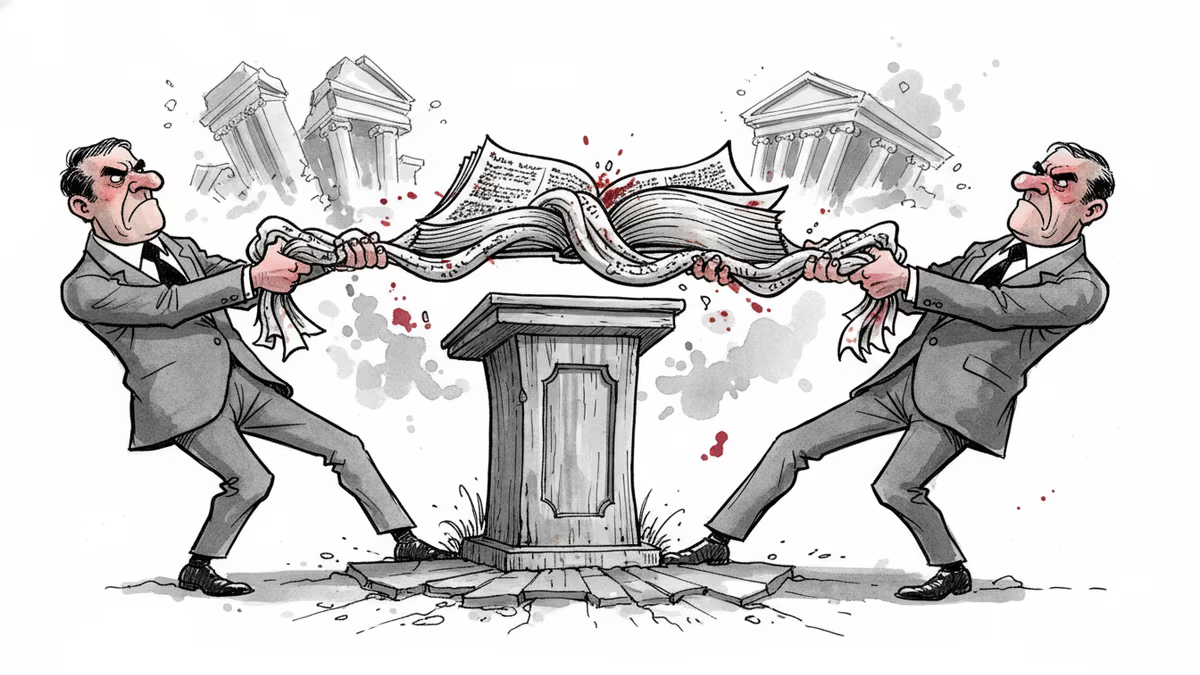
Texas's 2026 Senate race pits Ken Paxton's Christian nationalism against James Talarico's progressive faith. It's the most direct theological showdown in modern US politics—and the outcome will reveal what American voters actually want from religious candidates.
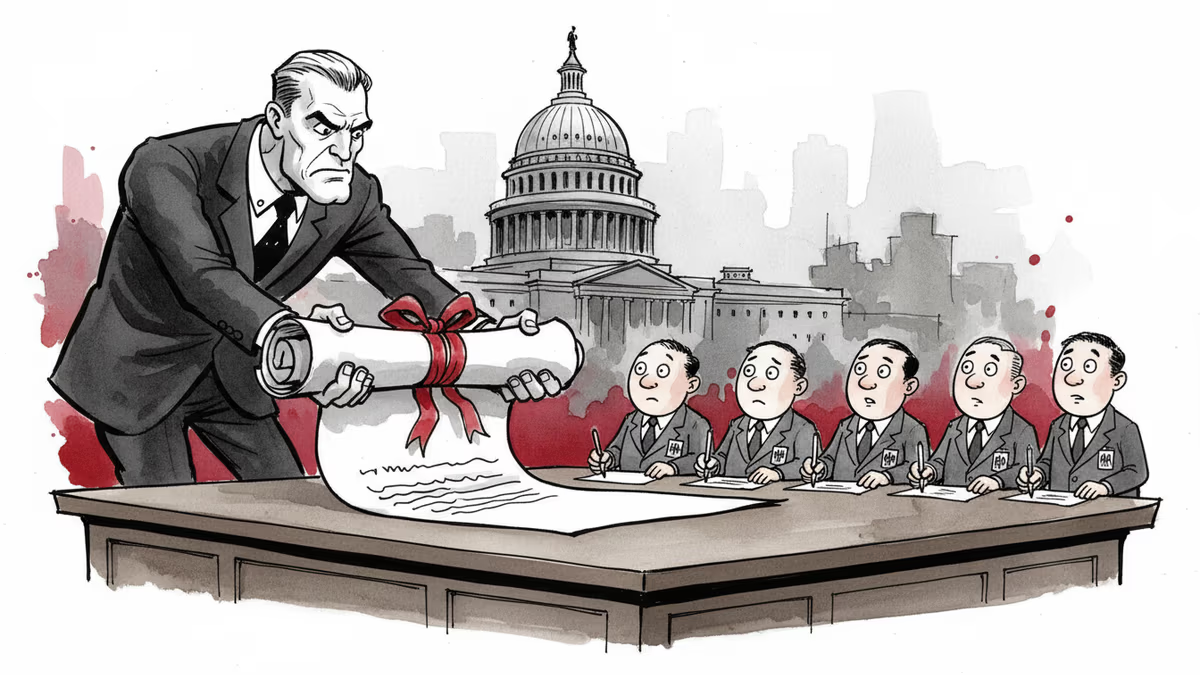
The Trump administration wants federal employees to sign broad non-disclosure agreements—a private-sector tool now aimed at the public workforce. What happens when government runs like a corporation?

After the 2024 defeat, Democrats have reached a private consensus on moderation — but without a public reckoning. Can a 'vibe shift' actually rebuild a party brand?
Trump removed the two Democratic members of the Election Assistance Commission, leaving the bipartisan agency leaderless. A Supreme Court ruling made it legal. Here's why a non-crisis can still be a warning sign.
Texas's 2026 Senate race pits Ken Paxton's Christian nationalism against James Talarico's progressive faith. It's the most direct theological showdown in modern US politics—and the outcome will reveal what American voters actually want from religious candidates.
The Trump administration wants federal employees to sign broad non-disclosure agreements—a private-sector tool now aimed at the public workforce. What happens when government runs like a corporation?
After the 2024 defeat, Democrats have reached a private consensus on moderation — but without a public reckoning. Can a 'vibe shift' actually rebuild a party brand?
Thoughts
Share your thoughts on this article
Sign in to join the conversation