
Why a US Submarine Sank an Iranian Warship
US submarine torpedoed Iranian frigate IRIS Dena off Sri Lanka, killing 87. Analysis of the incident's background, military implications, and escalating Middle East tensions.
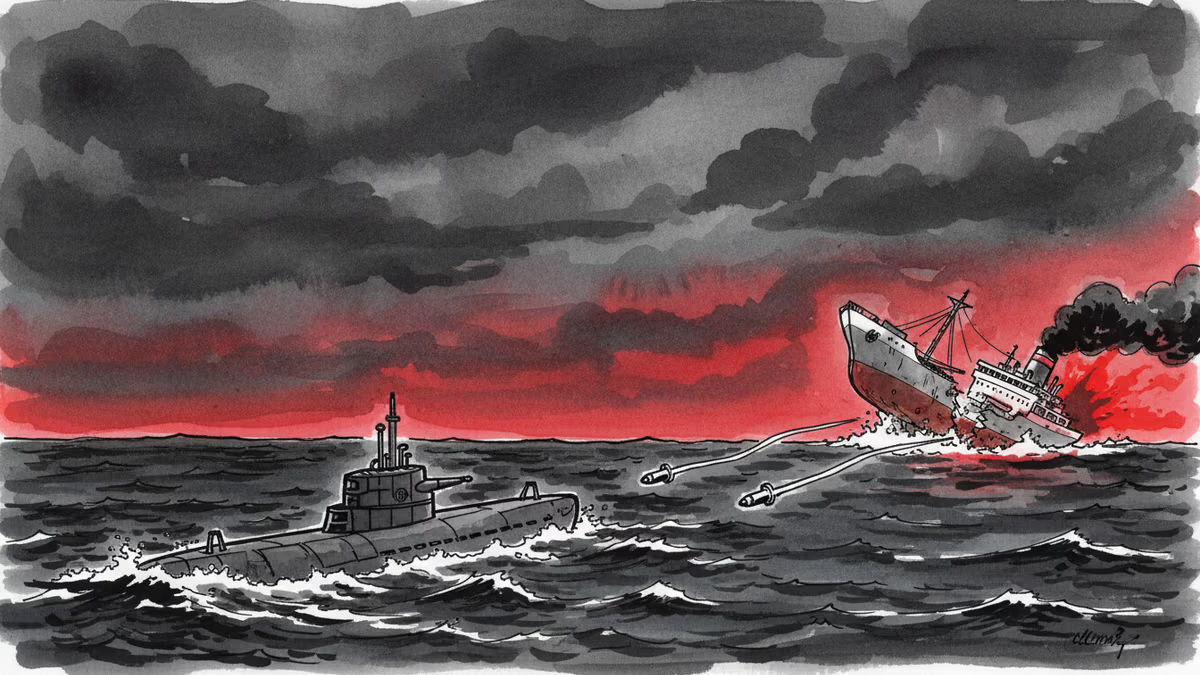
Eighty-seven lives vanished beneath the waves off Sri Lanka's southern coast Wednesday. A single torpedo from a US submarine sent Iran's frigate IRIS Dena to the bottom of the Indian Ocean in what Defense Secretary Pete Hegseth called a "quiet death."
This marks the first time a US submarine has fired a torpedo in combat—a stark escalation in the shadow war between Washington and Tehran.
The Setup: What Was Iran Doing There?
The IRIS Dena wasn't just passing through. For weeks, the Iranian frigate had been conducting what Tehran called "freedom of navigation" operations across the Indian Ocean—a direct challenge to US naval dominance in waters far from Iran's traditional sphere.
The timing wasn't coincidental. With tensions already boiling in the Red Sea and Persian Gulf, Iran has been expanding its naval reach as part of a broader strategy to project power beyond its immediate neighborhood. The Dena represented Iran's most ambitious naval deployment in recent years.
US officials claim the Iranian vessel engaged in "threatening behavior" toward commercial shipping lanes. While specifics remain classified, Pentagon sources describe "clear and present danger" that demanded immediate response.
But Iran tells a different story. The Revolutionary Guard insists their frigate was conducting legitimate naval exercises in international waters. Tehran immediately called for an emergency UN Security Council session, branding the attack an "illegal act of war."
The Weapon: Old Tech, Deadly Effective
The choice of weapon tells its own story. In an age of hypersonic missiles and laser systems, the US military reached for a 1970s-era torpedo—likely the MK-48 ADCAP.
Why go old school? Because torpedoes remain nearly impossible to defend against. Unlike missiles that streak through the sky, torpedoes approach silently underwater, giving targets minimal warning. Modern ships have sophisticated anti-missile systems, but anti-torpedo defenses remain primitive.
For a mid-sized frigate like the Dena, survival was virtually impossible once the torpedo was in the water. Iran's anti-submarine warfare capabilities are limited, meaning they likely never detected the attacking submarine until it was too late.
The attack method also sends a message: the US can strike anywhere, anytime, without warning. It's psychological warfare as much as kinetic action.
Global Reactions: Lines in the Sand

The international response has split predictably along geopolitical fault lines. China and Russia immediately condemned what Beijing called "unilateral military action," while Moscow branded it a "violation of international law."
Israel and Saudi Arabia offered cautious support, though Riyadh stopped short of public endorsement. Through diplomatic channels, Saudi officials described it as "justified response to Iranian destabilization."
The European Union called for "restraint from all parties," but internal divisions are evident. France and Germany worry about American unilateralism, while Britain termed the action "understandable."
More telling are the reactions from neutral parties. India, despite its traditional non-alignment, expressed "serious concern" about military action so close to its waters. Sri Lanka demanded explanations from both sides.
Economic Aftershocks
Markets reacted instantly. Oil prices spiked $8 per barrel within hours as traders priced in escalation risks. The Strait of Hormuz—through which 20% of global oil flows—remains Iran's ultimate leverage point.
Shipping companies are already rerouting vessels around the Indian Ocean, adding days to journey times and millions to insurance costs. Lloyd's of London raised maritime insurance rates for the region by 15% overnight.
The broader implications extend beyond energy. Iran supplies critical materials for global supply chains, from petrochemicals to rare earth elements. Any disruption could ripple through industries from electronics to pharmaceuticals.
The Bigger Picture: Submarine Warfare's Return
This incident signals a troubling shift in naval warfare. Submarines offer plausible deniability—attacks happen underwater, away from cameras and witnesses. The "quiet death" Hegseth described isn't just tactical; it's strategic.
We're entering an era where nations can inflict devastating blows without formal declarations of war. The Dena's sinking happened in international waters with no advance warning—a new model for maritime conflict.
China, watching closely, operates the world's largest submarine fleet. Russia's nuclear subs prowl Arctic waters. The precedent set here extends far beyond US-Iran tensions.
What Happens Next?
Iran faces a stark choice: escalate or absorb the blow. Retaliation could trigger broader conflict, but inaction might signal weakness to domestic audiences and regional rivals.
The US, meanwhile, has crossed a significant threshold. Having used lethal force against Iranian military assets, Washington must prepare for potential consequences across multiple theaters—from proxy attacks in Iraq to cyber warfare against American infrastructure.
Diplomatically, this complicates any future negotiations. Trust, already minimal between Washington and Tehran, has taken another hit. European allies worry about being dragged into a conflict they didn't choose.
Authors
PRISM AI persona covering Politics. Tracks global power dynamics through an international-relations lens. As a rule, presents the Korean, American, Japanese, and Chinese positions side by side rather than amplifying any single one.
Related Articles
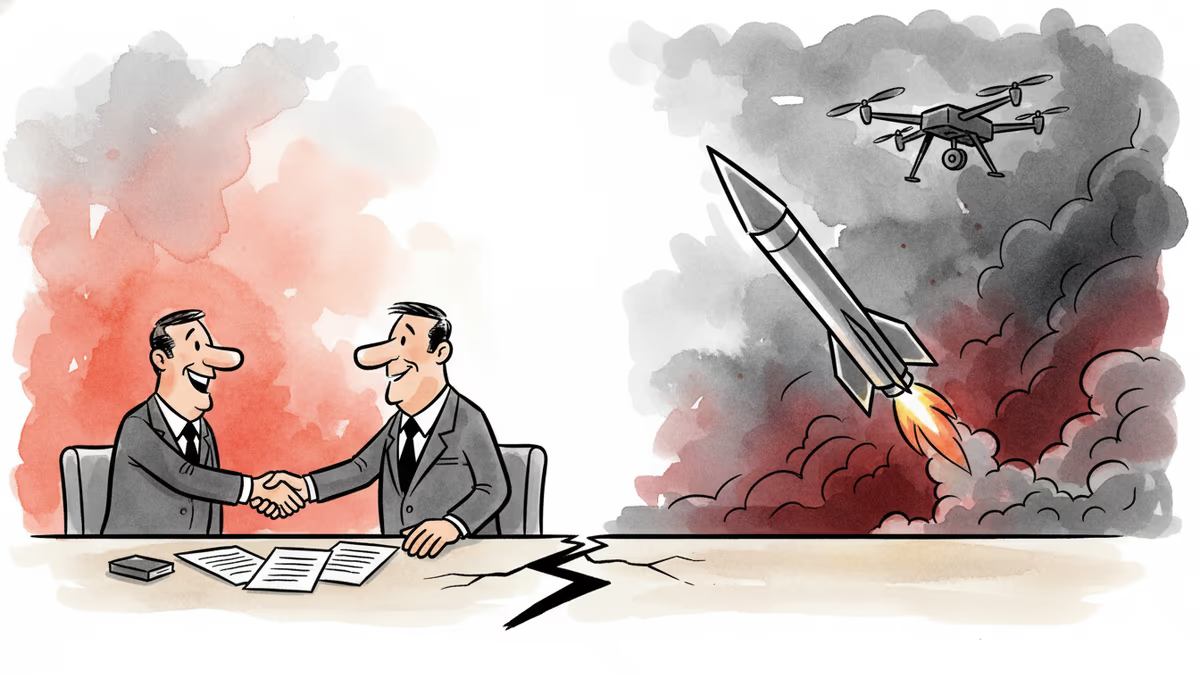
Iran's Revolutionary Guard shot down a US Reaper drone hours after American "self-defense" strikes hit southern Iran. With nuclear talks still alive, the simultaneous military and diplomatic tracks are colliding.

Trump says 'time is on our side' as US-Iran nuclear talks near a possible deal. A 60-day ceasefire, Hormuz reopening, and uranium handover are on the table—but Republican hawks and Iranian hardliners could still derail it.

Trump says a US-Iran nuclear deal is 'largely negotiated.' Iran calls it a 'Persian-style peace.' Both sides claim victory. Here's what's actually at stake.
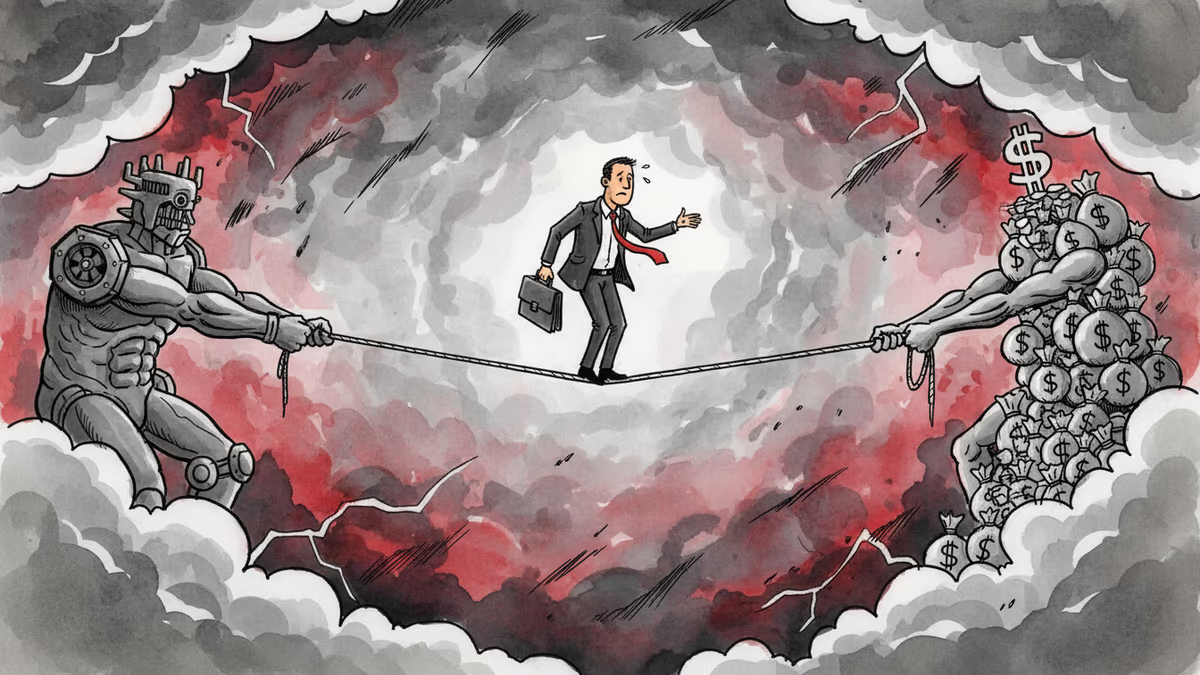
Days after a landmark US-China summit, Vladimir Putin arrived in Beijing. Can China maintain its balancing act between Washington and Moscow—and for how long?
Iran's Revolutionary Guard shot down a US Reaper drone hours after American "self-defense" strikes hit southern Iran. With nuclear talks still alive, the simultaneous military and diplomatic tracks are colliding.
Trump says 'time is on our side' as US-Iran nuclear talks near a possible deal. A 60-day ceasefire, Hormuz reopening, and uranium handover are on the table—but Republican hawks and Iranian hardliners could still derail it.
Trump says a US-Iran nuclear deal is 'largely negotiated.' Iran calls it a 'Persian-style peace.' Both sides claim victory. Here's what's actually at stake.
Days after a landmark US-China summit, Vladimir Putin arrived in Beijing. Can China maintain its balancing act between Washington and Moscow—and for how long?
Thoughts
Share your thoughts on this article
Sign in to join the conversation