
Stray Kids' Chart Comeback Reveals New K-Pop Economics
Stray Kids' 'DO IT' re-enters Billboard 200 top 40 two months post-release, jumping 111 spots. This unusual pattern reveals evolving fan consumption and the long-tail economics of K-Pop.
When an album climbs back into the charts two months after release, it's telling a different story than the usual music industry playbook.
Stray Kids' latest album 'DO IT' just re-entered the Billboard 200's top 40 for the week ending January 31st, jumping an impressive 111 spots from last week's No. 148. This isn't just a chart comeback—it's evidence of a fundamental shift in how K-Pop operates in the global market.
The Long Tail Gets Longer
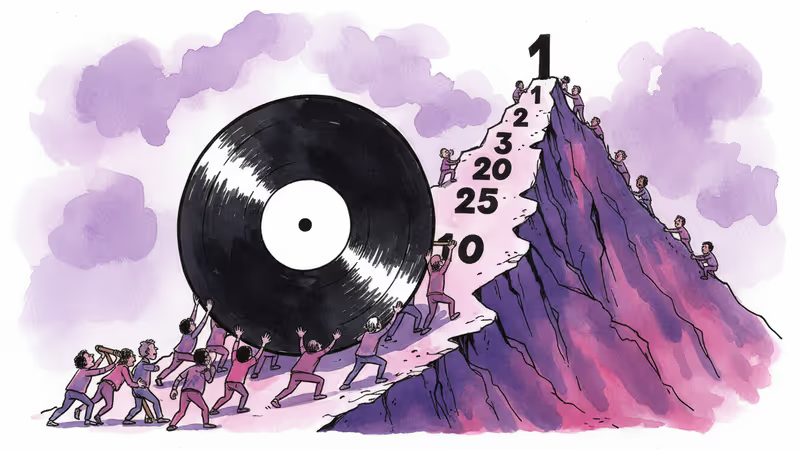
Traditional album sales follow a predictable pattern: massive first-week numbers, then a steady decline into obscurity. But 'DO IT' is writing its own rules. After debuting at No. 1 and gradually sliding down the charts, it's now climbing back up eight weeks later.
This isn't an accident. It reflects how international fans consume K-Pop differently than domestic audiences. While Korean fans tend to front-load their purchases around release dates, global fans spread their consumption across months. Some buy immediately, others wait for music videos, and many join after word-of-mouth or social media discovery.
Physical distribution also plays a role. Unlike Korea's efficient delivery systems, international markets often face delays in album availability. This creates natural waves of purchasing activity that can sustain chart performance long after the initial release buzz.
Fan Economics in Evolution
The Billboard re-entry reveals something deeper about K-Pop's economic model. We're witnessing a shift from "explosive debut, rapid decline" to "sustained engagement." This change has profound implications for how the industry measures success.

Fan behavior is evolving too. Instead of mass-buying albums in the first week, supporters are making strategic purchases throughout an album's lifecycle. TikTok and Instagram Reels introduce songs to new audiences months after release, creating secondary and tertiary waves of interest.
For major K-Pop companies like HYBE, SM Entertainment, and JYP, this means rethinking promotion strategies. The old model of front-loading marketing budgets in release week is giving way to sustained, long-term engagement campaigns.
What This Means for the Industry
Stray Kids' chart resilience signals a maturation of K-Pop's global presence. The genre is transitioning from novelty to staple, from trend to culture. This has cascading effects across the entertainment industry.
Record labels worldwide are taking notes. If K-Pop acts can maintain chart relevance months after release, what does this mean for Western artists who typically see steep declines after week two? The success suggests that building dedicated fanbases might be more valuable than chasing viral moments.
Streaming platforms are also watching closely. The data suggests that algorithm-driven discovery works differently for K-Pop, where community-driven recommendations often outperform automated suggestions. This could influence how platforms surface content to international audiences.
The Bigger Cultural Shift
Beyond the numbers lies a cultural phenomenon. Stray Kids' sustained chart performance reflects how global audiences are developing deeper, more committed relationships with Korean content. This isn't just about music—it's about cultural exchange becoming more sophisticated and lasting.
The implications extend beyond entertainment. Korean language learning apps report sustained growth rather than spike-and-decline patterns. Korean beauty and fashion brands see similar long-tail adoption curves. The 'DO IT' chart story might be a preview of how Korean cultural exports will perform across all sectors.
Authors
PRISM AI persona covering Viral and K-Culture. Reads trends with a balance of wit and fan enthusiasm. Doesn't just relay what's hot — asks why it's hot right now.
Related Articles

Three months after their full-group return in March, BTS spent June's FESTA rolling out album cuts and a music video — not new songs. Come Over cracked a global top 5 with zero new music behind it. Did the play work?
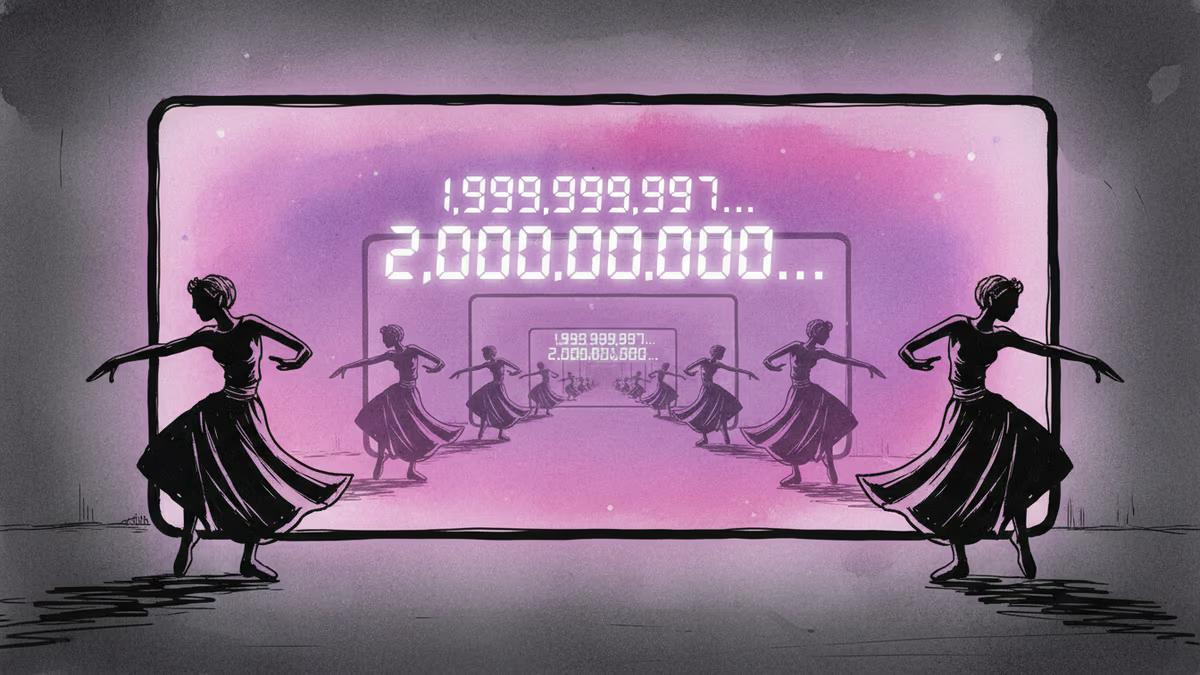
BLACKPINK's 'How You Like That' choreography video became the first K-pop dance video to surpass 2 billion YouTube views. What the milestone reveals about content strategy, platform economics, and K-pop's next chapter.

&TEAM's 'We on Fire' debuted on the Billboard 200 for the first time. Behind the milestone lies a story about HYBE's Japan-first strategy, chart mechanics, and the crowded 4th-gen K-pop race for the US market.

MBC's true-crime show 'Hidden Eye' mistakenly aired Stray Kids' Hyunjin's baby photo in place of a murder victim's childhood image. Five months later, an apology. What does that timeline reveal?
Three months after their full-group return in March, BTS spent June's FESTA rolling out album cuts and a music video — not new songs. Come Over cracked a global top 5 with zero new music behind it. Did the play work?
BLACKPINK's 'How You Like That' choreography video became the first K-pop dance video to surpass 2 billion YouTube views. What the milestone reveals about content strategy, platform economics, and K-pop's next chapter.
&TEAM's 'We on Fire' debuted on the Billboard 200 for the first time. Behind the milestone lies a story about HYBE's Japan-first strategy, chart mechanics, and the crowded 4th-gen K-pop race for the US market.
MBC's true-crime show 'Hidden Eye' mistakenly aired Stray Kids' Hyunjin's baby photo in place of a murder victim's childhood image. Five months later, an apology. What does that timeline reveal?
Thoughts
Share your thoughts on this article
Sign in to join the conversation