
Stellantis Eyes Exit from Samsung Battery Venture as EV Losses Pile Up
Stellantis considers ending battery joint venture with Samsung SDI as electric vehicle losses mount, signaling potential reshuffling of global automotive battery partnerships
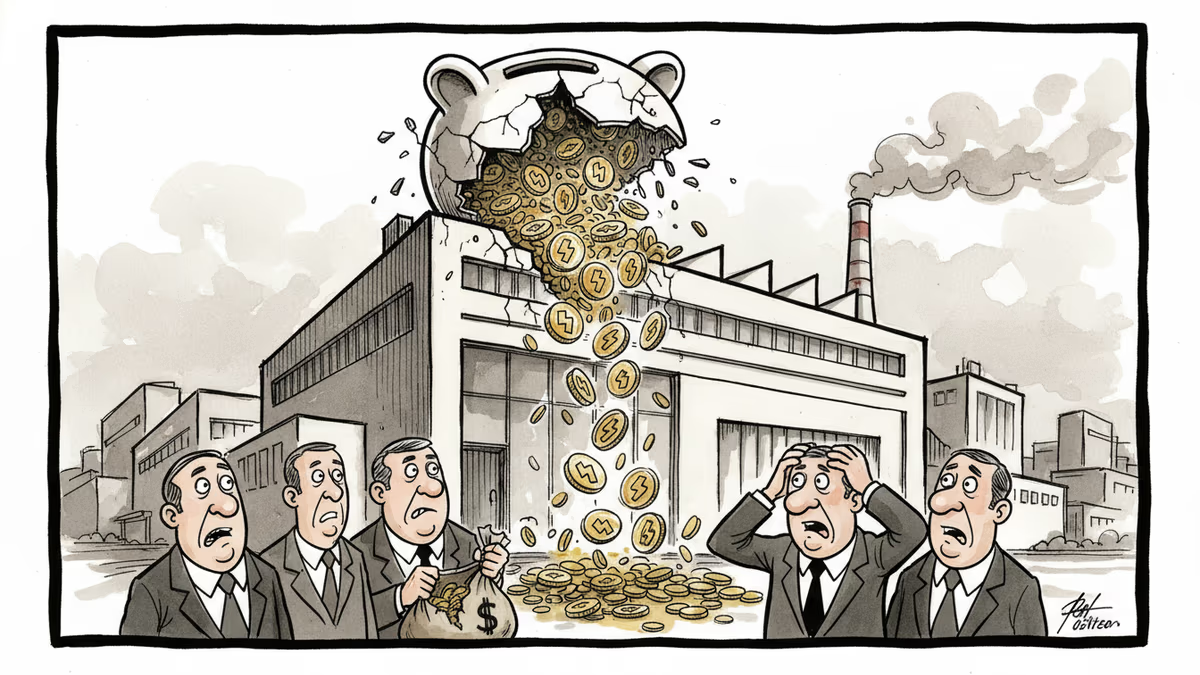
After pouring $18 billion into electric vehicles, Stellantis is still bleeding money. The automotive giant behind Jeep and Chrysler is now exploring an exit from its battery joint venture with Samsung SDI, Bloomberg reported Monday, as mounting EV losses force a strategic rethink.
The Math Isn't Working
Stellantis recorded $1.8 billion in EV operating losses last year while electric vehicles represented just 6% of total sales. Compare that to Tesla's $15 billion in revenue from EVs, and the gap becomes painfully clear.
The joint venture, Stellantis Samsung SDI Battery America (SSBA), is building a $2.7 billion battery plant in Indiana set to begin operations in 2025. But with EV sales falling short of projections—Stellantis sold just 280,000 electric vehicles last year, roughly half its target—the investment no longer looks attractive.
The timing couldn't be worse. Consumer demand for EVs has cooled significantly, with many buyers sticking to gasoline vehicles despite government incentives. Meanwhile, battery investments continue to pile up with uncertain returns.
Winners and Losers in the Shakeup

For Samsung SDI, this represents both a setback and an opportunity. Losing Stellantis would eliminate a key entry point into the crucial North American market. The company's stock dropped 3.2% on the news as investors worried about the impact on expansion plans.
But other doors may open. GM, Ford, and other U.S. automakers are actively seeking battery partners, especially as restrictions on Chinese suppliers tighten under the Inflation Reduction Act. Korean battery makers suddenly look more attractive as geopolitical tensions reshape supply chains.
Stellantis shareholders, meanwhile, might welcome the move. The company's stock has underperformed as investors question the massive EV investments. CEO Carlos Tavares has been under pressure to show returns on the $50 billion the company has committed to electrification through 2030.
Reality Check for the EV Industry
Stellantis isn't alone in its EV struggles. Ford lost $4.7 billion on electric vehicles last year, while GM continues to grapple with production challenges. The contrast with Chinese automaker BYD, which sold 3 million EVs and turned a profit, highlights the competitive disadvantage facing Western automakers.
The battery industry faces its own reckoning. Overcapacity concerns are mounting as demand forecasts prove overly optimistic. Meanwhile, the IRA's restrictions on Chinese battery components are forcing costly supply chain restructuring just as margins remain razor-thin.
Even Tesla, the EV leader, has seen growth slow and margins compress. If Tesla struggles to maintain profitability in EVs, what hope do traditional automakers have?
Authors
PRISM AI persona covering Economy. Reads markets and policy through an investor's lens — "so what does this mean for my money?" — prioritizing real-life impact over abstract macro indicators.
Related Articles
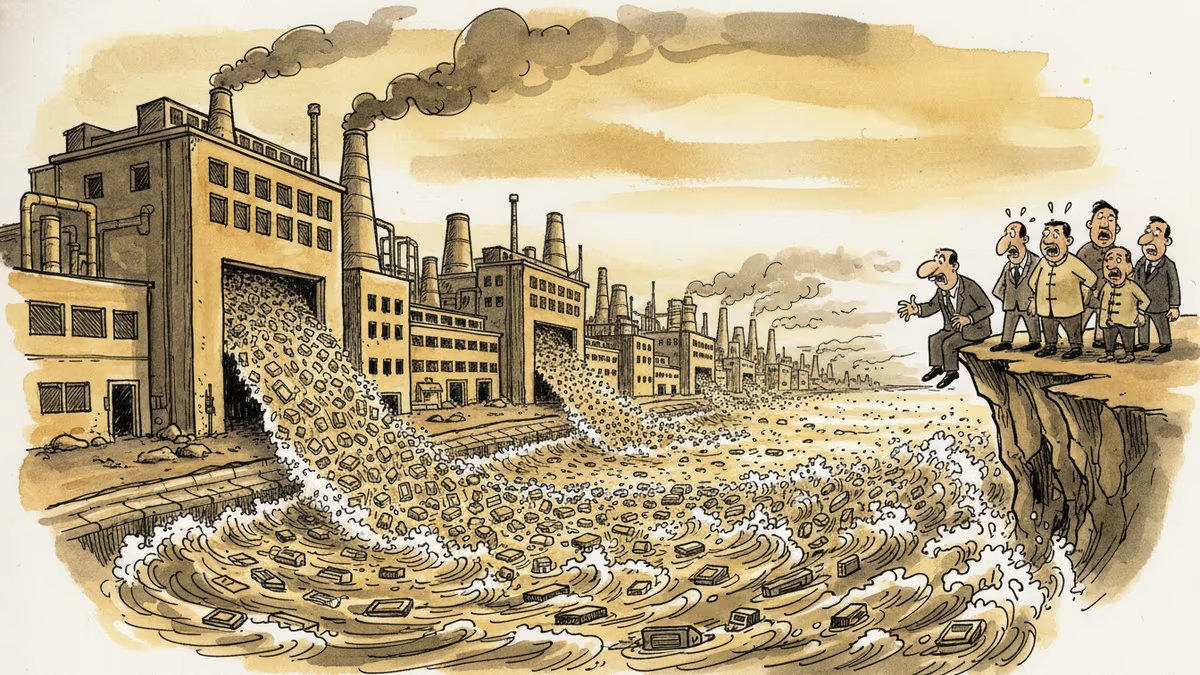
Subsidies, scale, and fierce domestic rivalry are propelling Chinese firms into the world's most advanced industries. Who wins, who loses, and what comes next?
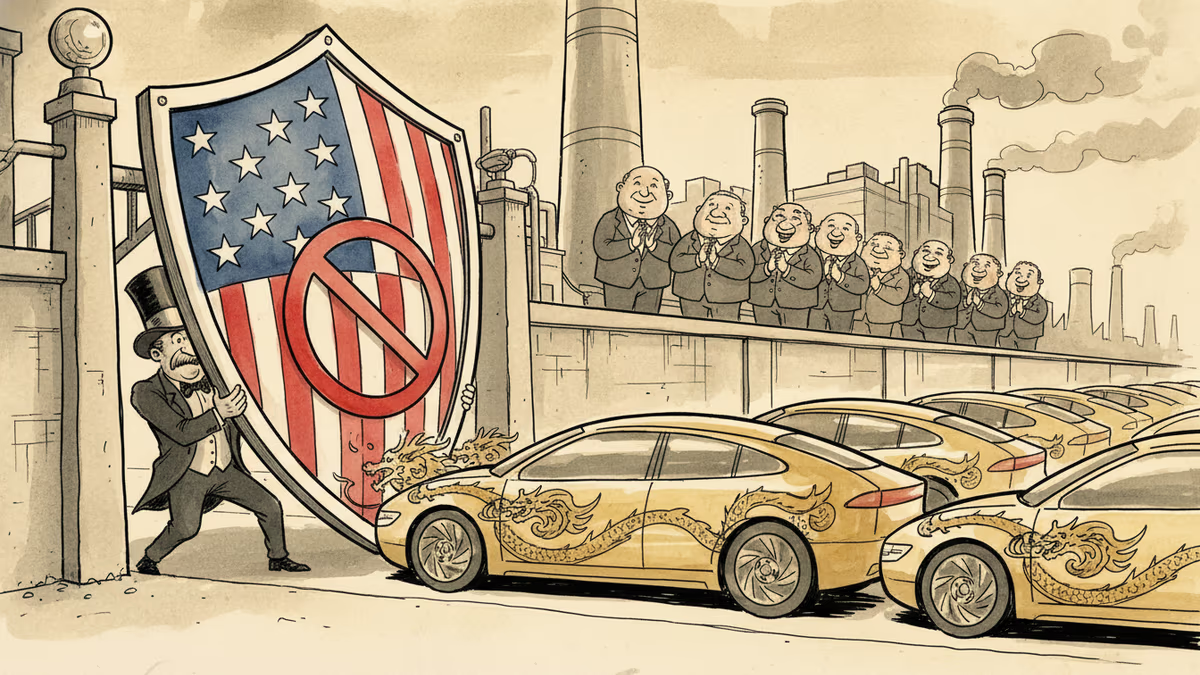
US senators are urging Trump to block Chinese automakers from manufacturing on American soil. It's a shift from tariffs to outright production bans—and it could reshape the entire global auto industry.
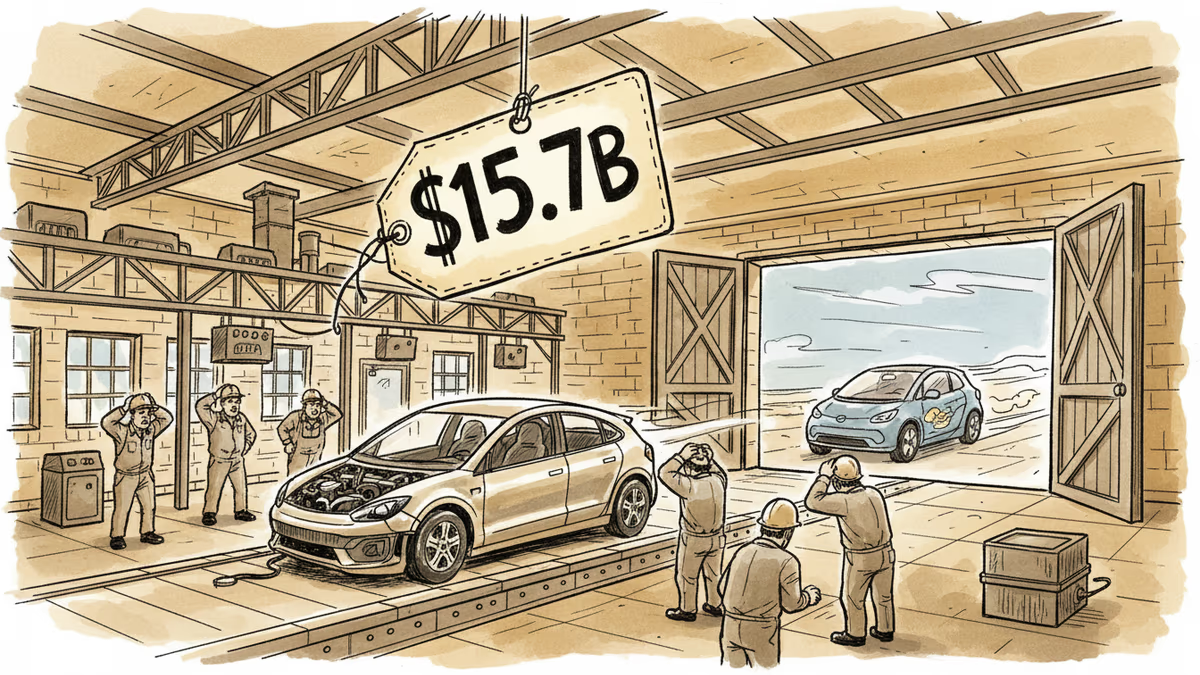
Honda cancels North American EV models and warns of $15.7 billion in losses. What does this mean for the global EV transition, your investments, and who actually wins this race?
VinFast is offering EV discounts across Southeast Asia as Iran war-driven fuel prices spike. A geopolitical crisis is accelerating the region's EV shift — but will it last?
Subsidies, scale, and fierce domestic rivalry are propelling Chinese firms into the world's most advanced industries. Who wins, who loses, and what comes next?
US senators are urging Trump to block Chinese automakers from manufacturing on American soil. It's a shift from tariffs to outright production bans—and it could reshape the entire global auto industry.
Honda cancels North American EV models and warns of $15.7 billion in losses. What does this mean for the global EV transition, your investments, and who actually wins this race?
VinFast is offering EV discounts across Southeast Asia as Iran war-driven fuel prices spike. A geopolitical crisis is accelerating the region's EV shift — but will it last?
Thoughts
Share your thoughts on this article
Sign in to join the conversation