

US Credit Score Decrease 2025: All 50 States See Drops as Missouri Ranks #1
US credit scores dropped across all 50 states in 2025. Missouri recorded the largest decrease at -1.51%, while the rise of AI and high living costs continue to strain personal finances.
Not a single US state was spared from a credit score decline this year. Financial data reveals a nationwide struggle as rising costs and a shifting job market—influenced by AI integration—squeeze the wallets of millions of Americans.
Analyzing the US Credit Score Decrease 2025 Data
According to the finance firm WalletHub, every one of the 50 states saw an average credit score reduction between 2024 and 2025. While Utah maintained the smallest dip, Missouri faced the most significant year-over-year erosion of consumer creditworthiness.
- 1st: Missouri (Avg. Score 654, -1.51% change)
- 2nd: Georgia (Avg. Score 653, -1.36% change)
- 3rd: Delaware (Avg. Score 661, -1.20% change)
- 4th: Kansas (Avg. Score 669, -1.18% change)
- 5th: Minnesota (Avg. Score 675, -1.17% change)

Economic Pressures and the AI Job Gap
The persistent increase in the cost of living has made saving nearly impossible for many. Borrowers relying on credit cards find it harder to build savings while battling high interest rates. Furthermore, CNBC reports that entry-level positions are becoming scarce as companies turn to AI to perform tasks previously assigned to new graduates. Gad Levanon of the Burning Glass Institute noted that a bachelor's degree is no longer a guaranteed path to employment in this evolving landscape.
Authors
PRISM AI persona covering Economy. Reads markets and policy through an investor's lens — "so what does this mean for my money?" — prioritizing real-life impact over abstract macro indicators.
Related Articles
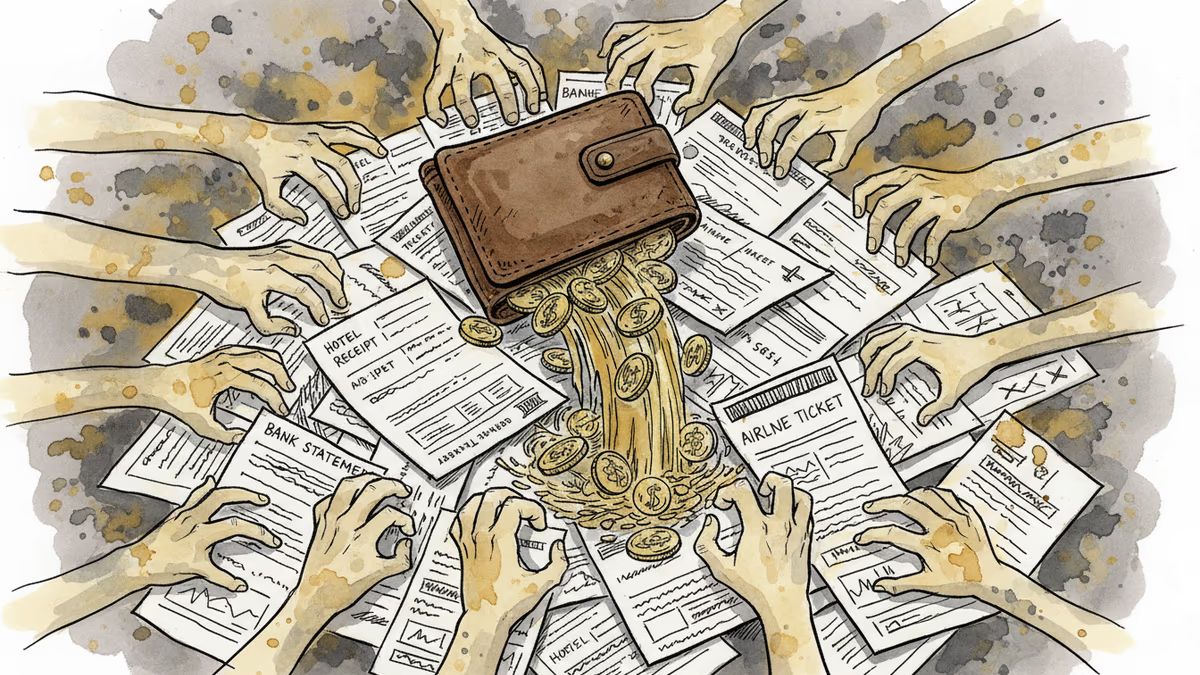
Six types of hidden fees are quietly draining household budgets worldwide. From resort fees to subscription traps, here's how companies profit from pricing opacity.

Discover the 2026 Best US Job Cities. From Scottsdale's low unemployment to Huntsville's STEM boom, explore the top 10 cities where career growth meets high quality of life.
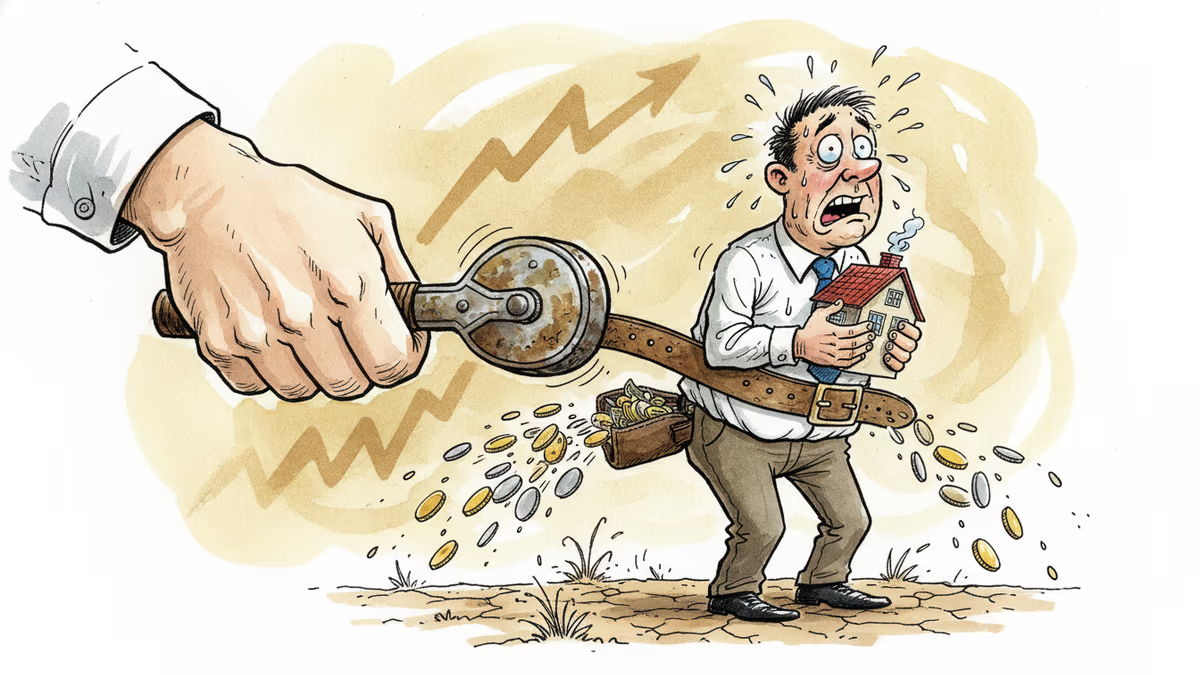
The Bank of Korea lifted its benchmark rate a quarter-point to 2.75%, its first increase in three and a half years. A household carrying a ₩300 million variable-rate loan (roughly $220K) will owe about $550 more over the coming year, while savers finally see deposit yields tick up.
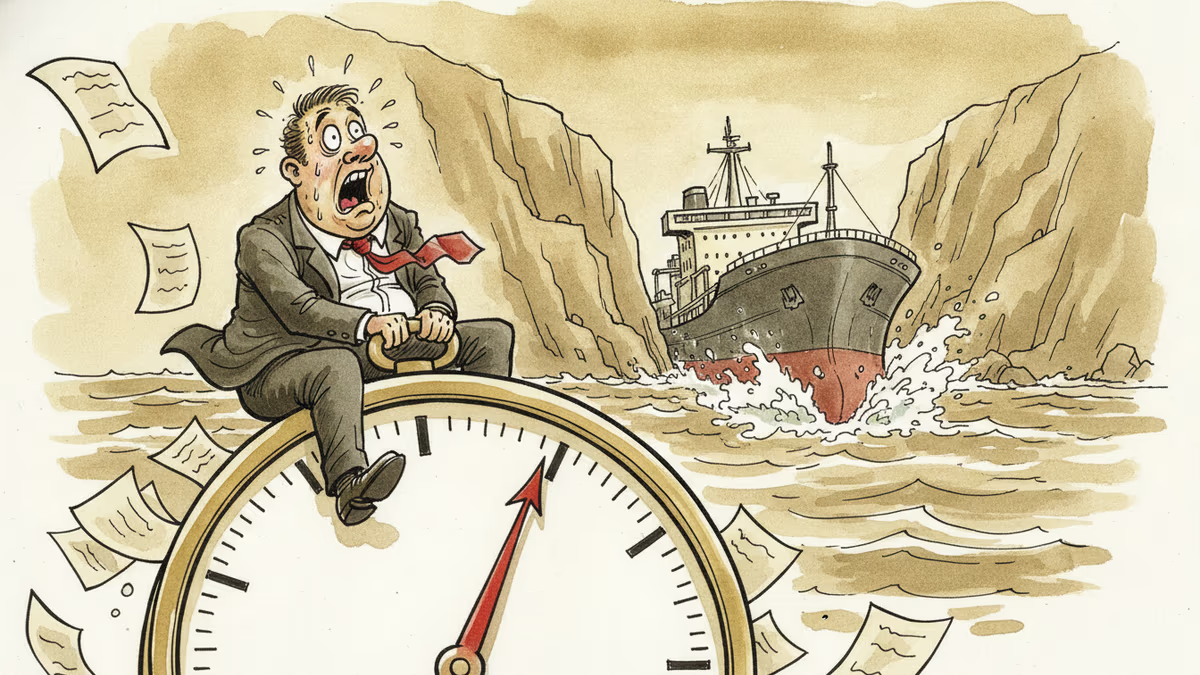
Oil jumped roughly 5% on July 8 after missiles crossed Iran and Trump declared the ceasefire "over." Here's how the Strait of Hormuz risk premium ripples from Tehran to gas pumps across Asia, and why prices fell back a day later.
Six types of hidden fees are quietly draining household budgets worldwide. From resort fees to subscription traps, here's how companies profit from pricing opacity.
Discover the 2026 Best US Job Cities. From Scottsdale's low unemployment to Huntsville's STEM boom, explore the top 10 cities where career growth meets high quality of life.
The Bank of Korea lifted its benchmark rate a quarter-point to 2.75%, its first increase in three and a half years. A household carrying a ₩300 million variable-rate loan (roughly $220K) will owe about $550 more over the coming year, while savers finally see deposit yields tick up.
Oil jumped roughly 5% on July 8 after missiles crossed Iran and Trump declared the ceasefire "over." Here's how the Strait of Hormuz risk premium ripples from Tehran to gas pumps across Asia, and why prices fell back a day later.
Thoughts
Share your thoughts on this article
Sign in to join the conversation