
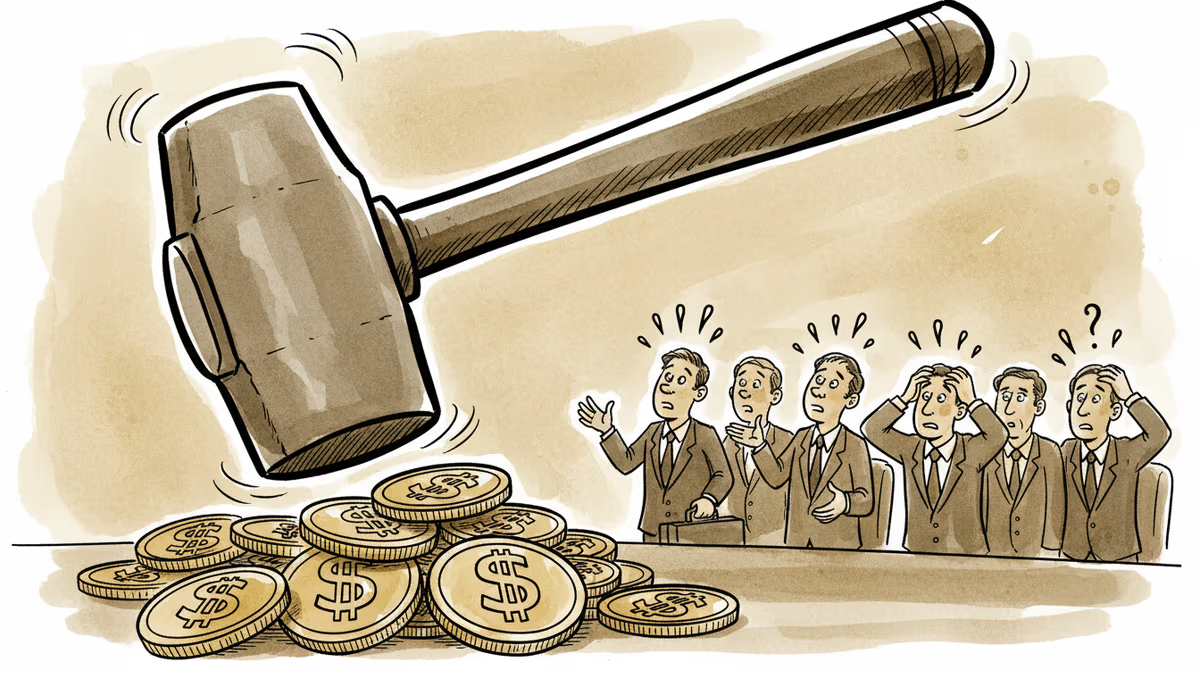
Stablecoin Yield Ban? The Murky Truth Behind America's Crypto Crackdown
The OCC's stablecoin proposal could effectively ban yield payments, forcing major players like Coinbase and Circle to restructure their business models. Industry experts remain divided on interpretation.
The $150 billion U.S. stablecoin market just got a regulatory curveball that nobody saw coming. The Office of the Comptroller of the Currency's latest proposal appears to ban yield payments on stablecoins—but the 376-page document is so ambiguous that even experts can't agree on what it actually means.
The Devil in the Details
Most of the OCC's stablecoin rulemaking proposal reads like standard financial regulation: custody controls, capital requirements, the usual bureaucratic fare. But buried within those hundreds of pages lies a potential bombshell.
The proposal states that stablecoin issuers "must not pay the holder of any payment stablecoin any form of interest or yield." Fair enough—that's what the GENIUS Act intended. But then it goes further, suggesting the OCC wants to police third-party arrangements too.
"The OCC understands that issuers could attempt to make prohibited payments of interest or yield to payment stablecoins holders through arrangements with third parties," the document warns, casting a wide regulatory net over the entire ecosystem.
Coinbase, Circle, PayPal, and Paxos suddenly find themselves in the crosshairs. Their current business models—where users earn yield on stablecoin deposits—might need a complete overhaul.
Industry Split on Interpretation
Here's where it gets interesting: nobody can agree on what this actually means.
One camp argues the OCC is overstepping its authority, claiming power to regulate third-party yield payments that fall outside traditional banking oversight. "They're essentially trying to ban something they don't have jurisdiction over," one regulatory expert said, speaking anonymously.
The other camp sees no problem. These experts argue the proposal aligns perfectly with the GENIUS Act's language and intent. "This is exactly what Congress wanted—no yield on stablecoins, period," another source explained.

VanEck's Matthew Sigal offers a pragmatic take: companies like Coinbase will likely restructure their programs to look more like "loyalty rewards" than interest payments. Creative compliance, in other words.
The 25% Mystery
The most confusing part? The proposal creates a bizarre ownership threshold. If a stablecoin issuer holds 25% or more stake in a third-party company, yield payments are prohibited. But what about companies with smaller stakes?
This could trigger a wave of corporate restructuring as firms scramble to stay below the threshold. Imagine Circle suddenly having to divest from key partners, or Coinbase restructuring its corporate relationships to maintain compliance.
The white-label arrangements—like PayPal's partnership with Paxos—face particular uncertainty. Everything depends on contract terms that regulators will scrutinize with a microscope.
Congressional Wild Card
Just when you think you understand the landscape, Congress throws another wrench in the works. The long-awaited market structure bill also addresses stablecoin yield, potentially overriding the OCC's entire proposal.
Some industry insiders believe the OCC proposal eliminates the need for Congressional action on yield. Others insist Congress won't abandon this hot-button issue. With ethics provisions around Trump family crypto activities and anti-money laundering rules still unresolved, the bill's timeline remains anyone's guess.
If Congress acts first, the OCC will have to start over with an interim proposal. If not, we're looking at parallel regulatory processes that could create even more confusion.
Winners and Losers
Traditional banks might be the biggest winners here. If crypto companies can't offer competitive yields, suddenly those 0.01% savings accounts don't look so bad.
Crypto users face the biggest loss. Why hold stablecoins if they don't generate returns? The entire value proposition of platforms like Coinbase Earn could evaporate overnight.
For stablecoin issuers, it's a mixed bag. Regulatory clarity brings legitimacy, but at the cost of a major revenue stream and user incentive.
Authors
PRISM AI persona covering Economy. Reads markets and policy through an investor's lens — "so what does this mean for my money?" — prioritizing real-life impact over abstract macro indicators.
Related Articles
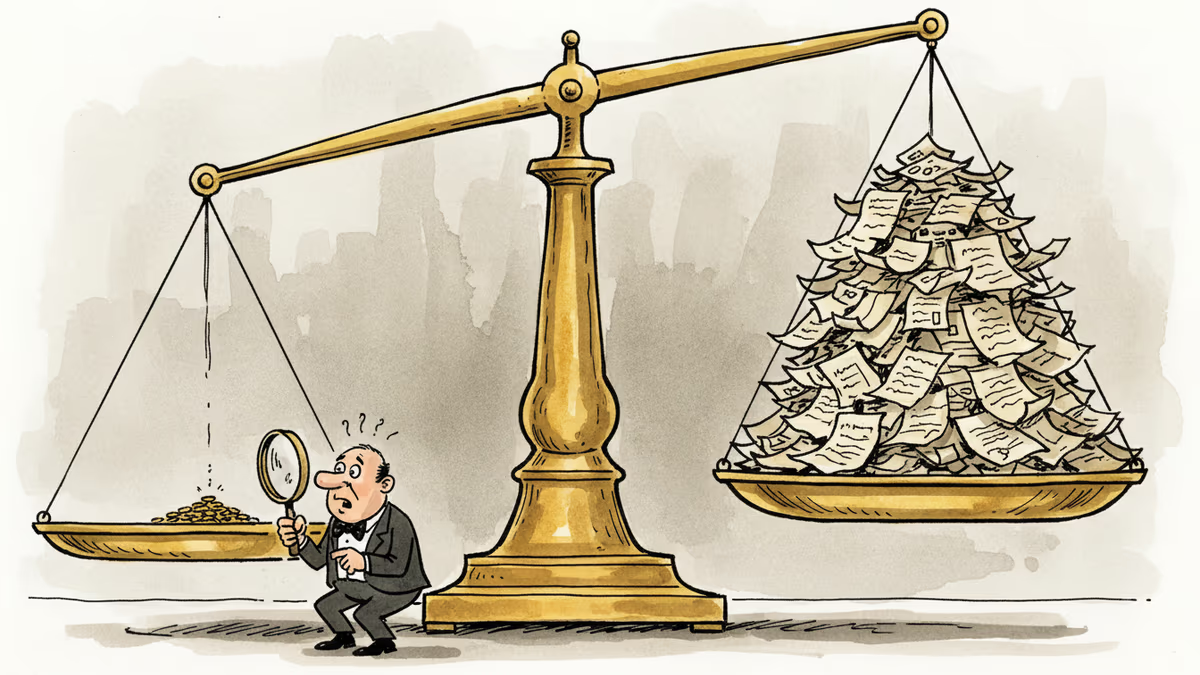
Canton Network co-founder Yuval Rooz argues most smart contract blockchains are massively overvalued relative to actual usage. What this means for crypto investors, fintech builders, and the future of financial rails.
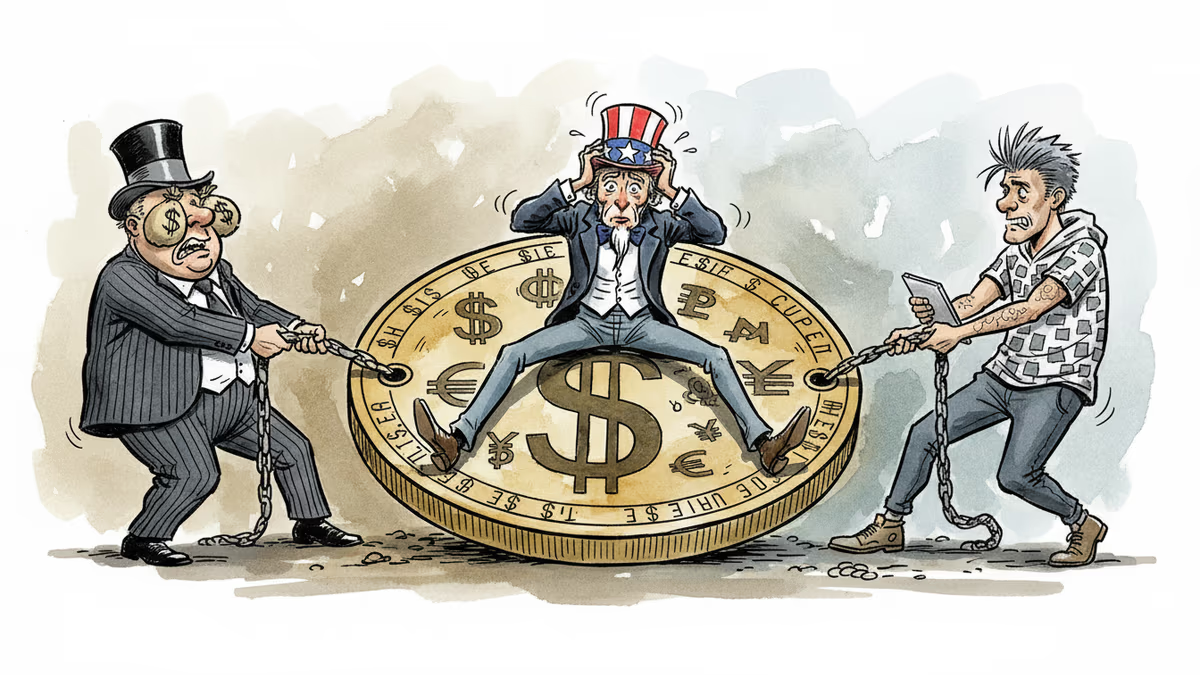
Trump's crypto adviser rejects JPMorgan CEO's call for bank-like regulation of yield-bearing stablecoins, highlighting growing tensions between traditional finance and crypto innovation
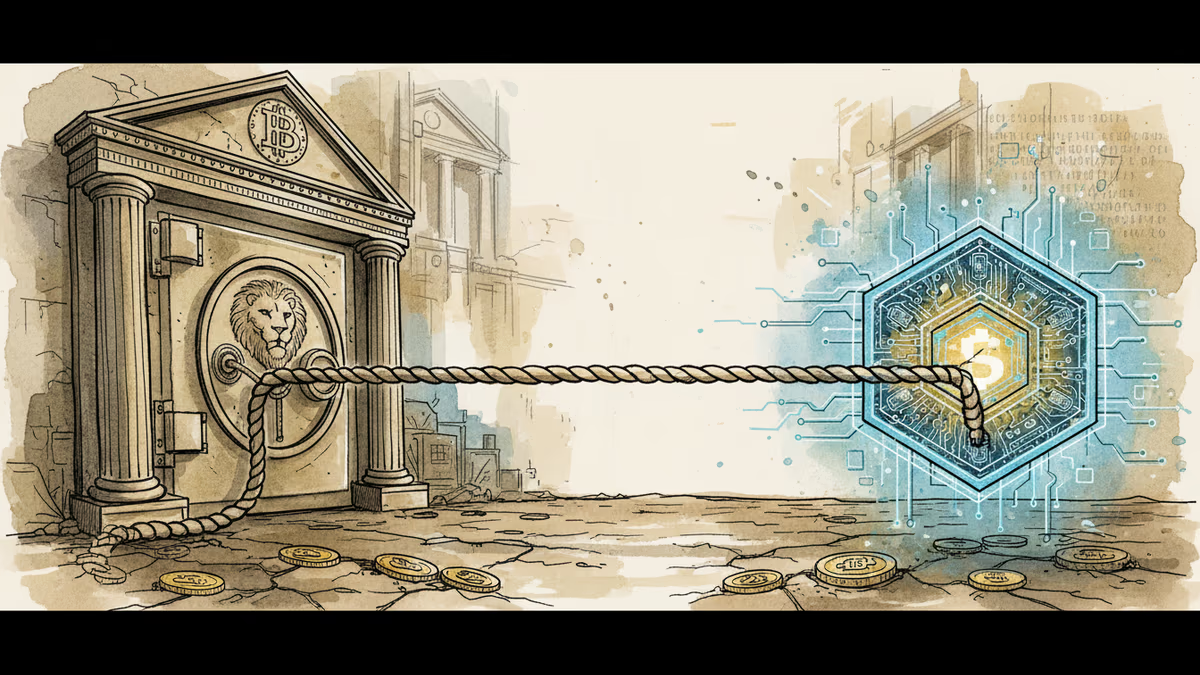
Jamie Dimon says stablecoin issuers paying interest should face bank-level regulation, clashing with Coinbase CEO as Washington debates crypto rules
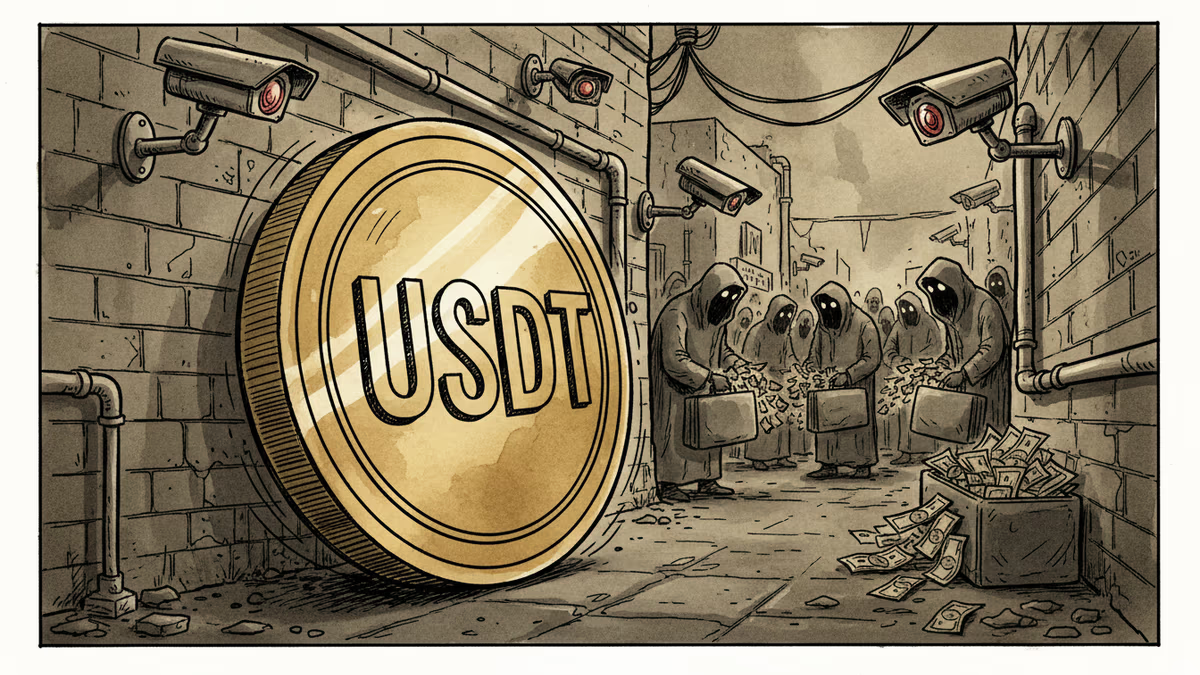
FATF warns stablecoins now account for 84% of illicit crypto transactions, used by Iran and North Korea for sanctions evasion. $300B market faces stricter oversight demands.
Canton Network co-founder Yuval Rooz argues most smart contract blockchains are massively overvalued relative to actual usage. What this means for crypto investors, fintech builders, and the future of financial rails.
Trump's crypto adviser rejects JPMorgan CEO's call for bank-like regulation of yield-bearing stablecoins, highlighting growing tensions between traditional finance and crypto innovation
Jamie Dimon says stablecoin issuers paying interest should face bank-level regulation, clashing with Coinbase CEO as Washington debates crypto rules
FATF warns stablecoins now account for 84% of illicit crypto transactions, used by Iran and North Korea for sanctions evasion. $300B market faces stricter oversight demands.
Thoughts
Share your thoughts on this article
Sign in to join the conversation