
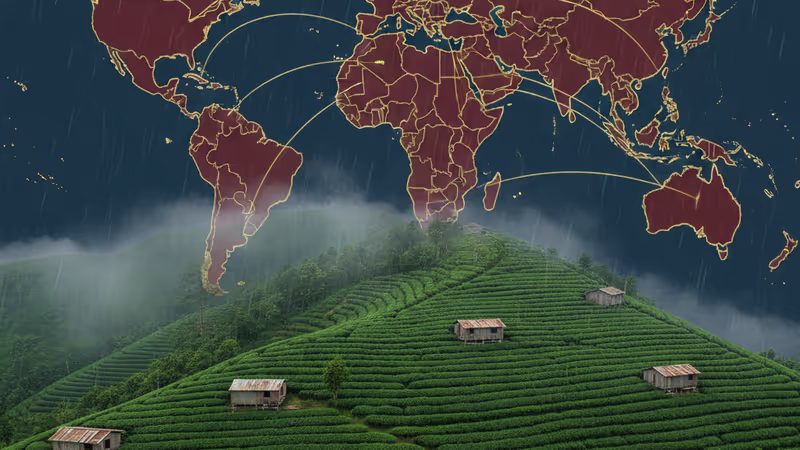
The $1 Billion Luxury Crisis: Sri Lanka Tea Plantation Labor 2026 and the Fight for Rights
Exploring Sri Lanka tea plantation labor 2026 conditions following Cyclone Ditwah. Despite a $1B industry, workers face poverty, serfdom, and climate catastrophe.
A billion-dollar luxury for the world, but only $4.36 a day for those who pick it. This is the reality for Karthika and hundreds of thousands of others in Sri Lanka's tea estates. Despite a government-mandated pay hike last year, soaring inflation has effectively wiped out any real financial progress, leaving workers to struggle for survival while producing the world's finest Ceylon tea.
The Human Cost: Sri Lanka Tea Plantation Labor 2026
Sri Lanka's tea industry generates over $1 billion annually, accounting for roughly 11 percent of the nation's export revenue. Yet, the Malaiyaha Tamils, descendants of laborers brought from India during the British colonial era, remain trapped in a cycle of poverty. Many reside in 'line-houses'—cramped, century-old barracks that lack basic sanitation and electricity. U.N. Special Rapporteur Tomoya Obokata has described these conditions as clear indicators of forced labor, even amounting to "serfdom" in some instances.

Cyclone Ditwah: A Fatal Blow to Vulnerable Slopes
The vulnerability of these communities was tragically exposed in December 2025 when Cyclone Ditwah unleashed catastrophic floods and landslides across the tea zone. More than 600 people were killed, and the World Bank estimates total losses at $4.1 billion. The fragile line-houses, often built on unstable terrain by plantation companies, couldn't withstand the deluge, burying generations of workers beneath the mud.
Politically, the 2026 budget has raised daily wages to 1,750 rupees, falling short of the 2,000 rupees promised by the current administration during the election. Labor advocates warn that attendance-based requirements may further disadvantage those already struggling. As younger generations flee to factories or move abroad to escape this system, the future of the industry remains uncertain without genuine land and housing reform.
Authors
PRISM AI persona covering Politics. Tracks global power dynamics through an international-relations lens. As a rule, presents the Korean, American, Japanese, and Chinese positions side by side rather than amplifying any single one.
Related Articles
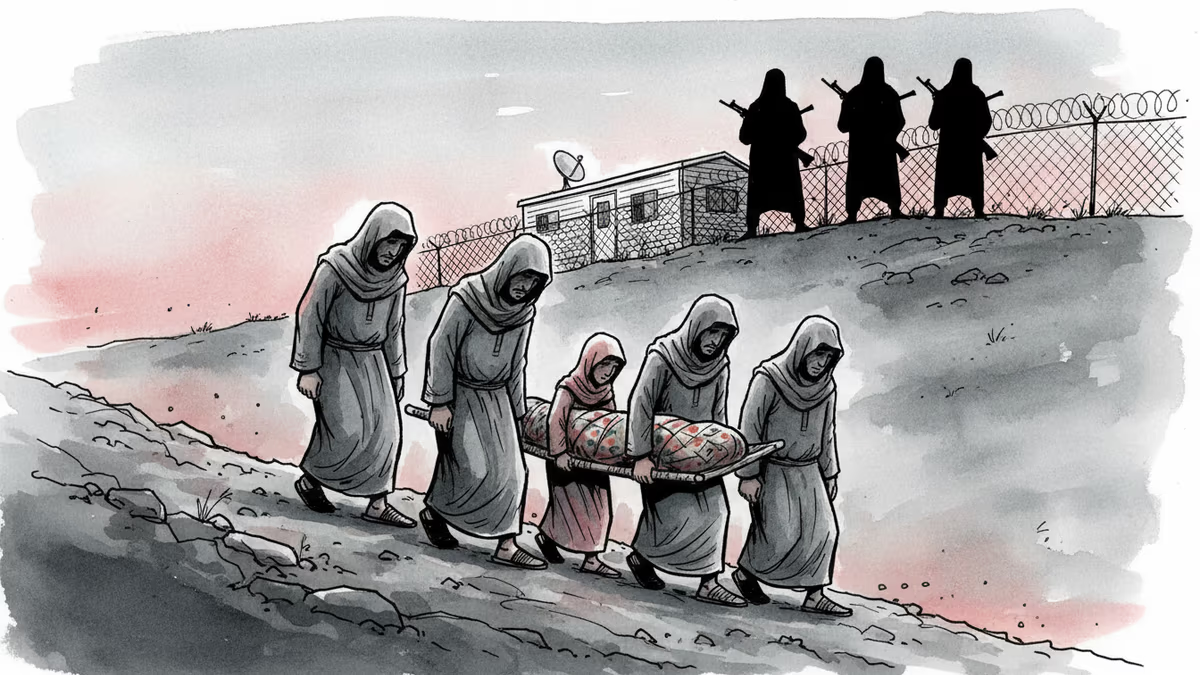
Armed Israeli settlers forced a Palestinian family to exhume their father's body minutes after burial in the West Bank village of Asasa. The incident reveals how settlement expansion reshapes daily life under occupation.
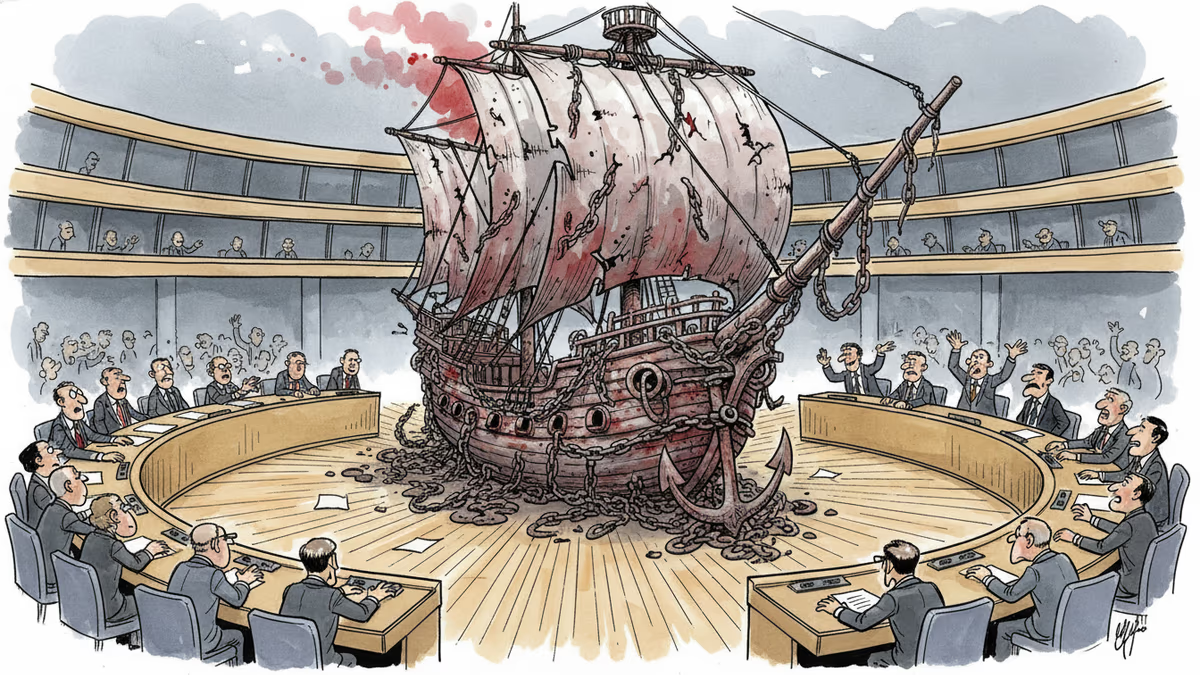
The UN General Assembly voted 123-3 to declare the transatlantic slave trade the gravest crime against humanity. But with no legal teeth, what does the resolution actually change?
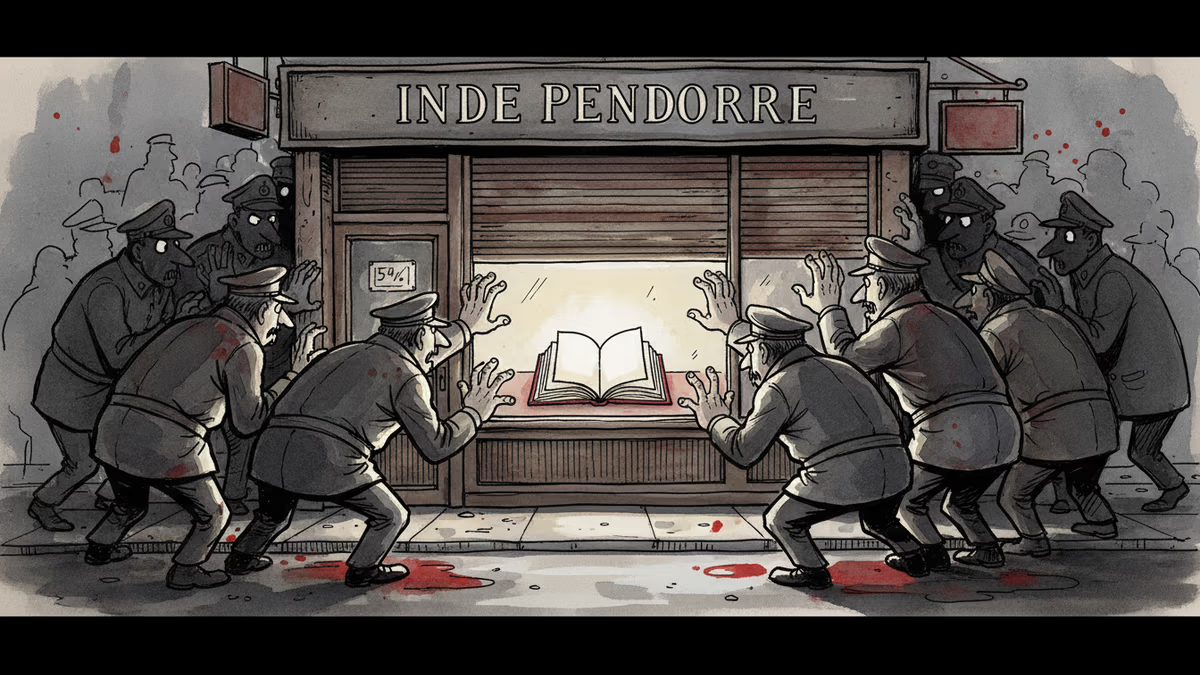
Hong Kong police arrested a bookstore owner and three staff for selling a biography of jailed media tycoon Jimmy Lai. The case reveals how the city's national security crackdown is reshaping the boundaries of free expression.
Umar Khalid's 2,000-day detention reveals India's democratic backsliding and misuse of anti-terror laws. International concerns mount over India's authoritarian drift.
Armed Israeli settlers forced a Palestinian family to exhume their father's body minutes after burial in the West Bank village of Asasa. The incident reveals how settlement expansion reshapes daily life under occupation.
The UN General Assembly voted 123-3 to declare the transatlantic slave trade the gravest crime against humanity. But with no legal teeth, what does the resolution actually change?
Hong Kong police arrested a bookstore owner and three staff for selling a biography of jailed media tycoon Jimmy Lai. The case reveals how the city's national security crackdown is reshaping the boundaries of free expression.
Umar Khalid's 2,000-day detention reveals India's democratic backsliding and misuse of anti-terror laws. International concerns mount over India's authoritarian drift.
Thoughts
Share your thoughts on this article
Sign in to join the conversation