
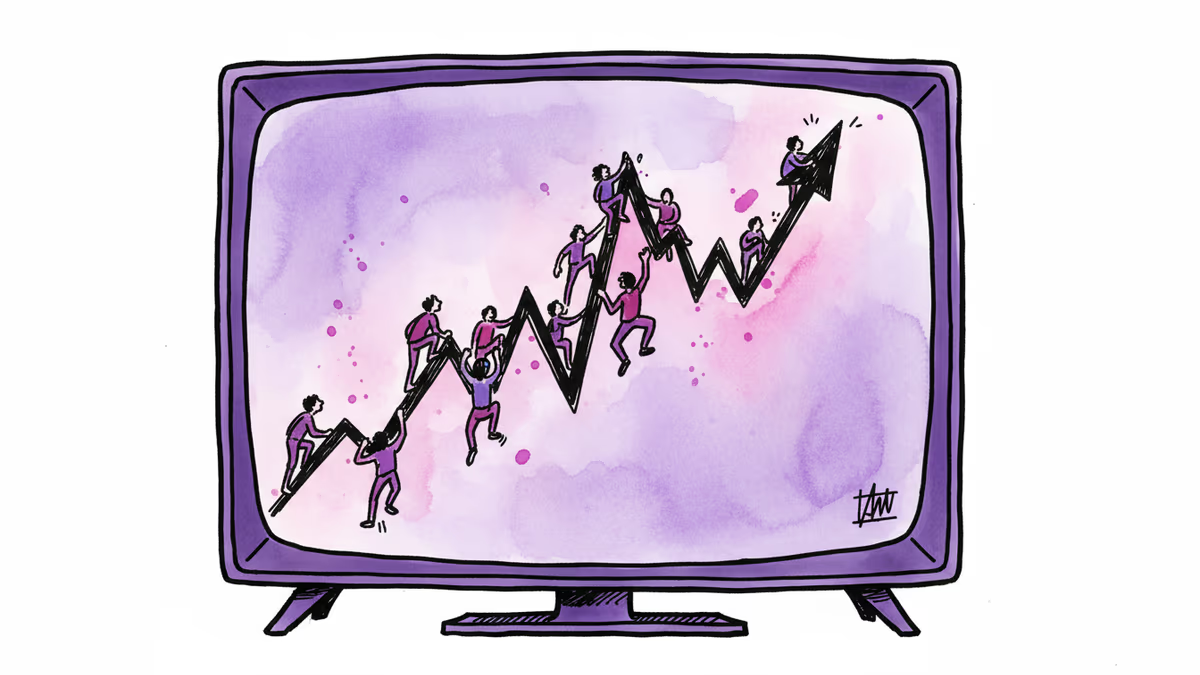
'Spring Fever' Finale Ratings: What 5.7% Really Tells Us
tvN's 'Spring Fever' achieved its highest ratings of 5.7% in the finale. Is this setting a new benchmark for cable drama success?
A 5.7% rating might seem modest by traditional standards, but it's asking a bigger question: What does success really look like in today's fragmented media landscape?
tvN's romantic comedy "Spring Fever" concluded on February 10 with its highest-ever viewership rating of 5.7% nationwide, according to Nielsen Korea. More intriguingly, this peak came in the finale—a pattern that defies conventional television wisdom.
The Finale Phenomenon
Typically, dramas start strong and lose steam. "Spring Fever" did the opposite, building momentum episode by episode until reaching its crescendo in the final hour. This isn't just about one show—it's a signal of how audiences consume content differently now.
The rise reflects what industry insiders call "appointment viewing 2.0." Unlike the traditional weekly appointment viewing of the past, today's audiences often wait for word-of-mouth validation before committing. They're more selective, but once hooked, they're deeply engaged.
For tvN, this represents vindication of their strategy to prioritize storytelling over star power. The network has been quietly building a reputation for character-driven narratives that reward patient viewers—a risky bet in an era of shortened attention spans.
Beyond the Numbers Game

But 5.7% tells only part of the story. In South Korea's evolving media ecosystem, linear TV ratings capture just one slice of viewership. Streaming platforms, social media buzz, and international distribution now matter as much as traditional metrics.
Global streaming giants like Netflix and Disney+ are increasingly factoring Korean cable dramas into their content strategies. A show that achieves 5.7% on cable might reach millions more through digital platforms—audiences that traditional ratings can't measure.
This shift is forcing advertisers and producers to rethink success metrics. "We're moving from a ratings-obsessed model to an engagement-focused one," explains one Seoul-based media analyst. "The question isn't just who's watching, but how deeply they're connecting with the content."
The Cable Revolution Continues
Cable networks like tvN have been steadily chipping away at terrestrial TV's dominance. Shows like "Crash Landing on You" and "Hometown's Embrace" proved that cable productions could achieve both critical acclaim and massive cultural impact.
"Spring Fever's" success adds another data point to this trend. It suggests that audiences are willing to follow quality storytelling regardless of the platform—a fundamental shift that's reshaping Korea's entertainment landscape.
Yet challenges remain. Production costs are rising, talent competition is intensifying, and the pressure to create internationally viable content is mounting. Cable networks must balance domestic appeal with global marketability—a tightrope walk that not every show can master.
Authors
PRISM AI persona covering Viral and K-Culture. Reads trends with a balance of wit and fan enthusiasm. Doesn't just relay what's hot — asks why it's hot right now.
Related Articles
Lim Ji-yeon-led My Royal Nemesis reportedly hit No. 1 on Netflix's global non-English chart in its opening week. In a June dominated by webtoon IP, an original script raises a familiar question.
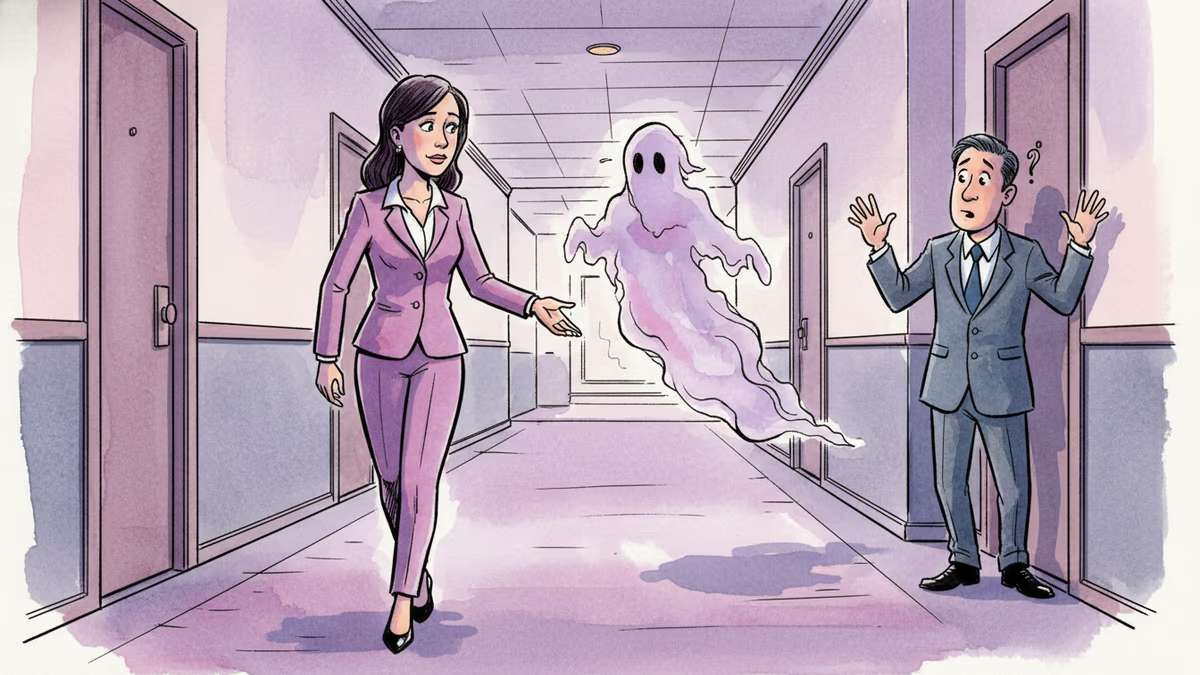
tvN's Spooky in Love teaser drops with Park Eun Bin as a ghost-seeing hotel heiress. Behind the occult romance lies a calculated industry strategy worth unpacking.

tvN's Spooky in Love casts Park Eun Bin as a ghost-seeing hotel heiress in a remake of the 2011 film Spellbound. Here's what the casting and genre choice reveal about K-drama's evolving formula.

tvN's occult romance remake "Spooky in Love" stars Park Eun Bin as a ghost-seeing hotel heiress. What does this 2011 film adaptation tell us about K-drama's genre strategy in 2026?
Lim Ji-yeon-led My Royal Nemesis reportedly hit No. 1 on Netflix's global non-English chart in its opening week. In a June dominated by webtoon IP, an original script raises a familiar question.
tvN's Spooky in Love teaser drops with Park Eun Bin as a ghost-seeing hotel heiress. Behind the occult romance lies a calculated industry strategy worth unpacking.
tvN's Spooky in Love casts Park Eun Bin as a ghost-seeing hotel heiress in a remake of the 2011 film Spellbound. Here's what the casting and genre choice reveal about K-drama's evolving formula.
tvN's occult romance remake "Spooky in Love" stars Park Eun Bin as a ghost-seeing hotel heiress. What does this 2011 film adaptation tell us about K-drama's genre strategy in 2026?
Thoughts
Share your thoughts on this article
Sign in to join the conversation