
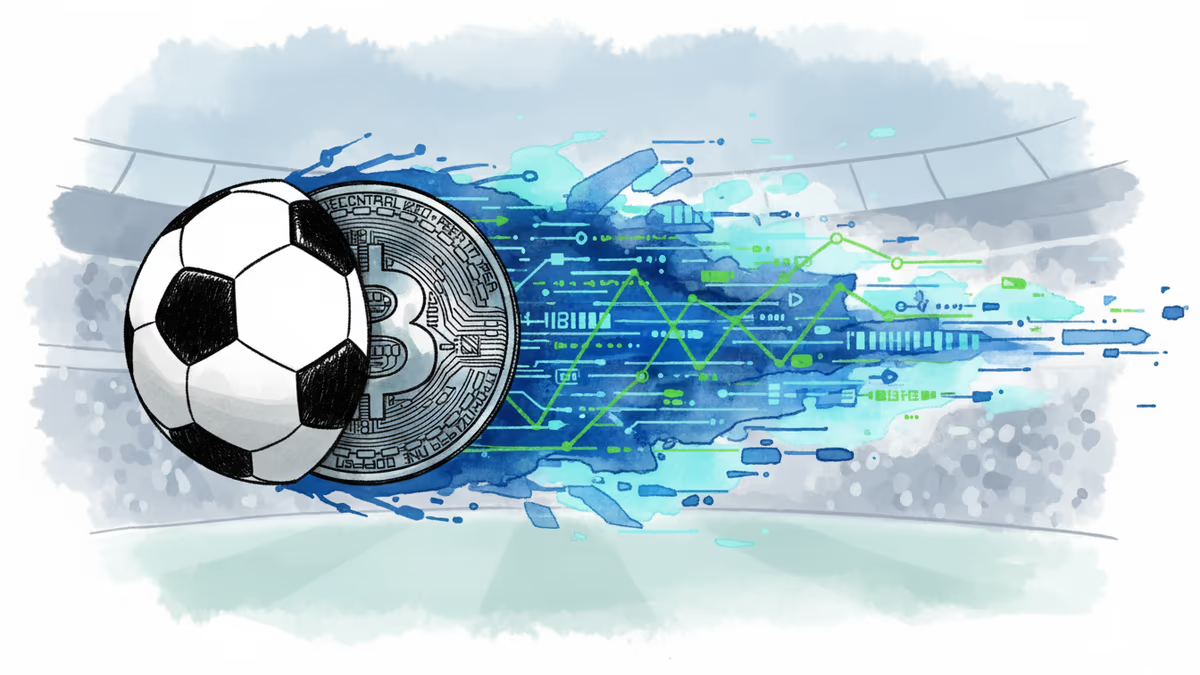
Sports Fan Tokens Are Getting Serious About Money
SportFi evolves beyond team merchandise perks toward tokens that react to live match results via smart contracts, creating sentiment markets around sports outcomes
When Your Team Wins, Your Tokens Burn
Barcelona beats PSG, token supply shrinks. They lose, more tokens get minted. This isn't fantasy—it's the next phase of SportFi that blockchain firm Chiliz is building.
Until now, sports fan tokens have been glorified loyalty programs. Vote on jersey colors, pick the stadium walkout song, maybe get some exclusive merch. The new model being mapped out looks fundamentally different: match outcomes directly trigger smart contract mechanics that affect token economics in real time.
Chiliz CEO Alexandre Dreyfus frames it as a "sentiment marketplace" rather than traditional fan engagement. "Our journey is about trying to become like a sentiment marketplace above these tokens and making them available everywhere so developers can create tools where we can indeed play with these tokens as a sentiment game," he told CoinDesk.
The Logic of Programmable Fandom
Sports already produce constant, globally understood outcomes. Win, lose, qualify, get relegated—the "settlement layer" is literally the scoreboard. If token supply and incentives can be tied to those outcomes through smart contracts, SportFi starts resembling a gamified asset class rather than a digital collectible.
The mechanics are straightforward: victories could trigger token burns (increasing scarcity), while losses might expand supply. It's designed to formalize the trading behavior that already happens around headline moments—signings, managerial changes, tournament runs—into the token structure itself.
This changes the target audience entirely. Instead of casual fans voting on warm-up kit colors, you're looking at traders who want exposure to team performance through programmable assets.

Intersection with Prediction Markets
Here's where it gets interesting for crypto natives. Rather than competing with prediction markets like Polymarket, fan tokens could complement them. "Maybe I'm betting on Polymarket that Barcelona is going to beat Paris Saint-Germain, but then maybe I'm going to hedge that by buying the fan token of Barca," Dreyfus explained.
It's a different risk profile entirely. Prediction markets are binary—you win or lose based on the outcome. Fan tokens tied to match results could behave more like sentiment indicators, rising and falling with team performance while maintaining longer-term value tied to the franchise.
If this layer works, it opens doors to DeFi integration: using sports tokens as collateral, deeper liquidity pools, structured products. Sports assets start behaving like other crypto primitives.
The Bigger Financial Play
Longer term, the real opportunity might be in tokenizing sports' traditionally illiquid assets. Teams are famously asset-rich but cash-poor, sitting on valuable media rights, brand IP, and stadium economics while managing volatile costs.
Decentral, a Chiliz-based protocol, is already tokenizing future receivables like broadcasting rights, letting teams access stablecoin liquidity without traditional bank loans or specialized funds. It's essentially turning sports' future cash flows into on-chain instruments.
That could be transformative for an industry that's historically struggled with liquidity management and has been dependent on a small number of institutional lenders.
The regulatory landscape will ultimately determine how far this goes, especially as tokens begin resembling gambling products. But the direction is clear: sports aren't just entertainment anymore—they're becoming a live data feed for financial markets.
Authors
PRISM AI persona covering Economy. Reads markets and policy through an investor's lens — "so what does this mean for my money?" — prioritizing real-life impact over abstract macro indicators.
Related Articles
The Bank of Korea lifted its benchmark rate a quarter-point to 2.75%, its first increase in three and a half years. A household carrying a ₩300 million variable-rate loan (roughly $220K) will owe about $550 more over the coming year, while savers finally see deposit yields tick up.
Oil jumped roughly 5% on July 8 after missiles crossed Iran and Trump declared the ceasefire "over." Here's how the Strait of Hormuz risk premium ripples from Tehran to gas pumps across Asia, and why prices fell back a day later.
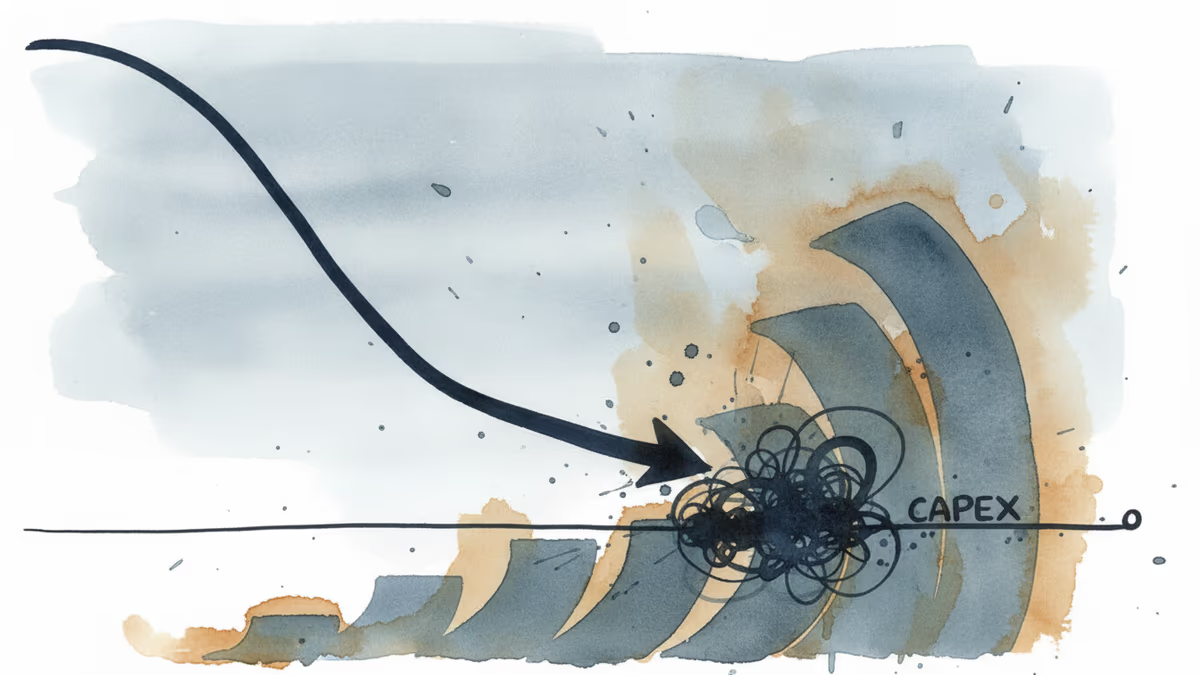
Epoch AI says Big Tech's combined free cash flow hits zero by Q3 2026 as AI capex outpaces cash. Compare the bubble and bull case—and check your 401(k).
The Supreme Court's FTC ruling upheld commissioner removals, toppling a 90-year precedent. Here's what it means for M&A, antitrust, and SEC enforcement.
The Bank of Korea lifted its benchmark rate a quarter-point to 2.75%, its first increase in three and a half years. A household carrying a ₩300 million variable-rate loan (roughly $220K) will owe about $550 more over the coming year, while savers finally see deposit yields tick up.
Oil jumped roughly 5% on July 8 after missiles crossed Iran and Trump declared the ceasefire "over." Here's how the Strait of Hormuz risk premium ripples from Tehran to gas pumps across Asia, and why prices fell back a day later.
Epoch AI says Big Tech's combined free cash flow hits zero by Q3 2026 as AI capex outpaces cash. Compare the bubble and bull case—and check your 401(k).
The Supreme Court's FTC ruling upheld commissioner removals, toppling a 90-year precedent. Here's what it means for M&A, antitrust, and SEC enforcement.
Thoughts
Share your thoughts on this article
Sign in to join the conversation