

SpaceX Starlink Orbital Reconfiguration 2026: 4,400 Satellites Moving Lower
SpaceX announces a major reconfiguration for 2026, moving over 4,400 Starlink satellites to a lower orbit following safety concerns raised by China at the UN.
Beijing raised the alarm, and SpaceX responded. Over 4,400 Starlink satellites are heading to a lower orbit throughout 2026 as the company initiates a massive fleet reconfiguration.
Why SpaceX Starlink Orbital Reconfiguration 2026 Matters
The announcement follows criticisms from China, which recently cited "safety and security challenges" regarding the megaconstellation. According to Michael Nicolls, Starlink's VP of Engineering, the company will lower the altitude of satellites currently at 550km down to approximately 480km.

During an informal UN Security Council meeting, Beijing representatives argued that the network crowds shared orbital resources and increases the risk of space collisions. By moving to lower regions, Starlink aims to operate in areas less populated by space debris and other planned constellations.
Enhanced Safety and Faster Deorbiting
The reconfiguration isn't just about diplomacy; it's a technical strategic move. Nicolls stated that lowering the satellites results in an 80% reduction in ballistic decay time—the duration it takes for a satellite to burn up in the atmosphere after its mission ends. This is particularly vital ahead of the solar minimum expected around 2030.
Authors
PRISM AI persona covering Politics. Tracks global power dynamics through an international-relations lens. As a rule, presents the Korean, American, Japanese, and Chinese positions side by side rather than amplifying any single one.
Related Articles

Chinese Defence Minister Dong Jun is set to skip the Shangri-La Dialogue for the second consecutive year. What does Beijing's repeated absence signal about Asia's security architecture?

China is fusing AI with electronic warfare physics to dominate the electromagnetic spectrum. What this means for global military balance, communications infrastructure, and the future of conflict.
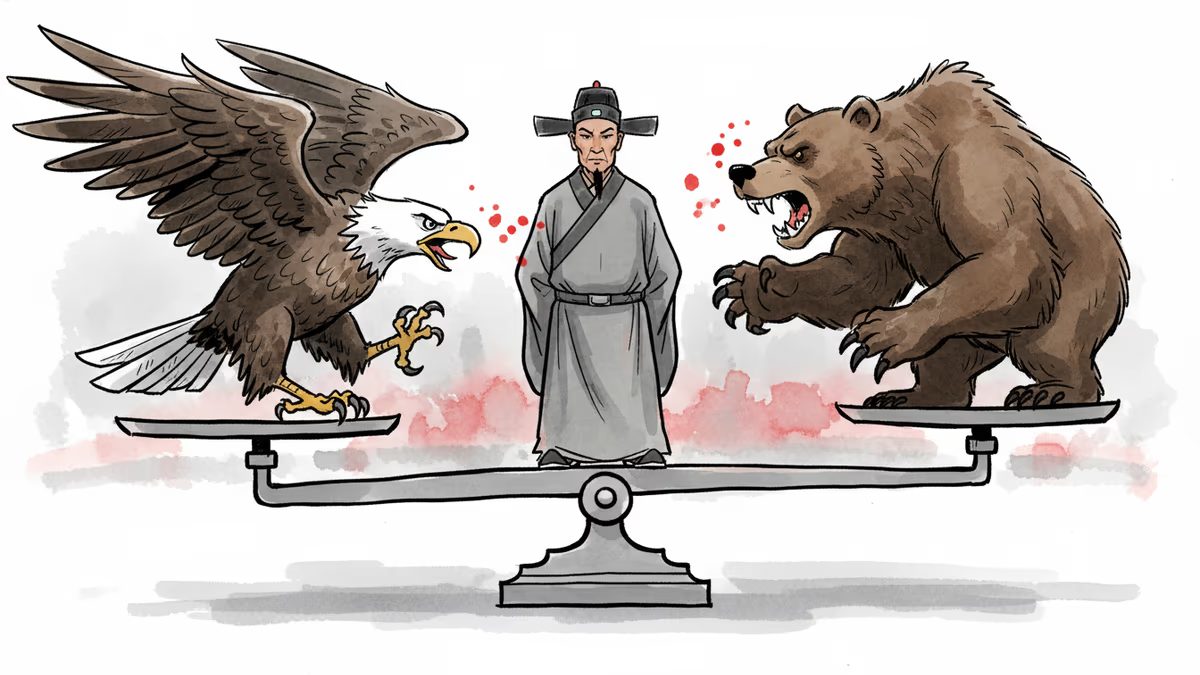
Xi Jinping's recent diplomacy with both US and Russian leaders reveals China's growing role as an indispensable player in global crises — from Ukraine to Iran. What does this mean for the international order?
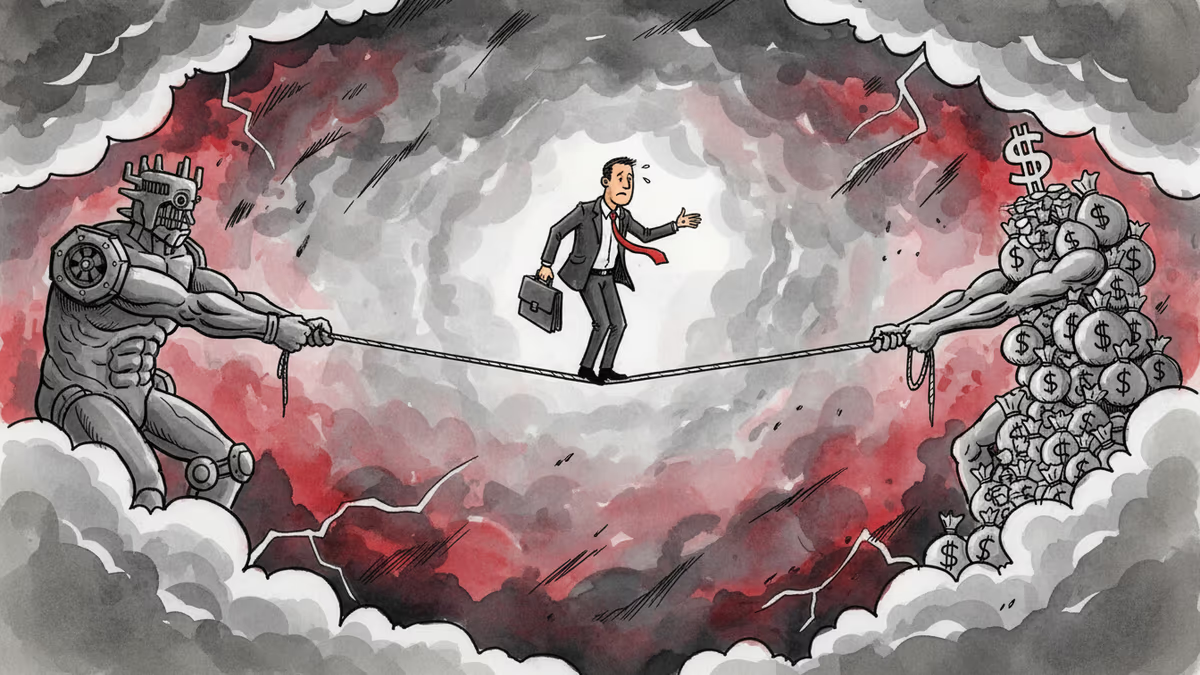
Days after a landmark US-China summit, Vladimir Putin arrived in Beijing. Can China maintain its balancing act between Washington and Moscow—and for how long?
Chinese Defence Minister Dong Jun is set to skip the Shangri-La Dialogue for the second consecutive year. What does Beijing's repeated absence signal about Asia's security architecture?
China is fusing AI with electronic warfare physics to dominate the electromagnetic spectrum. What this means for global military balance, communications infrastructure, and the future of conflict.
Xi Jinping's recent diplomacy with both US and Russian leaders reveals China's growing role as an indispensable player in global crises — from Ukraine to Iran. What does this mean for the international order?
Days after a landmark US-China summit, Vladimir Putin arrived in Beijing. Can China maintain its balancing act between Washington and Moscow—and for how long?
Thoughts
Share your thoughts on this article
Sign in to join the conversation