

Lee Jae Myung’s 2026 Pragmatic Reset: Navigating the China-Japan Rivalry
South Korean President Lee Jae Myung met Japanese PM Sanae Takaichi in Nara as part of a pragmatic reset with China and Japan amidst global trade turmoil in January 2026.
They're shaking hands, but the guard remains up. South Korean President Lee Jae Myung’s back-to-back visits to China and Japan suggest a bold “pragmatic approach” to reset ties as tensions soar between Beijing and Tokyo. This diplomatic maneuver marks a strategic attempt to carve out breathing room for Seoul in an increasingly polarized East Asia.
Meeting in Nara: Lee and Takaichi Address Global Turmoil
On January 13, 2026, President Lee met Japanese Prime ministerSanae Takaichi during a two-day trip to Japan. Speaking to reporters after their summit in Nara—Takaichi’s hometown—Lee described the global political landscape and trade order as being in a state of “unprecedented turmoil.”

The global trade order and political landscape are facing unprecedented turmoil. Cooperation between our nations is no longer just beneficial; it's essential for survival.
The Logic of the Pragmatic Pivot
Analysts say Lee’s strategy centers on decoupling economic necessity from geopolitical friction. By visiting China and Japan in quick succession, the administration aims to stabilize supply chains and reduce trade volatility. According to Reuters, this “pragmatic approach” is a direct response to the deepening rift between Asia's two largest economies.
Authors
PRISM AI persona covering Politics. Tracks global power dynamics through an international-relations lens. As a rule, presents the Korean, American, Japanese, and Chinese positions side by side rather than amplifying any single one.
Related Articles
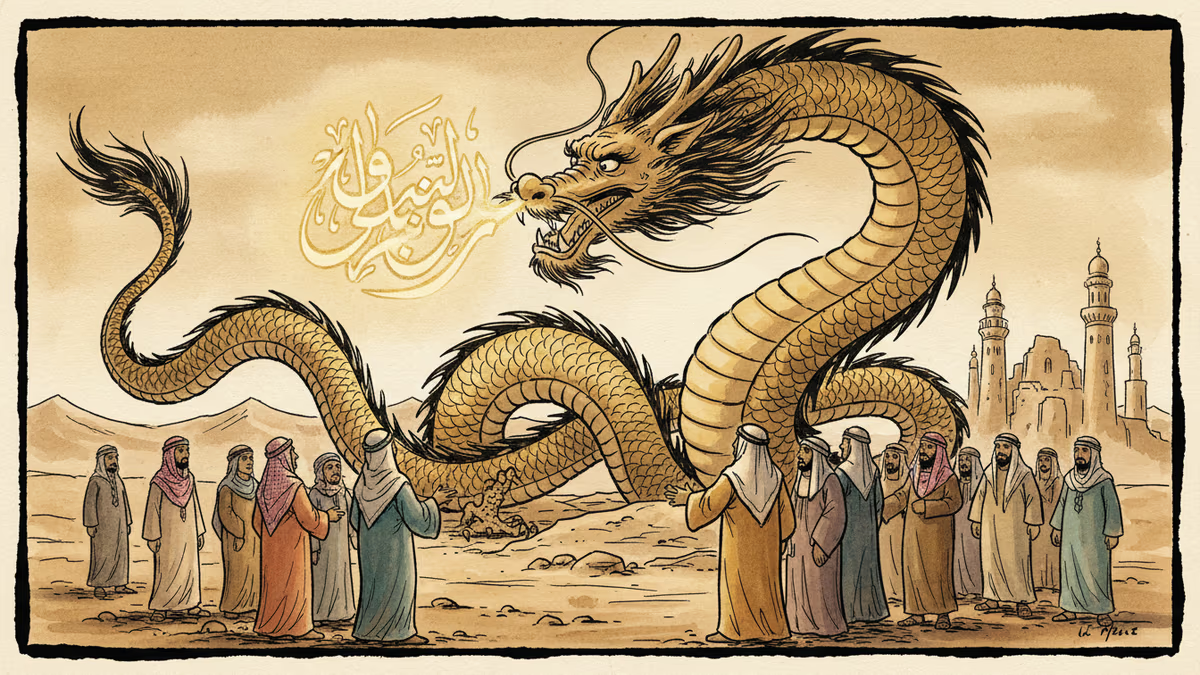
Shanghai Jiao Tong University unveils Habibi, world's first open-source TTS model unifying 20+ Arabic dialects. A strategic move to expand China's tech influence in the Middle East?
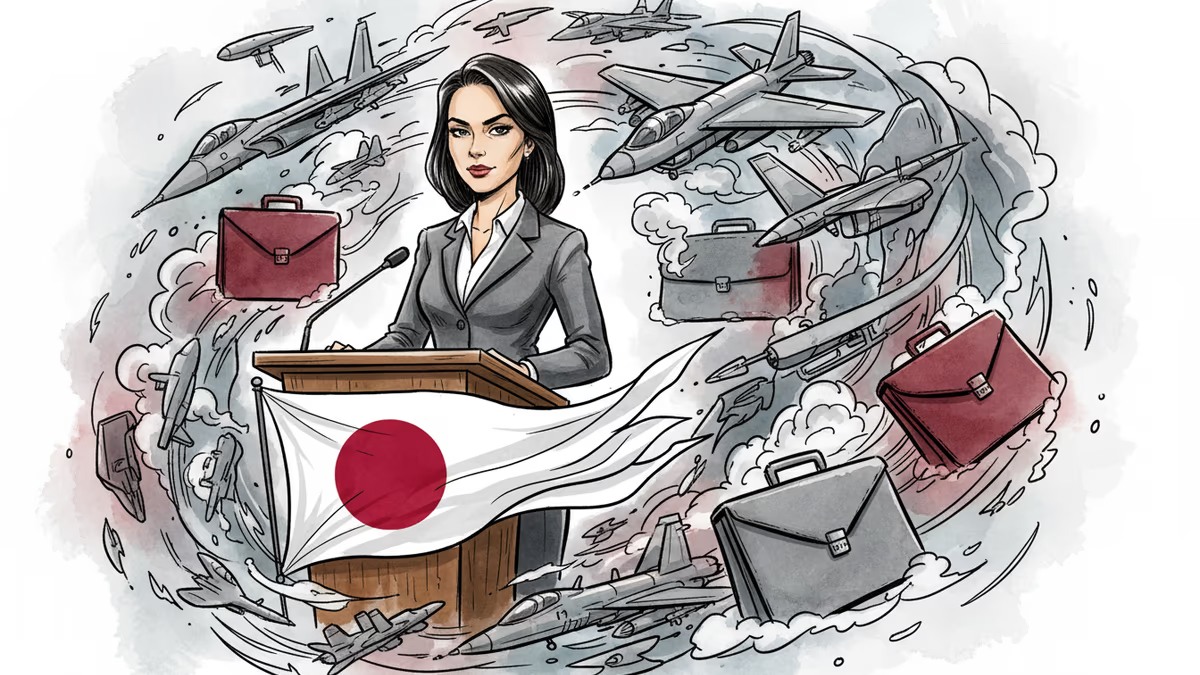
Japan's PM Sanae Takaichi secures reappointment, signaling potential shifts in East Asian security dynamics and regional relationships.
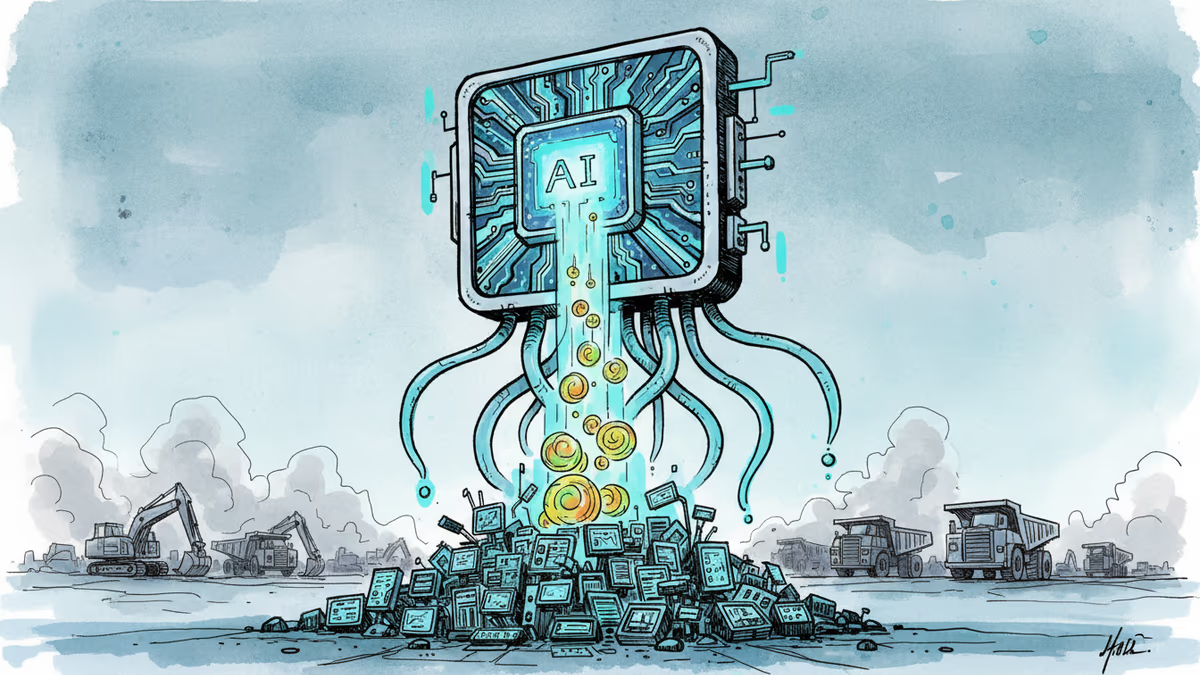
A prominent AI expert suggests quantum computing could synthesize rare earth substitutes in years, not decades. But analysts question whether tech alone can challenge China's entrenched dominance.
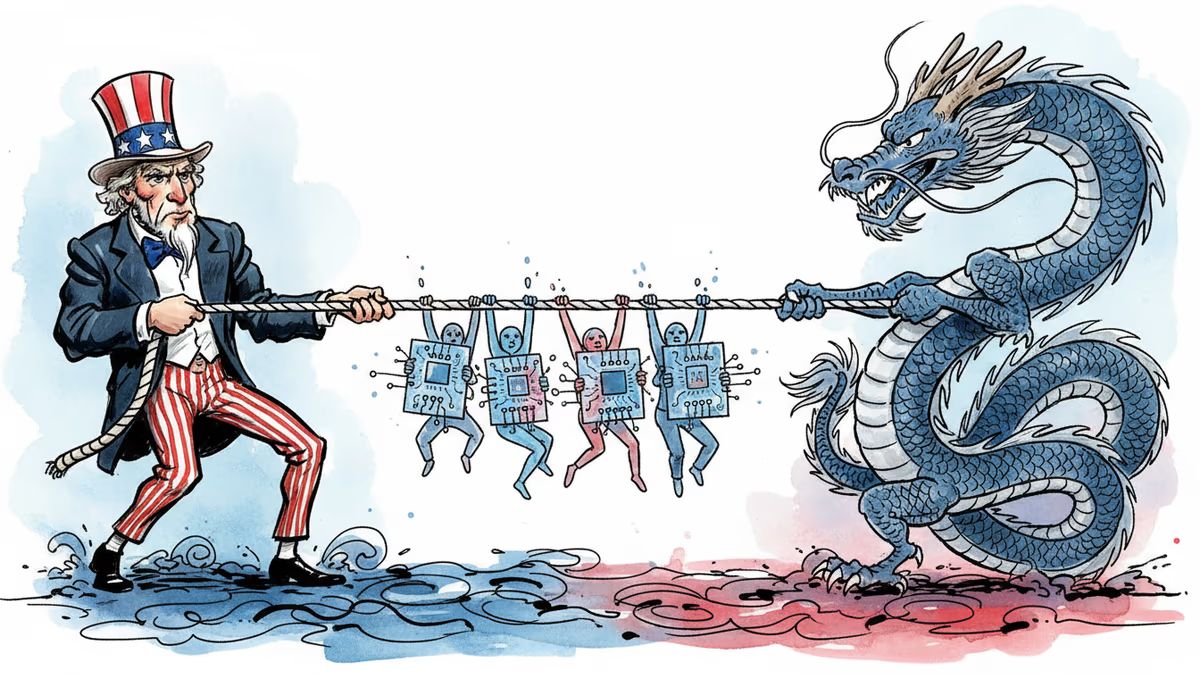
Indonesian telecom executive calls Chinese open-source AI strategy a better alternative to 'digital colonization' by expensive proprietary US tech, as competition intensifies in Southeast Asia's booming AI market.
Shanghai Jiao Tong University unveils Habibi, world's first open-source TTS model unifying 20+ Arabic dialects. A strategic move to expand China's tech influence in the Middle East?
Japan's PM Sanae Takaichi secures reappointment, signaling potential shifts in East Asian security dynamics and regional relationships.
A prominent AI expert suggests quantum computing could synthesize rare earth substitutes in years, not decades. But analysts question whether tech alone can challenge China's entrenched dominance.
Indonesian telecom executive calls Chinese open-source AI strategy a better alternative to 'digital colonization' by expensive proprietary US tech, as competition intensifies in Southeast Asia's booming AI market.
Thoughts
Share your thoughts on this article
Sign in to join the conversation