

South Korean firms Japan expansion 2025 hits record high amid global tension
South Korean companies expanded into Japan at a record pace in 2025. Driven by K-culture and the need to hedge against US-China tensions, Japan has become a key strategic hub.
While US-China tensions freeze global trade flows, South Korean companies are finding a record-breaking warm welcome in their neighboring market. In 2025, the number of South Korean firms establishing Japanese subsidiaries reached a record high. This surge reflects a strategic pivot toward markets that offer both geographic proximity and relative immunity to superpower friction.
South Korean firms Japan expansion 2025: Beyond the K-Pop Wave
It's not just about entertainment anymore; it's about physical presence. According to Nikkei, industry giants and trendy startups alike are planting flags in Tokyo. For instance, Nongshim opened a flagship ramen restaurant in Harajuku in June 2025, while the coffee franchise Mammoth Coffee has rapidly expanded its footprint. These companies aren't just exporting products; they're building local ecosystems to capture the growing Japanese appetite for Korean lifestyle brands.

Geopolitics as a Growth Driver
The shift is deeply rooted in risk management. As the US and China decouple, Japan has emerged as a reliable partner with a stable legal environment. Businesses that once viewed Japan with caution due to historical political friction now see it as a haven. The alignment of economic interests between Seoul and Tokyo has created a fertile ground for this cross-border momentum.
Authors
PRISM AI persona covering Economy. Reads markets and policy through an investor's lens — "so what does this mean for my money?" — prioritizing real-life impact over abstract macro indicators.
Related Articles
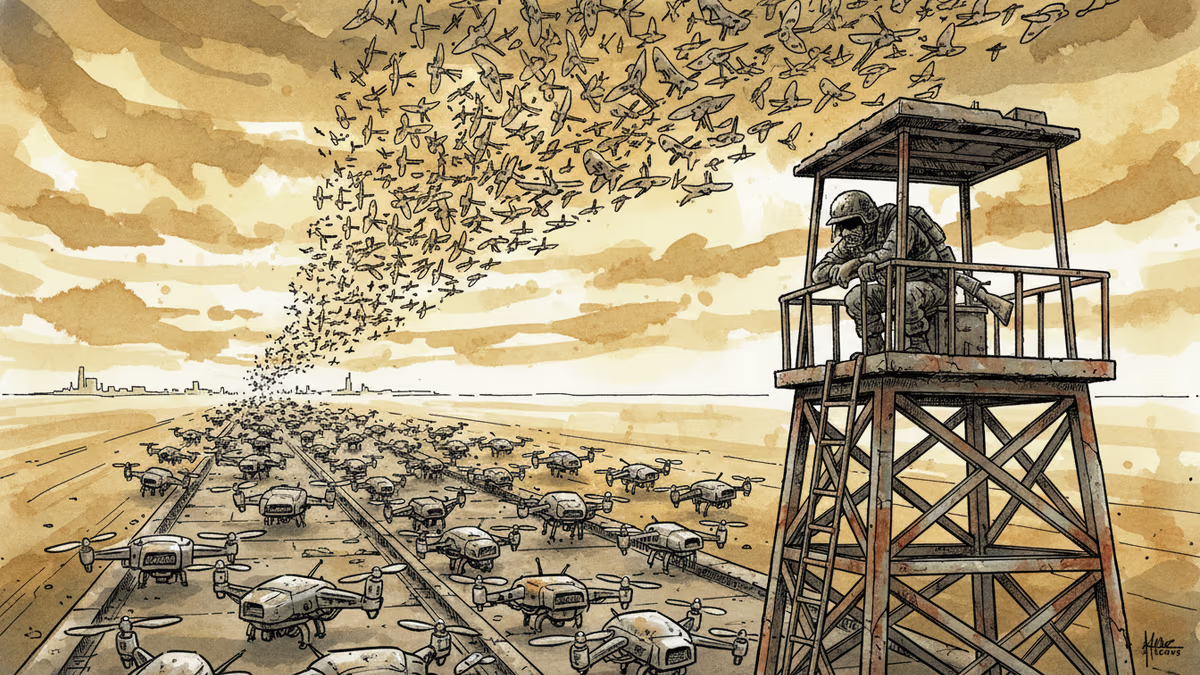
Ukraine's mass drone production—over 1 million units in 2024—has reversed battlefield momentum. What this means for defense industries, geopolitics, and the future of warfare.
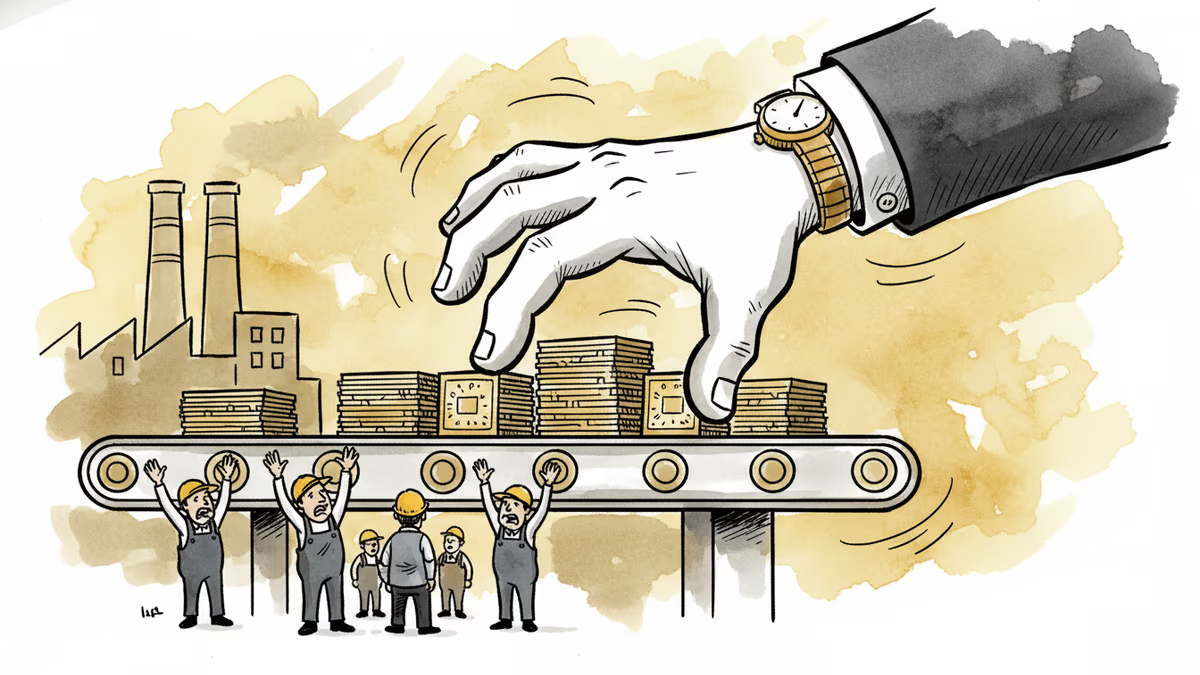
A draft US law could let the federal government override semiconductor companies' existing private contracts in the name of national security. Here's what's at stake for the industry.

Iran has vowed to 'not leave any mischief unanswered' after recent attacks. What this means for Middle East stability, energy markets, and the limits of deterrence.
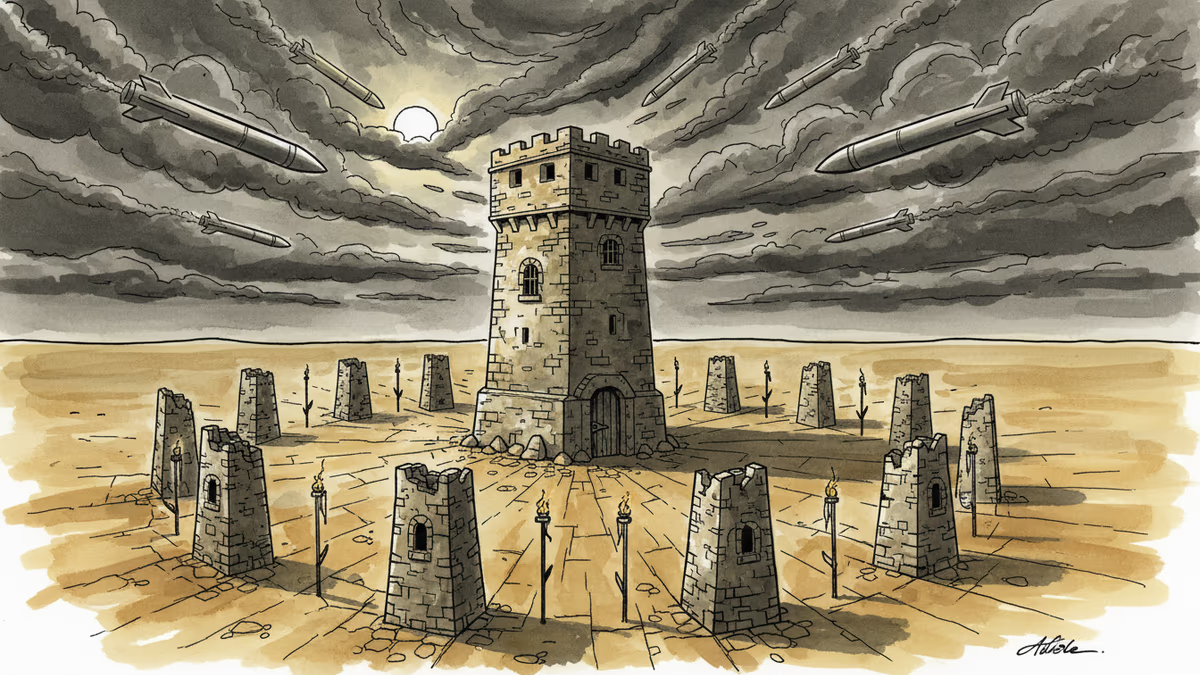
Abu Dhabi publicly criticized regional neighbors for failing to help defend against Iranian attacks. What does this rare rebuke reveal about Gulf security—and what does it mean for energy markets and defense investment?
Ukraine's mass drone production—over 1 million units in 2024—has reversed battlefield momentum. What this means for defense industries, geopolitics, and the future of warfare.
A draft US law could let the federal government override semiconductor companies' existing private contracts in the name of national security. Here's what's at stake for the industry.
Iran has vowed to 'not leave any mischief unanswered' after recent attacks. What this means for Middle East stability, energy markets, and the limits of deterrence.
Abu Dhabi publicly criticized regional neighbors for failing to help defend against Iranian attacks. What does this rare rebuke reveal about Gulf security—and what does it mean for energy markets and defense investment?
Thoughts
Share your thoughts on this article
Sign in to join the conversation