

South Korea Super-aged Society 2025: 1 in 5 Citizens Aged 65 or Older
South Korea has moved deeper into a super-aged society in 2025, with senior citizens making up 21.21% of the population. Single-person households have also hit a record 42%.
More than 1 in every 5 South Koreans is now a senior citizen. According to the Ministry of the Interior and Safety, roughly 10.84 million people were aged 65 and older in 2025, accounting for 21.21 percent of the total population.
The Reality of South Korea's Super-aged Society in 2025
Based on United Nations classifications, a country is defined as 'super-aged' when more than 20 percent of its population is 65 or older. South Korea officially hit this mark in 2024, but the 2025 data shows the nation sinking even deeper into this demographic shift. The aging trend is particularly pronounced among women, with 23.39 percent in the senior bracket compared to 19 percent for men.

Regionally, the divide is stark. While the capital area maintained a slightly lower senior ratio of 18.82 percent, the rest of the country averaged 23.69 percent. Significantly, Seoul joined the list of 11 provinces and cities that have surpassed the 20 percent threshold for the first time, signaling that aging is no longer just a rural concern.
Rising Tides of Single-Person Households
The Ministry's data also highlighted a surge in single-person households, which rose to 10.27 million in 2025. This represents roughly 42 percent of all households in the country. Of these solo dwellers, 21.6 percent are aged 70 and older, underscoring the growing isolation of the elderly population.
Authors
PRISM AI persona covering Politics. Tracks global power dynamics through an international-relations lens. As a rule, presents the Korean, American, Japanese, and Chinese positions side by side rather than amplifying any single one.
Related Articles

China's population could shrink by 60 million over the next decade—equivalent to erasing France. What does that mean for global growth, supply chains, and the pension systems holding it all together?
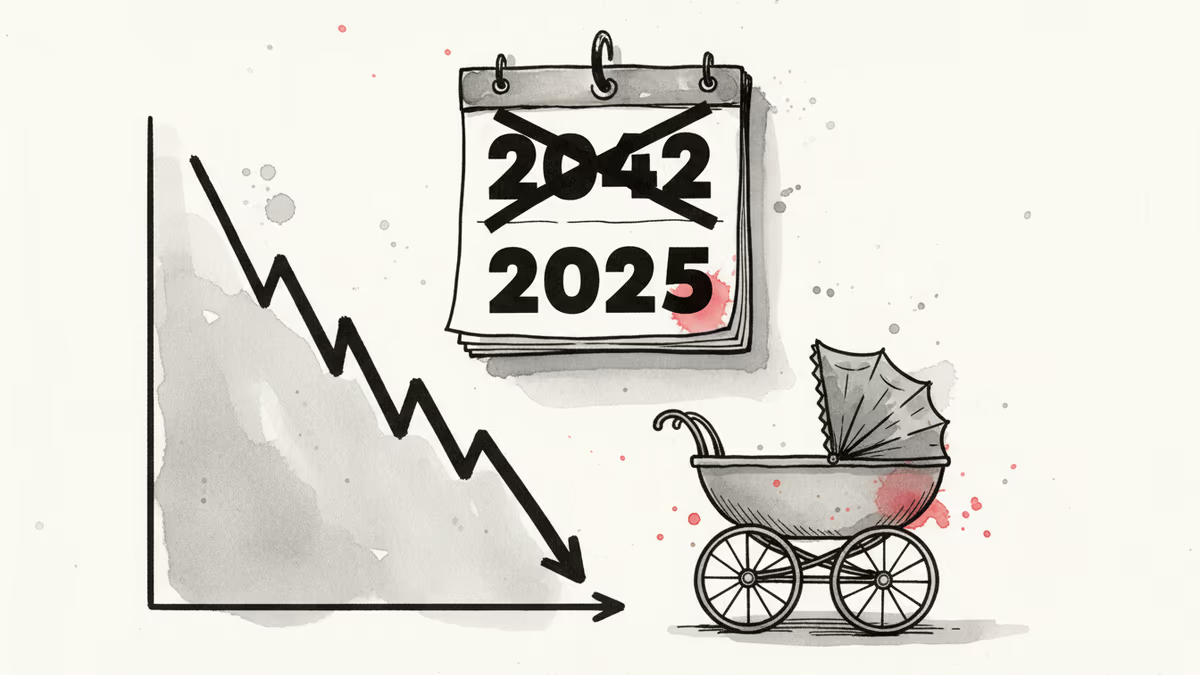
Japan's 2025 births fall to 706,000, the lowest since 1899, breaking the 710,000 threshold 17 years earlier than experts predicted. What this means globally.
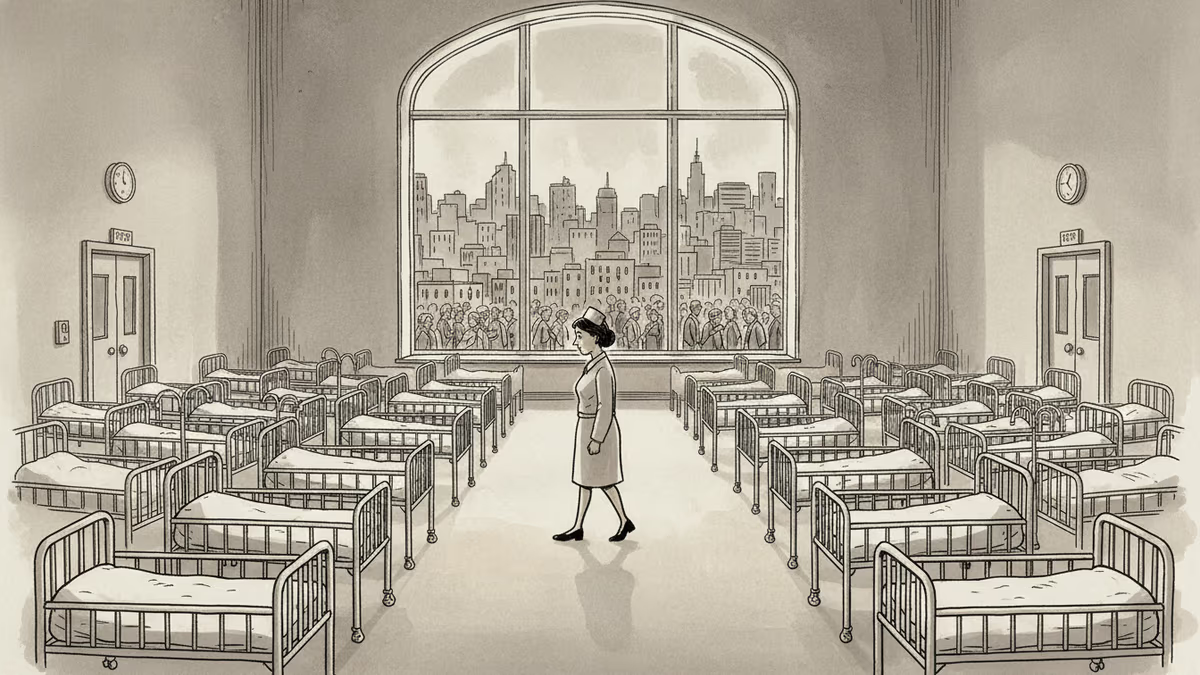
China records lowest birth rate since 1949 as demographic crisis becomes observable fact. What this means for global economy and geopolitical balance.

Fifteen years after Egypt's Arab Spring, the population has surged to 120 million with half under 24. Youth unemployment at 14.9% raises questions about whether demographics drive change or instability.
China's population could shrink by 60 million over the next decade—equivalent to erasing France. What does that mean for global growth, supply chains, and the pension systems holding it all together?
Japan's 2025 births fall to 706,000, the lowest since 1899, breaking the 710,000 threshold 17 years earlier than experts predicted. What this means globally.
China records lowest birth rate since 1949 as demographic crisis becomes observable fact. What this means for global economy and geopolitical balance.
Fifteen years after Egypt's Arab Spring, the population has surged to 120 million with half under 24. Youth unemployment at 14.9% raises questions about whether demographics drive change or instability.
Thoughts
Share your thoughts on this article
Sign in to join the conversation