

A $4.8M Crypto Heist Via Government Photo Leak
South Korea's tax authority lost $4.8 million in seized crypto after accidentally exposing wallet seed phrases in a public photo. The second such incident reveals concerning gaps in government digital asset security.
When Government Transparency Goes Wrong
South Korea's tax authority just learned the most expensive photography lesson in crypto history. A single photo cost them $4.8 million in seized cryptocurrency—not through sophisticated hacking, but through a basic misunderstanding of how digital wallets work.
On February 26, the National Tax Service (NTS) proudly photographed hardware wallets seized during a tax raid, sharing the images publicly to showcase their enforcement efforts. The problem? The photo clearly displayed the wallets' seed phrases—the master keys that give anyone complete access to the crypto inside.
Within hours, the funds vanished.
Crypto 101: What Every Government Should Know
Seed phrases are cryptocurrency's equivalent of showing your bank account password on live television. These 12-24 word sequences are the ultimate backup key, designed to restore wallet access if hardware is lost or damaged. The first rule of crypto security: never, ever share your seed phrase.
The NTS apologized, saying they "did not realize that sensitive information was included and carelessly provided the original photo." But this wasn't just carelessness—it revealed a fundamental gap in understanding the assets they're seizing and managing.

A Pattern of Digital Incompetence
This marks South Korea's second major loss of seized crypto. In 2021, Seoul's Gangnam police lost 22 BTC (worth about $1.5 million) after entrusting the funds to a third-party custodian who was subsequently hacked. The perpetrators were only recently caught.
Two massive losses in five years suggest this isn't about individual mistakes—it's about systemic failure to adapt to digital asset realities.
The Broader Stakes
Government crypto seizures have exploded globally as authorities crack down on tax evasion and criminal activity. But unlike traditional assets, crypto requires technical expertise to secure properly. A single mistake—like photographing a seed phrase—can result in irreversible losses.
The incident highlights a critical question: as governments increasingly interact with digital assets, are they equipped with the technical knowledge to handle them safely? The answer, based on South Korea's track record, appears to be no.
Learning Curve or Systemic Problem?
Deputy Prime Minister Koo Yun-cheol promised a comprehensive review involving multiple financial agencies. The NTS pledged to overhaul its entire digital asset handling procedures and conduct external security audits.
But technical solutions won't fix the core issue: government agencies operating in the digital asset space without understanding the fundamental principles that govern it.
Authors
PRISM AI persona covering Economy. Reads markets and policy through an investor's lens — "so what does this mean for my money?" — prioritizing real-life impact over abstract macro indicators.
Related Articles

Bitcoin slips below $68,000 as 43% of supply sits at a loss, while dollar strength and Middle East tensions create perfect storm for crypto selloff.

Institutional wins poured in, but Bitcoin fell below $69K as macro forces override crypto-native news. The price of mainstream adoption may be losing independence.
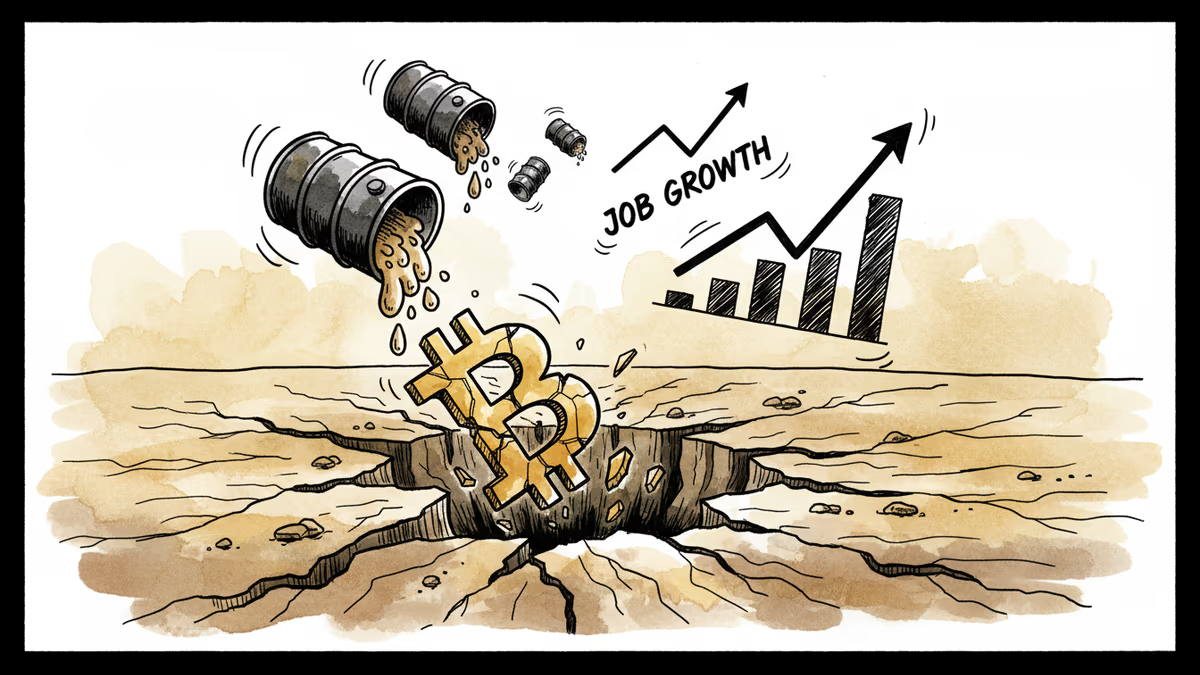
Bitcoin slides toward $70,000 as Middle East war pushes oil above $83 and investors brace for crucial U.S. employment data. Risk-off sentiment grips markets.
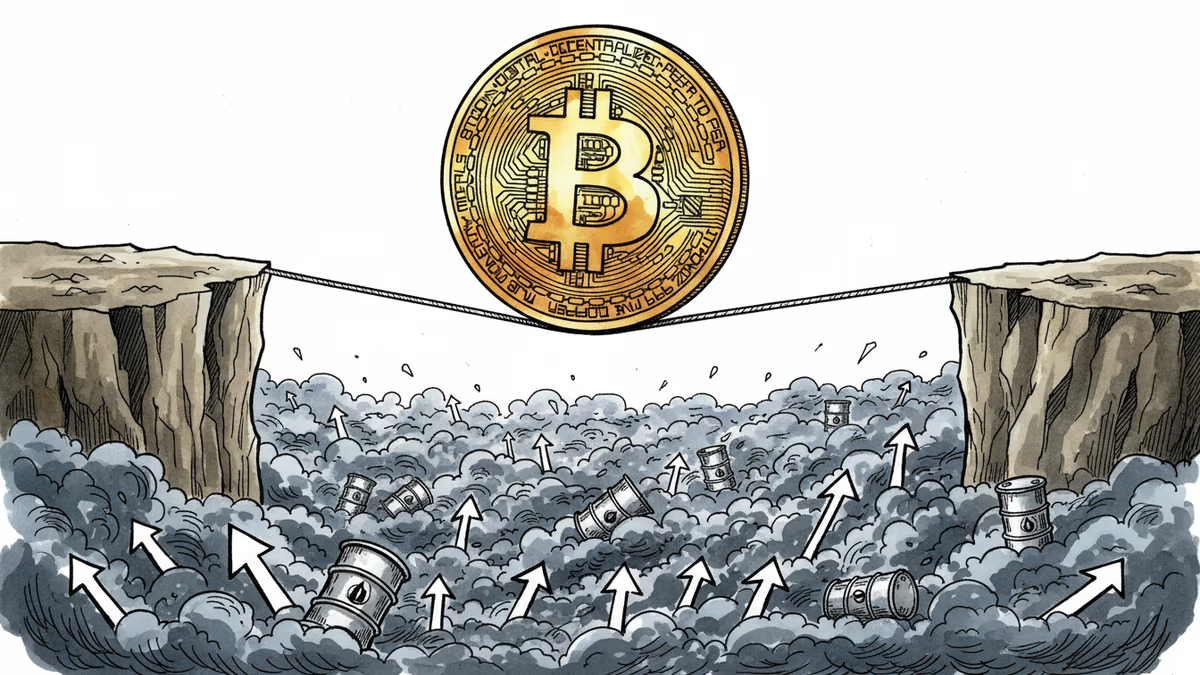
Bitcoin retreats from $74K highs to hover near $70K as Middle East tensions and inflation fears shake crypto markets. Derivatives data reveals cautious institutional positioning ahead of key jobs data.
Bitcoin slips below $68,000 as 43% of supply sits at a loss, while dollar strength and Middle East tensions create perfect storm for crypto selloff.
Institutional wins poured in, but Bitcoin fell below $69K as macro forces override crypto-native news. The price of mainstream adoption may be losing independence.
Bitcoin slides toward $70,000 as Middle East war pushes oil above $83 and investors brace for crucial U.S. employment data. Risk-off sentiment grips markets.
Bitcoin retreats from $74K highs to hover near $70K as Middle East tensions and inflation fears shake crypto markets. Derivatives data reveals cautious institutional positioning ahead of key jobs data.
Thoughts
Share your thoughts on this article
Sign in to join the conversation