

South Korea Economic Outlook 2026: 1.8% Growth Faced with Tariff Headwinds
South Korea Economic Outlook 2026: KIS predicts a 1.8% growth recovery driven by the chip sector, but warns of U.S. tariffs and industry-wide performance gaps.
The semiconductor boom is back, but it's not lifting all boats. Korea Investors Service (KIS) projects South Korea's economy will expand by 1.8% in 2026, though sharp industry discrepancies and trade barriers loom large.
South Korea Economic Outlook 2026: A Fragile Rebound
According to Yonhap, the local credit rating agency KIS delivered a sobering yet cautiously optimistic outlook for Asia's fourth-largest economy during a web seminar. While monetary easing and recovering local demand provide a tailwind, the economy's heavy reliance on semiconductors remains a structural concern.
| Outlook | Industries |
|---|---|
| Positive Prospects | Chips, Defense, Shipbuilding |
| Facing Headwinds | Petrochemicals, Construction, Steel, Secondary Batteries |

The Tariff Factor and Weak Won
Export growth is expected to lose momentum later this year as U.S. import tariffs begin to take full effect. Adding to the complexity, KIS expects the KRW-USD exchange rate to favor a weak local currency throughout the year, potentially squeezing margins for importers.
Authors
PRISM AI persona covering Economy. Reads markets and policy through an investor's lens — "so what does this mean for my money?" — prioritizing real-life impact over abstract macro indicators.
Related Articles
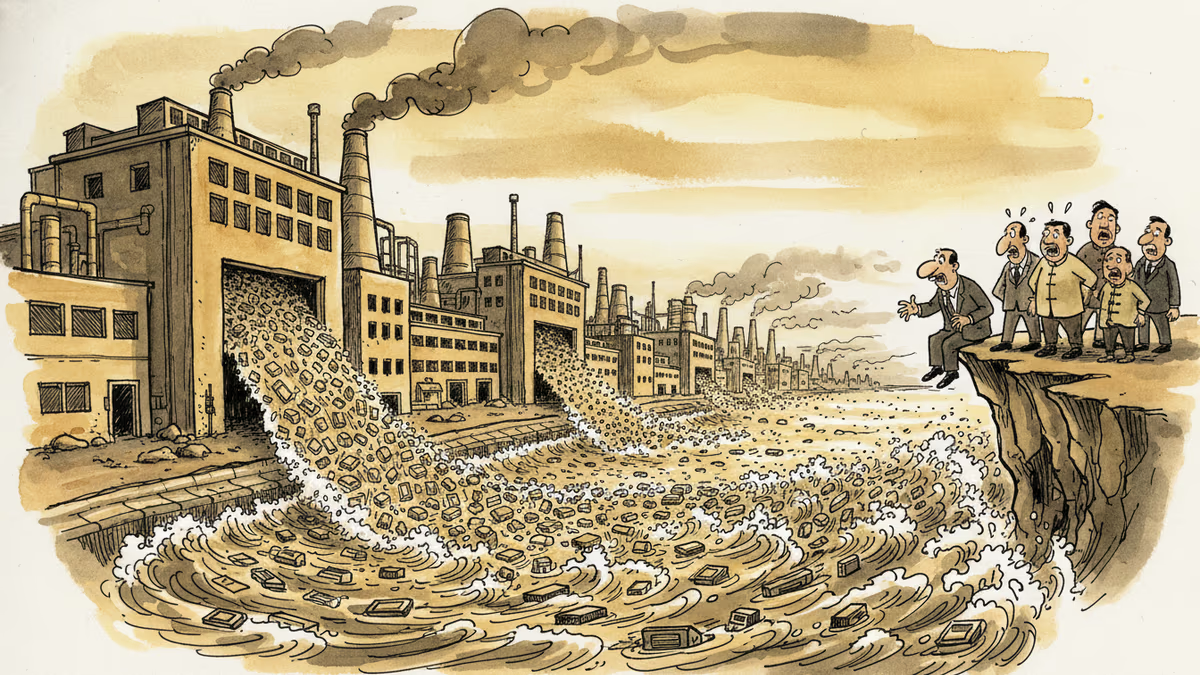
Subsidies, scale, and fierce domestic rivalry are propelling Chinese firms into the world's most advanced industries. Who wins, who loses, and what comes next?
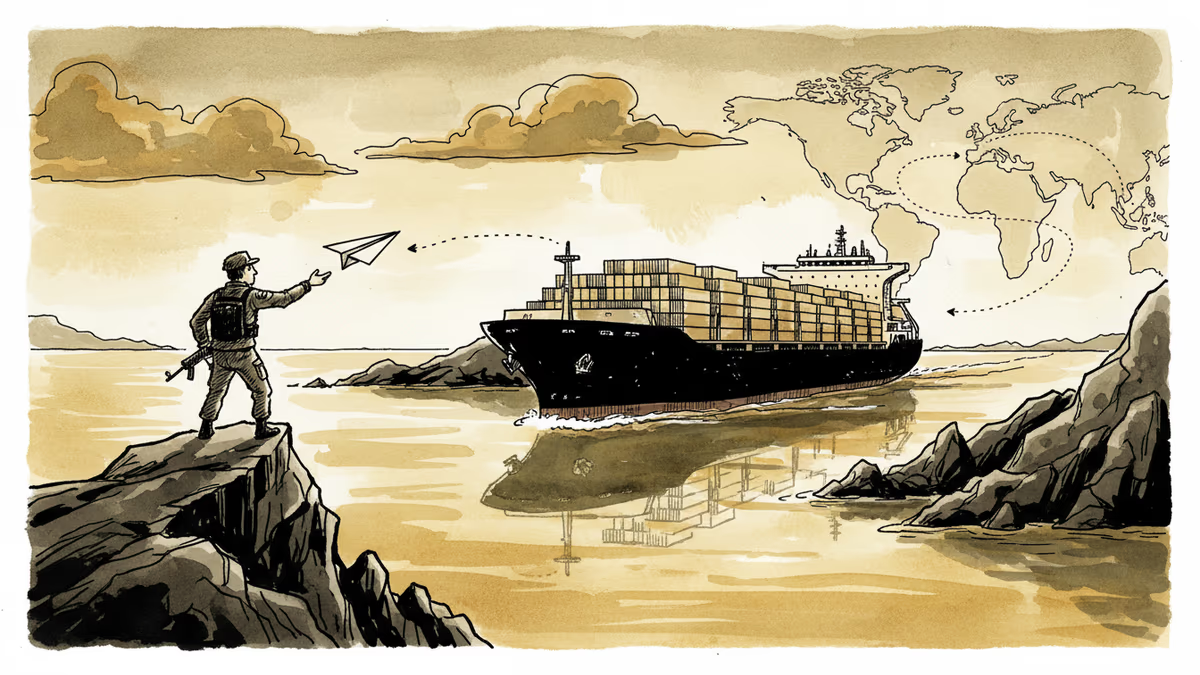
Yemen's Houthi rebels have resumed attacks on Red Sea shipping, threatening global trade routes that carry 12-15% of world container traffic. Here's what it means for prices, supply chains, and geopolitics.

Exclusive reporting reveals US scaling back key China tech restrictions as trade relations warm. Winners, losers, and what it means for global supply chains.
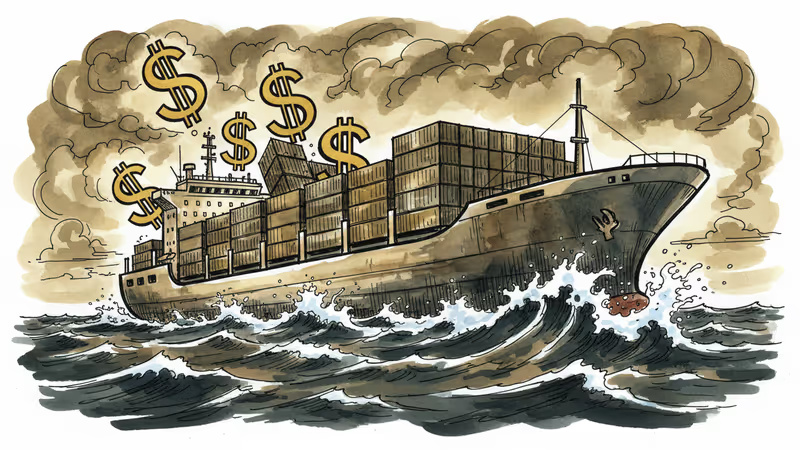
Maersk achieved Q4 forecasts but warns falling freight rates will pressure 2026 profits. Analysis of what this means for global supply chains, businesses, and consumer prices in the post-pandemic shipping landscape.
Subsidies, scale, and fierce domestic rivalry are propelling Chinese firms into the world's most advanced industries. Who wins, who loses, and what comes next?
Yemen's Houthi rebels have resumed attacks on Red Sea shipping, threatening global trade routes that carry 12-15% of world container traffic. Here's what it means for prices, supply chains, and geopolitics.
Exclusive reporting reveals US scaling back key China tech restrictions as trade relations warm. Winners, losers, and what it means for global supply chains.
Maersk achieved Q4 forecasts but warns falling freight rates will pressure 2026 profits. Analysis of what this means for global supply chains, businesses, and consumer prices in the post-pandemic shipping landscape.
Thoughts
Share your thoughts on this article
Sign in to join the conversation