
Daiso's Big-Box Bet: How a Korean Retailer Is Fighting Temu With Bricks, Not Clicks
South Korea's Asung Daiso is countering the rise of Chinese e-commerce giants like Temu and AliExpress by investing in large-format physical stores, betting on in-store experience to win over price-sensitive consumers.
South Korean discount chain Asung Daiso is doubling down on a decidedly old-school strategy to fight new-age competition. As Chinese e-commerce giants AliExpress and Temu rapidly expand their online footprint, Daiso is betting big on massive physical stores and logistics, hoping to lure inflation-hit consumers with an in-person shopping experience that digital rivals can't replicate.
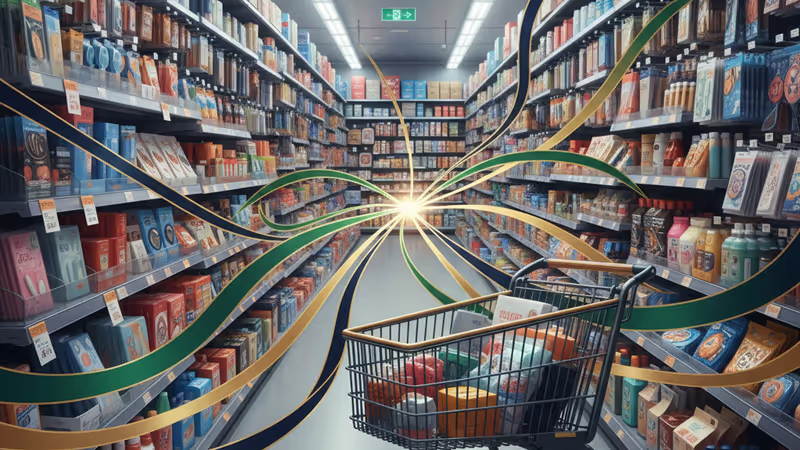
The company is actively expanding its network of large-format stores and investing heavily in its logistics infrastructure, according to a December 23 report from Nikkei. The strategy hinges on creating a superior store experience, turning shopping from a transaction into a 'treasure hunt.' This is fueled by a constant stream of affordable, buzz-worthy products, like collaborative fleece jackets that have gained attention for their rock-bottom price of just $3 to $4.
This physical-first approach is a direct counterpunch to the asset-light, digital-only model of Temu and AliExpress. These platforms have disrupted global retail with ultra-low prices and aggressive marketing, appealing directly to consumers feeling the pinch from persistent inflation. Daiso aims to prove that even in a tough economy, price isn't everything.
Daiso's strategy is a high-stakes test of a 'phygital' (physical + digital) retail model against pure-play e-commerce. For investors and retail executives, this is a key battleground to watch. If Daiso succeeds, it could provide a blueprint for legacy retailers globally on how to leverage physical assets not as a liability, but as a competitive moat. It's a bet that tangible experience and instant gratification can build a more loyal customer base than an endless scroll of algorithm-driven deals.
The central question is whether the allure of an in-store discovery can consistently win against the sheer convenience and aggressive pricing of its Chinese competitors. As Daiso invests in its physical presence, it's not just selling household goods; it's selling an experience. Whether that experience is valuable enough to protect its market share remains to be seen.
This content is AI-generated based on source articles. While we strive for accuracy, errors may occur. We recommend verifying with the original source.
Related Articles

A new FKI poll reveals 52% of South Korea's top companies expect a challenging 2026, citing a weak won and slow domestic demand. We analyze the risks and potential impact on the Korean economy and global investors.

South Korea's consumer agency has ordered SK Telecom to financially compensate 58 hacking victims, setting a key precedent for corporate liability in data breach cases.

Temu's Super Bowl ad spend is more than marketing. It's a strategic economic assault on Amazon and a new phase in global e-commerce. Here's why it matters.

China's $30B luxury resale boom is more than a trend; it's a deep economic reset. Our analysis breaks down the impact on LVMH, Kering, and investors.