
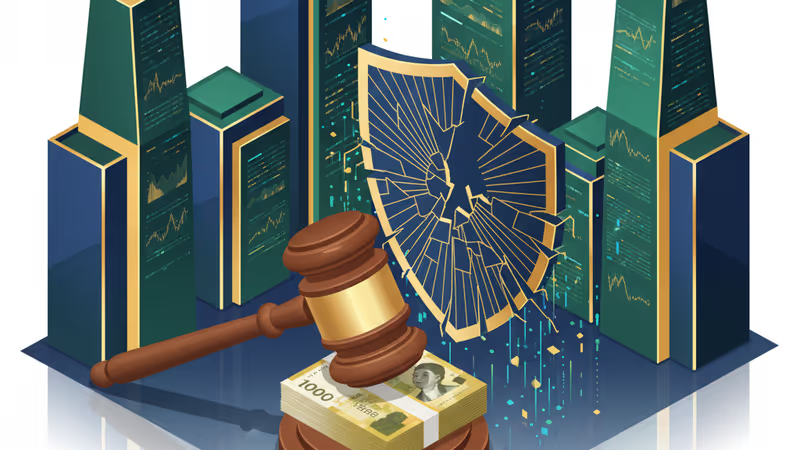
SK Telecom Ordered to Pay Hacking Victims in Test of Corporate Liability
South Korea's consumer agency has ordered SK Telecom to financially compensate 58 hacking victims, setting a key precedent for corporate liability in data breach cases.
The Lead: A Landmark Order
South Korea's consumer protection agency has ordered SK Telecom Co., the nation's largest mobile carrier, to financially compensate 58 customers impacted by a hacking incident. According to Reuters, the decision marks a significant step toward holding corporations directly accountable for data breaches in Asia's fourth-largest economy.
Why It Matters: From Apology to Payout
The order came from the Korea Consumer Agency's (KCA) Dispute Mediation Committee. It forces SK Telecom to move beyond typical corporate apologies or loyalty points and provide direct monetary compensation to victims. This shift establishes a critical precedent that could empower consumers and increase the financial stakes for companies that fail to protect user data.
For investors, this decision highlights a growing operational risk. What was once a public relations issue is now solidifying into a clear financial liability. The ruling puts pressure not only on SK Telecom but on its main rivals, KT Corp. and LG Uplus Corp., to bolster their cybersecurity infrastructure.
PRISM INSIGHT
Beyond the Headline: This decision is more than just a fine; it's a shift in the balance of power. For years, South Korean conglomerates have often settled data breach cases with non-monetary gestures. An official order for direct cash compensation, even for a small group, creates a powerful precedent. This could embolden more consumers to file for collective dispute mediation, potentially turning future data breaches from a PR headache into a significant financial liability for Korean tech and telecom giants.
What's Next?
SK Telecom has not yet publicly commented on whether it will accept the committee's recommendation or challenge it in court. The company's response will be closely watched, as it will signal how South Korea's corporate giants intend to navigate a regulatory environment that is increasingly prioritizing consumer rights and data privacy, aligning more closely with global standards like Europe's GDPR.
Related Articles

CEOs are flocking to social media, but missteps are leading to regulatory filings, PR crises, and legal battles. We analyze the tangible business risks and rewards of the CEO influencer trend.
Elon Musk becomes the world's first person with a net worth of $700 billion following a court ruling that upheld his massive Tesla pay package. Analysis on what this means for investors and TSLA stock.
A high-profile Trump ally's sudden resignation from Meta's board signals a major shift in the tech giant's political strategy ahead of the election.

Beyond the headlines, the Google-Palo Alto Networks deal is a strategic realignment in the cloud wars, forging a new security-AI stack to challenge Microsoft.