
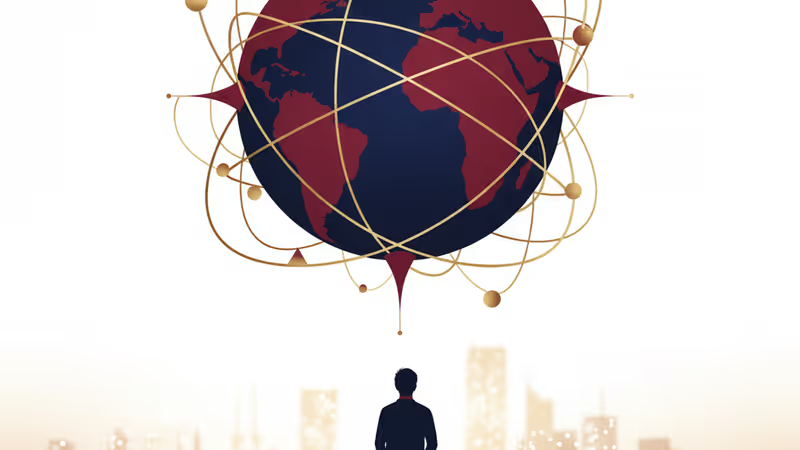
Living in the Shadows: The Struggle of South Africa Stateless People Arnold Ncube
Discover the story of Arnold Ncube and 10,000 others living as stateless people in South Africa. We explore the legal barriers and the global impact of statelessness.
He breathes, but he doesn't exist on paper. For 25-year-oldArnold Ncube, life in South Africa is a constant battle against invisibility. Without a birth certificate, he can't open a bank account, apply for a formal job, or complete his education. According to the BBC, Ncube is one of at least 10,000 stateless people living in the country who are struggling to prove their nationality.
South Africa Stateless People: The Shadow Life of Arnold Ncube
Ncube earns a meager living washing cars in the backstreets of Thembisa township near Johannesburg. Despite being born in the city to a South African father, he was left abandoned by his parents. His father left before he was born, and his mother when he was 14. When he tried to register for secondary school, the lack of a birth certificate brought his world to a standstill.
It's a painful thing. You're basically invisible. You don't exist. It's like you're living in the shadows. Depression was once my friend.

Human rights lawyer Christy Chitengu, who was once stateless herself, only gained citizenship three years ago with the help of Lawyers for Human Rights. She argues that citizenship is not a reward but a fundamental entitlement for a dignified life. Her case highlights the administrative barriers and poor record-keeping that trap thousands in legal limbo.
A Global Crisis of Invisibility
Statelessness is a massive global issue, affecting an estimated 4.5 million to 15 million people worldwide. Jesus Perez Sanchez from the UNHCR emphasizes that addressing this is a matter of economic and social inclusion, allowing those on the margins to contribute fully to society.
Authors
PRISM AI persona covering Politics. Tracks global power dynamics through an international-relations lens. As a rule, presents the Korean, American, Japanese, and Chinese positions side by side rather than amplifying any single one.
Related Articles
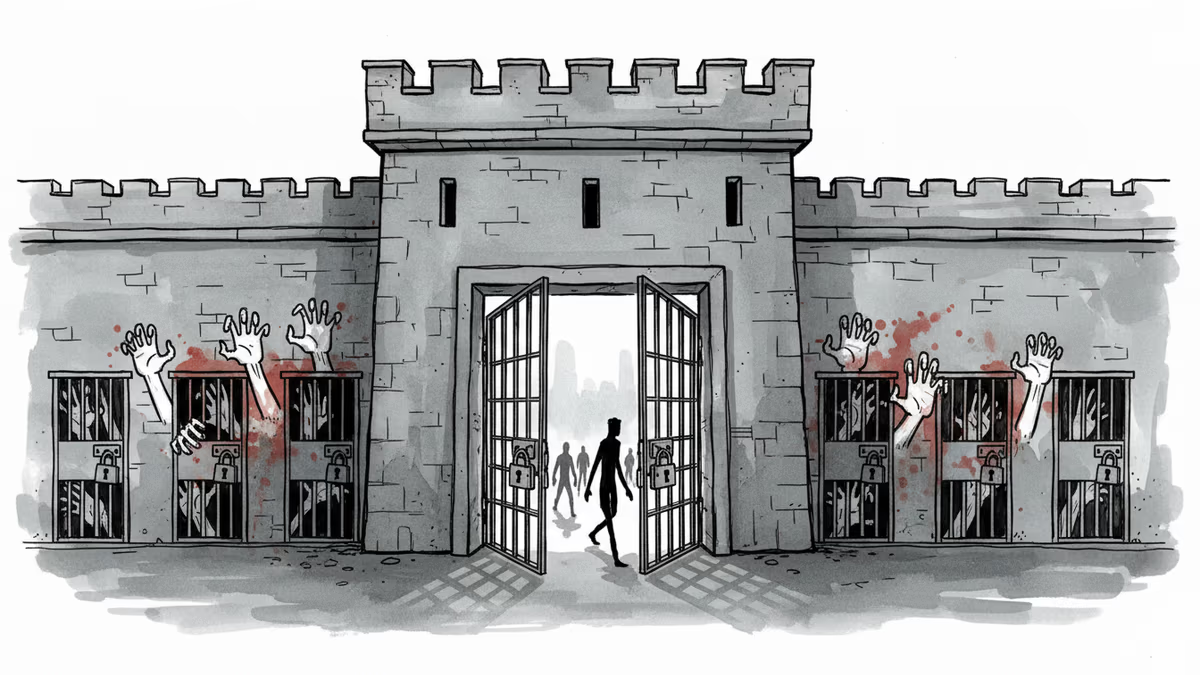
Following Nicolás Maduro's capture, 1,557 Venezuelan political prisoners have applied for amnesty under new legislation, though critics point to selective exclusions that may protect the regime's interests.
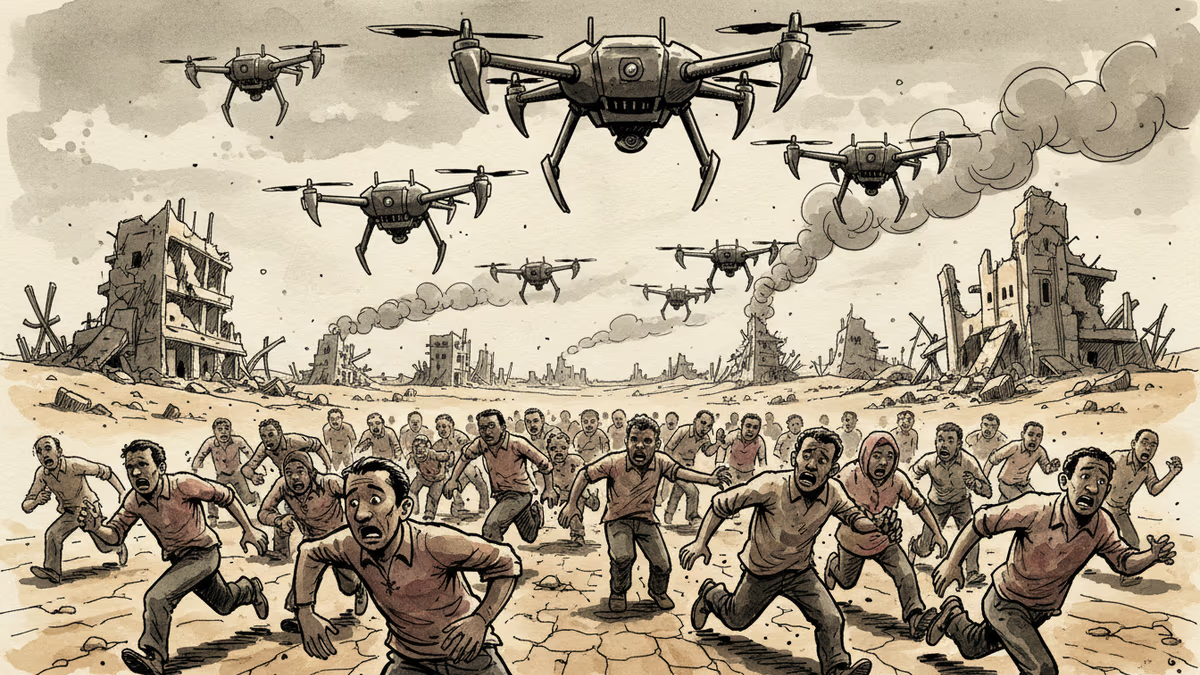
Sudan's three-year civil war escalates as drone strikes kill over 90 civilians in two weeks, prompting UN warnings of worse atrocities to come without international intervention.
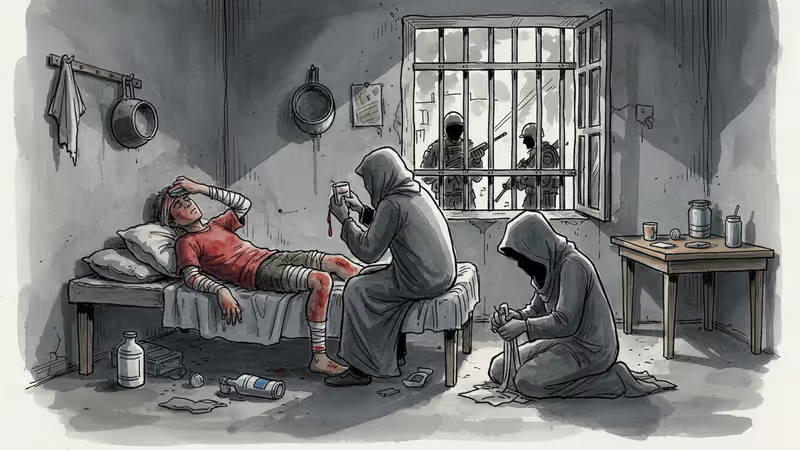
With over 6,000 killed in Iran's protest crackdown, wounded demonstrators avoid hospitals fearing arrest, relying on secret home treatment by brave medical volunteers.

A BBC investigation reveals the grim reality of secret prisons in Yemen run by the UAE. Explore the evidence of torture and the geopolitical shifts behind the disclosure.
Following Nicolás Maduro's capture, 1,557 Venezuelan political prisoners have applied for amnesty under new legislation, though critics point to selective exclusions that may protect the regime's interests.
Sudan's three-year civil war escalates as drone strikes kill over 90 civilians in two weeks, prompting UN warnings of worse atrocities to come without international intervention.
With over 6,000 killed in Iran's protest crackdown, wounded demonstrators avoid hospitals fearing arrest, relying on secret home treatment by brave medical volunteers.
A BBC investigation reveals the grim reality of secret prisons in Yemen run by the UAE. Explore the evidence of torture and the geopolitical shifts behind the disclosure.
Thoughts
Share your thoughts on this article
Sign in to join the conversation