

The Sound of Silence: How Loop Earplugs Hacked the Acoustic Wellness Market
Loop earplugs' success isn't about discounts; it's a strategic play in the acoustic wellness market, turning a utility into a fashion-forward wellness tool.
The Lede: Beyond Noise Reduction
While a flurry of discount codes for Loop earplugs might seem like just another consumer tech deal, it signals a much deeper market shift. This isn't about cheap earplugs; it's about the maturation of the 'Acoustic Wellness' category. Loop's strategic product segmentation and design-first approach have transformed a utilitarian necessity into a desirable lifestyle accessory, effectively creating a new market for 'passive hearables' that grant users control over their sensory environment. For executives, this is a masterclass in turning a niche product into a mass-market phenomenon by rebranding a problem (noise) into a solution (curated soundscapes).
Why It Matters: The Rise of Sensory Control
The success of Loop signifies a critical evolution in the wellness economy. The battleground is no longer just about blocking noise—a feature now commoditized in high-end headphones from Apple and Bose. The new frontier is about providing nuanced, passive, and stylish control over one's auditory world. This has profound second-order effects:
- Normalizing Sensory Tools: As conversations around neurodiversity (ADHD, autism, sensory sensitivity) enter the mainstream, products that help manage overstimulation are moving from medical aids to everyday wellness tools. Loop makes managing sensory input socially acceptable and even fashionable.
- The Unbundling of a Headphone: Loop's products 'unbundle' a single feature of expensive noise-canceling earbuds—noise reduction—and deliver it in a simpler, battery-free, and more affordable package. This challenges the 'one device does all' philosophy of Big Tech.
- Redefining Personal Space: In an age of open-plan offices and crowded urban environments, the ability to create a personal 'bubble' of quiet is a new form of luxury. Loop is selling focus, calm, and better sleep as a wearable product.

The Analysis: From Utility to Identity
Historically, earplugs were a purely functional, disposable item. Think of the neon foam plugs used on construction sites or the waxy blobs for swimming. They were effective but ugly and carried a stigma. The category was ripe for disruption.
Loop’s brilliance lies in its three-pronged attack on this stagnant market:
- Design as the Product: The source article notes they look "like jewelry." This is not an accident. By making the product a stylish ring, Loop removed the stigma and turned it into a form of self-expression. It’s a wearable, not a plug.
- Market Segmentation by Need State: Instead of a one-size-fits-all solution, Loop created distinct products—'Quiet' for sleep, 'Engage' for social filtering, and 'Experience' for live music. This targeted marketing allows them to address specific pain points, as seen in their 'Student' or 'Dreamville' gift sets, creating multiple entry points for a single customer.
- Passive Technology: In a world of constant charging and battery anxiety, Loop offers a robust analog solution. Its patented acoustic channels provide clear sound fidelity without electronics, offering a reliable 'off-grid' alternative to AirPods Pro or Bose QuietComfort buds.
Competitors like Eargasm and Flare Audio focus heavily on the audiophile/musician niche, but Loop has successfully crossed over into the much larger lifestyle and wellness mainstream by focusing on everyday use cases and aesthetics.
PRISM's Take
Loop earplugs are more than a clever product; they are a cultural barometer. Their ascent reveals a society increasingly desperate for focus and control in an environment of perpetual noise and distraction. The company isn't just selling sound-dampening silicone; it's selling agency over one's own sensory reality. While discount codes drive tactical sales, the long-term strategy is clear: position silence and moderated sound not as an absence of noise, but as a premium, attainable wellness state. Loop has successfully made managing your soundscape a proactive act of self-care, and in doing so, defined a category that Big Tech is only now beginning to notice.
Authors
Related Articles

KakaoTalk's gifting service saw nearly 200 million uses in 2025, according to Kakao Corp. A key trend is 'self-gifting,' with users buying luxury items like Dyson and Dior for themselves, signaling a major shift in digital consumer behavior.
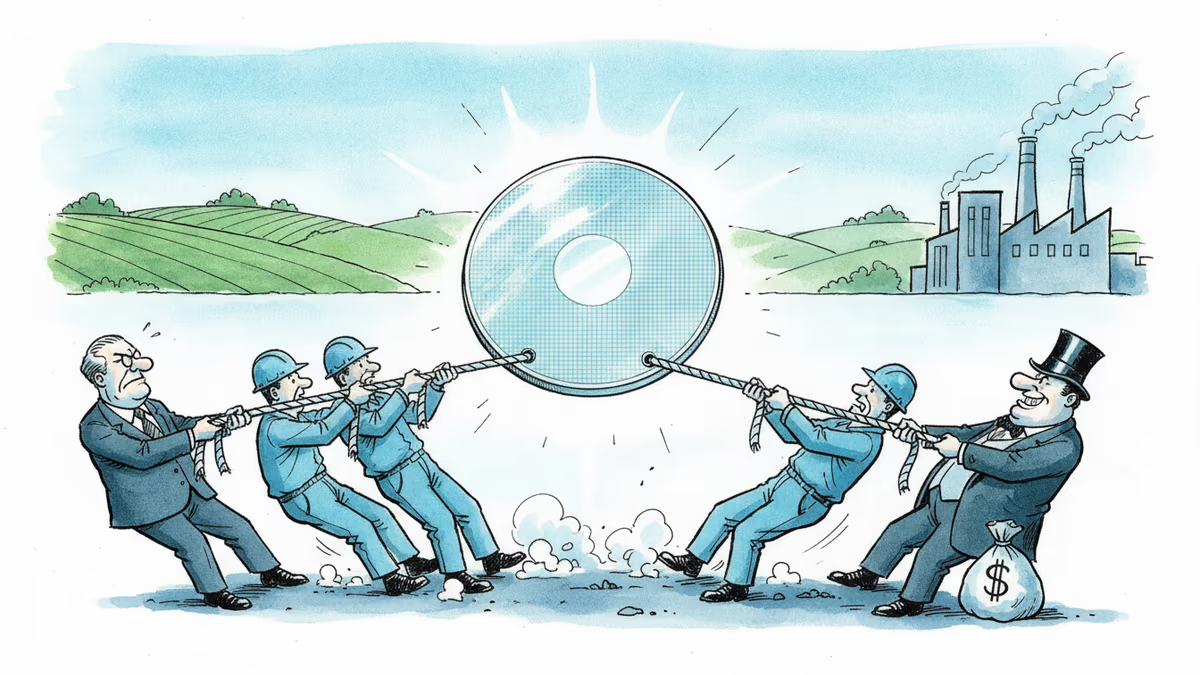
Samsung Electronics' union branch revealed that 84% of survey respondents oppose the government's roughly $290 billion (₩400 trillion) semiconductor megaproject in Gwangju. Government, management, the union and shareholders are all reading the same national project in sharply different ways.

Nvidia shipped roughly a billion RISC-V cores in 2024, then announced it would run CUDA on the open standard. We break down how royalty-free instruction sets and open software stacks are trying to route around CUDA's lock-in. Part 2 of the Semiconductor Sovereignty series.
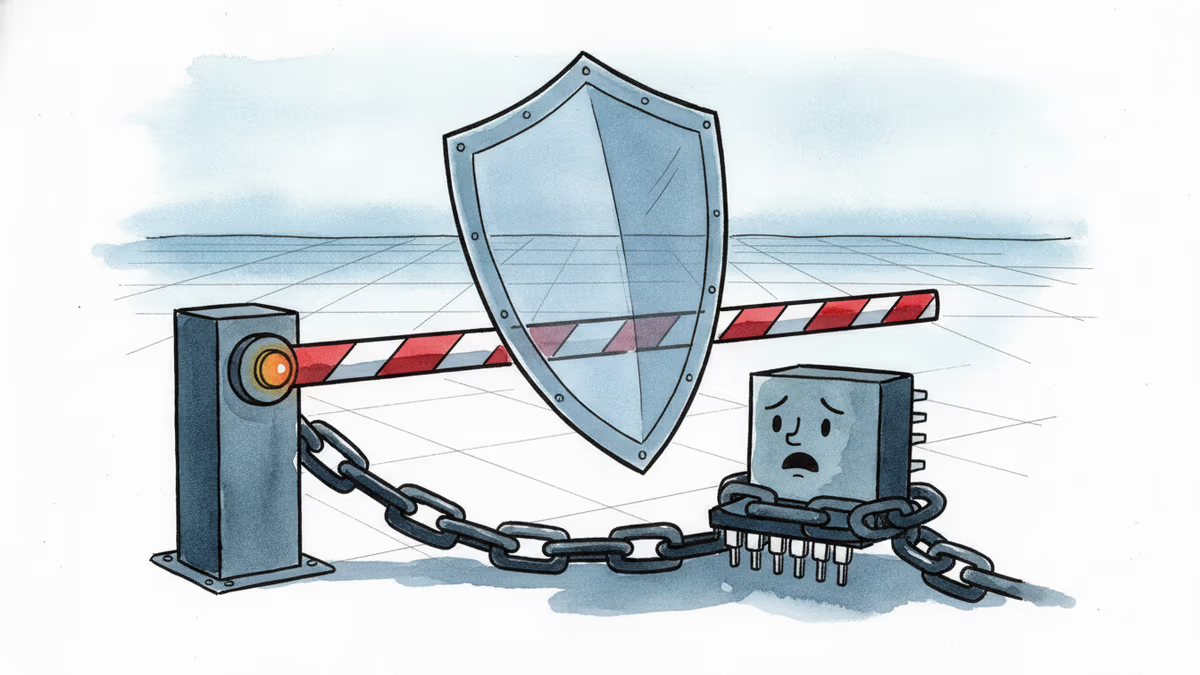
US AI-chip export controls split into three layers in the first half of 2026 — January easing, a May crackdown on circumvention, and a pending bill. Nvidia erased China from its guidance and still posted a record $81.6 billion quarter. A look at the export policy that both shields and cages it.
KakaoTalk's gifting service saw nearly 200 million uses in 2025, according to Kakao Corp. A key trend is 'self-gifting,' with users buying luxury items like Dyson and Dior for themselves, signaling a major shift in digital consumer behavior.
Samsung Electronics' union branch revealed that 84% of survey respondents oppose the government's roughly $290 billion (₩400 trillion) semiconductor megaproject in Gwangju. Government, management, the union and shareholders are all reading the same national project in sharply different ways.
Nvidia shipped roughly a billion RISC-V cores in 2024, then announced it would run CUDA on the open standard. We break down how royalty-free instruction sets and open software stacks are trying to route around CUDA's lock-in. Part 2 of the Semiconductor Sovereignty series.
US AI-chip export controls split into three layers in the first half of 2026 — January easing, a May crackdown on circumvention, and a pending bill. Nvidia erased China from its guidance and still posted a record $81.6 billion quarter. A look at the export policy that both shields and cages it.
Thoughts
Share your thoughts on this article
Sign in to join the conversation