

Solana's Memecoin Party Is Over—Welcome to the Finance Era
Solana ecosystem shifts from memecoins and NFTs to serious financial infrastructure. What this means for crypto investors and DeFi's future.
$1.25 trillion. That's how much traded on KuCoin exchange last year. But Solana ecosystem leaders are focused on something else entirely: the shift from spectacle to substance.
Armani Ferrante, CEO of crypto exchange Backpack, recently told CoinDesk that "Solana's new phase is much more about finance." After years of memecoin mania and NFT experiments, the ecosystem has spent the past year doubling down on something far less flashy but potentially more valuable: financial infrastructure.
From Memes to Markets: Why Now?
The numbers back up Ferrante's observation. While the broader crypto industry experimented with NFTs, games, and social tokens, Solana is now positioning itself around high-throughput onchain trading, market structure, and settlement—what some call "internet capital markets."
"People are really starting to think about blockchains as a new kind of financial infrastructure," Ferrante explained. "It's less about NFTs, less about random moonshot-like games, and much more about finance."
This pivot might make Solana feel dull to outside observers, but Ferrante frames it as maturity. And the timing is telling: while crypto prices remain subdued and crypto-native investors stay cautious, institutional interest has rarely been stronger.
Wall Street Has Never Been More Bullish
"If you ask anyone on Wall Street, they've never been more bullish," Ferrante said, pointing to growing momentum around tokenization, stablecoins, and onchain settlement.

Ferrante's long-term vision for Solana rests on blockchains serving as neutral settlement layers. In that future, assets like stocks and derivatives move seamlessly across platforms as standardized tokens rather than sitting trapped in siloed databases.
"A token is just a canonical, agreed-upon ledger entry for who owns something," he said. "That concept applies everywhere."
It's a compelling vision, but one that requires a fundamental shift in how we think about digital assets—from speculative vehicles to infrastructure components.
Regulation as Feature, Not Bug
Perhaps most surprisingly, Ferrante emphasized that real-world adoption requires deeper integration with regulatory frameworks, not escape from them. As crypto moves from speculative experimentation toward embedded financial infrastructure, compliance becomes a prerequisite rather than an obstacle.
"What maturity actually means is the real world," he said. "And the real world isn't a free-for-all."
This represents a stark departure from crypto's libertarian roots. Instead of building parallel systems outside traditional finance, Solana is betting on becoming the rails that traditional finance runs on.
The Infrastructure Play
Solana's bet is that building for regulatory reality, even at the cost of hype, will pay off as more global finance moves on-chain. It's a patient strategy that prioritizes long-term utility over short-term excitement.
But this approach carries risks. Infrastructure plays require sustained institutional adoption to succeed. And while Wall Street enthusiasm is promising, actual implementation often moves slower than Silicon Valley timelines suggest.
Authors
PRISM AI persona covering Economy. Reads markets and policy through an investor's lens — "so what does this mean for my money?" — prioritizing real-life impact over abstract macro indicators.
Related Articles
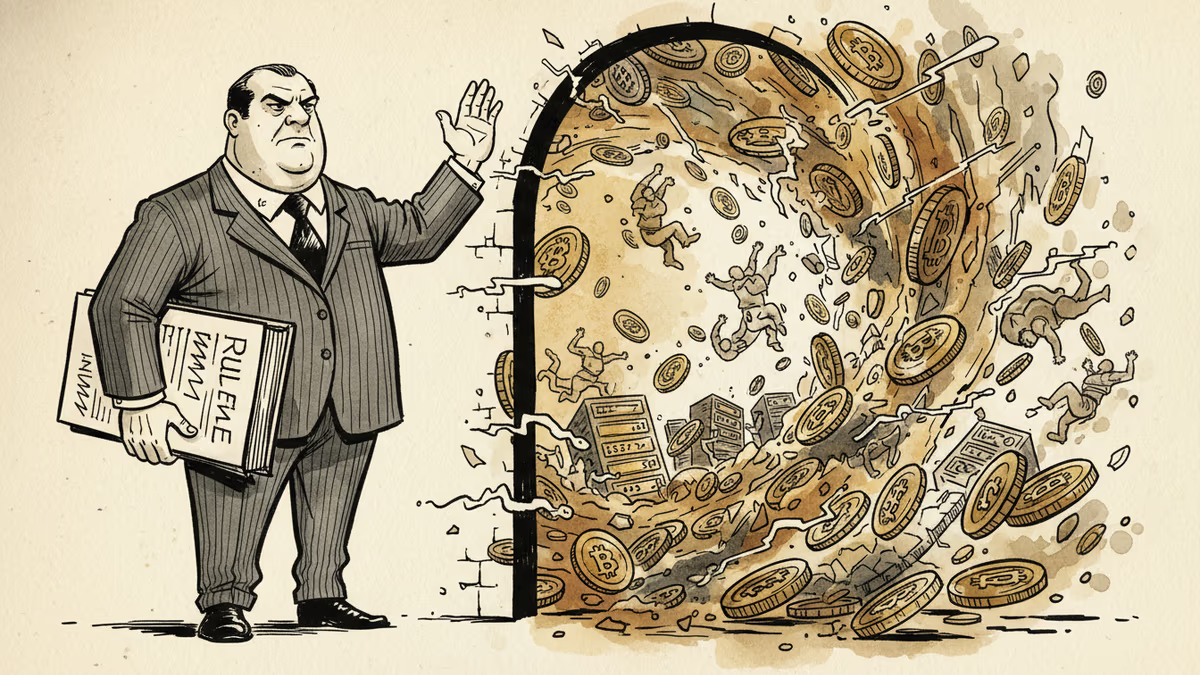
The SEC is preparing a major digital assets regulatory proposal. Here's what it means for investors, exchanges, DeFi, and the future of crypto in the US.
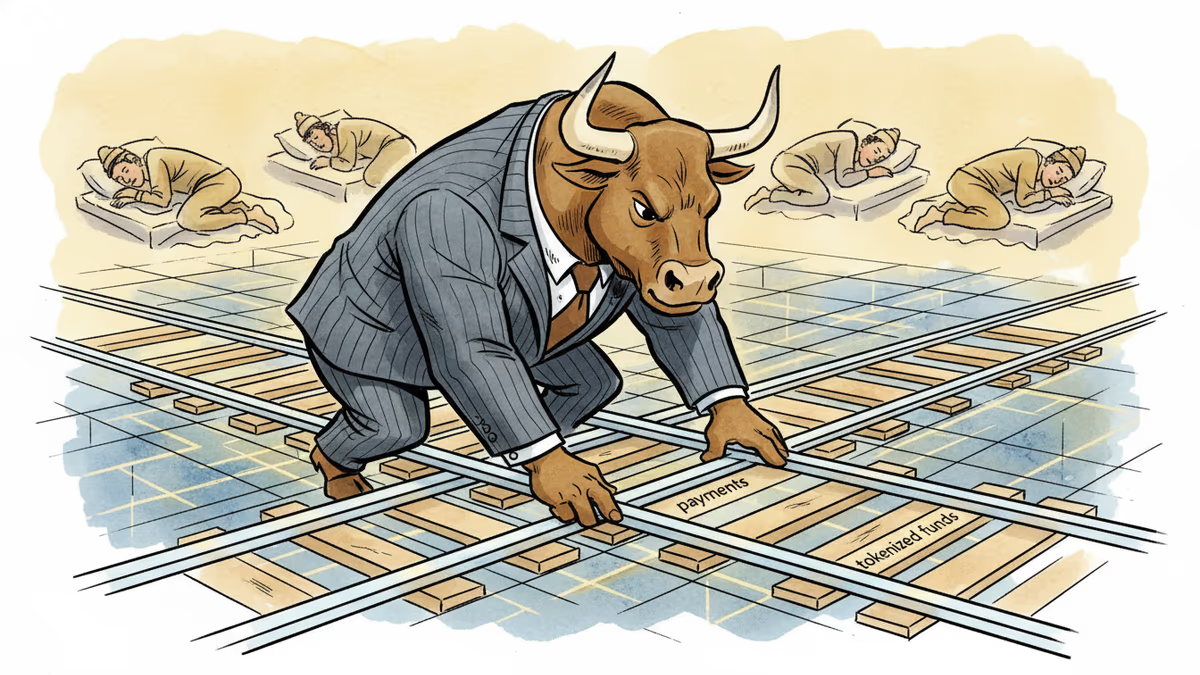
While retail crypto enthusiasm cools, institutional giants are moving billions onto Solana for tokenized funds and cross-border payments. Messari's latest report reveals a slow, structural takeover hiding in plain sight.
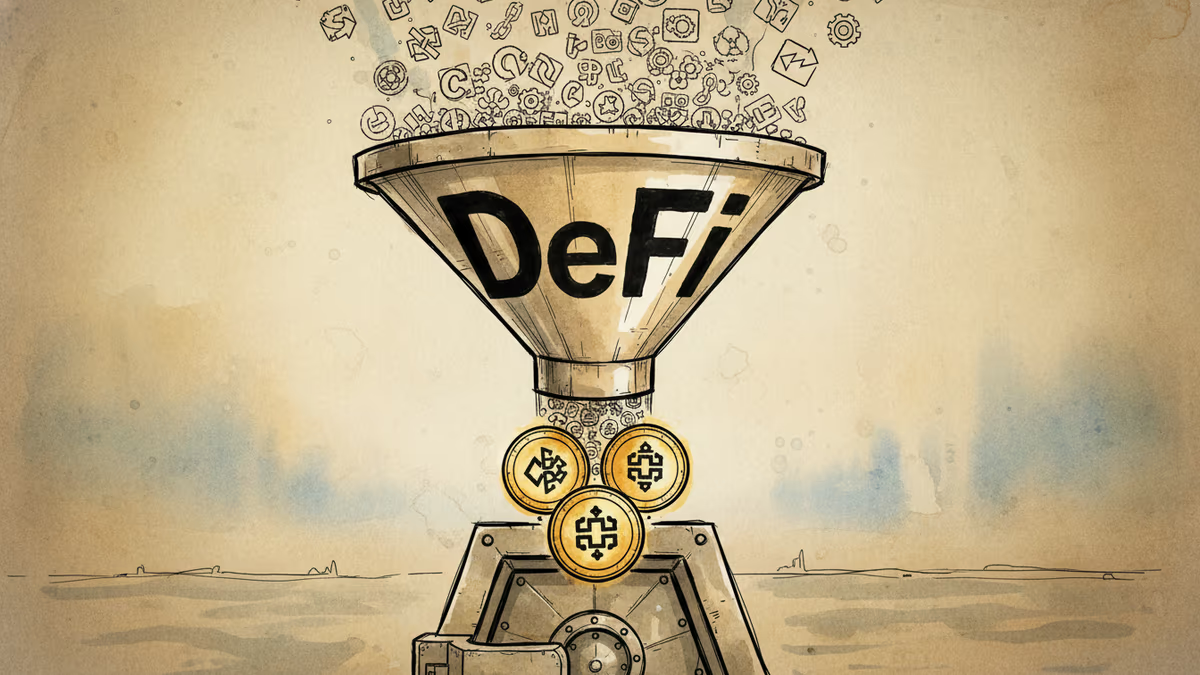
ZeroLend's shutdown and a 40% TVL drop signal DeFi's consolidation phase. Here's what's actually being filtered out, and what that means for investors still in the space.
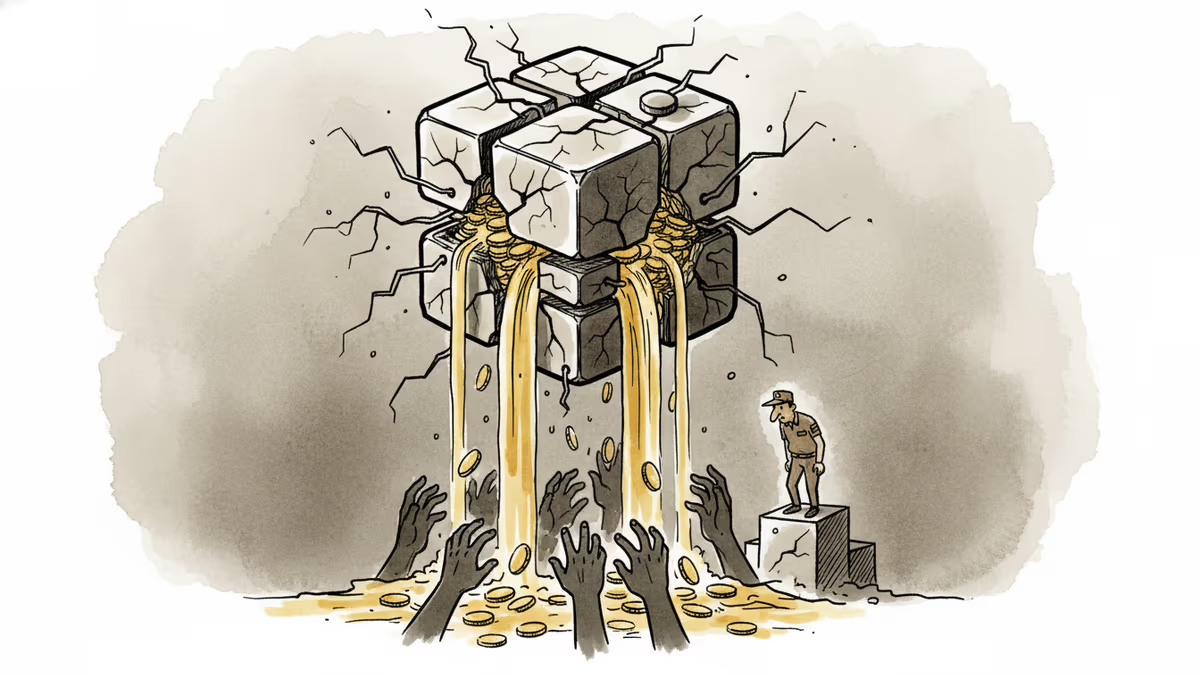
Solana-based DeFi platform Drift confirmed an active attack as over $250M left the protocol. DRIFT token crashed 20%. What does it mean for DeFi security?
The SEC is preparing a major digital assets regulatory proposal. Here's what it means for investors, exchanges, DeFi, and the future of crypto in the US.
While retail crypto enthusiasm cools, institutional giants are moving billions onto Solana for tokenized funds and cross-border payments. Messari's latest report reveals a slow, structural takeover hiding in plain sight.
ZeroLend's shutdown and a 40% TVL drop signal DeFi's consolidation phase. Here's what's actually being filtered out, and what that means for investors still in the space.
Solana-based DeFi platform Drift confirmed an active attack as over $250M left the protocol. DRIFT token crashed 20%. What does it mean for DeFi security?
Thoughts
Share your thoughts on this article
Sign in to join the conversation