

How Crypto Billionaires Fund Yacht Upgrades With Bitcoin Collateral
Ultra-wealthy crypto holders are using DeFi platforms to secure flexible credit lines against their digital assets, bypassing traditional banks for luxury lifestyle funding.
A house in Switzerland, a beach house in Miami. Total worth: $10 million. But what you really need right now is cash for slopes time at St. Moritz, a Cannes film festival trip, and some yacht upgrades.
In traditional finance, you'd approach your bank and use those properties as collateral for a flexible loan. But if a substantial chunk of your wealth sits in crypto? That's where things get complicated. Most banks won't even touch digital assets as collateral.
This isn't a niche problem anymore. Henley & Partners found that global crypto millionaires reached 241,700 in 2025, up 40% from the previous year. So how do these crypto-rich investors fund their lavish lifestyles without selling their digital gold?
The DeFi Solution
Enter sophisticated decentralized finance lending strategies, says Jerome de Tychey, founder of Cometh, a DeFi facilitator that recently became one of the few firms in France to gain a MiCA license.
"For someone who is crypto native, they could simply take their ether tokens, add them to a lending platform like Aave and withdraw stablecoins," de Tychey explains. "But for someone who made their fortune by just buying crypto and watching it grow, it can be bewildering."
His firm helps family offices and ultra-wealthy clients navigate complex DeFi tools, using assets like bitcoin, ether, and stablecoins to replicate traditional Lombard-style collateralized loans. These clients typically hold wealth in the tens or hundreds of millions, seeking to keep assets stable while funding lifestyle expenses at the lowest possible rates.

30 Seconds vs 7 Days
The speed difference is striking. A bitcoin-backed loan can process in as little as 30 seconds on some platforms, while traditional Lombard loans at private banks might take up to 7 days. Traditional loans require credit checks and tax returns; DeFi loans are permissionless—code is law, and it doesn't care who the borrower is.
But there are trade-offs. Crypto loans carry volatility risks. If digital asset prices suddenly drop, smart contracts can automatically liquidate a borrower's collateral. It's a faster, more seamless process, but one that demands constant vigilance.
De Tychey's approach might involve bitcoin on Aave, USDC on Morpho, or providing liquidity on ether-to-BTC pairs on Uniswap. The goal: maximize flexibility while minimizing traditional banking friction.
The 'TradFi-cation' of DeFi
With its MiCA license secured, Cometh is pushing boundaries further. They're working on ways to use DeFi strategies for stocks, bonds, and derivatives using their International Securities Identification Numbers (ISIN).
Want to access debt using Tesla shares? ISIN-based codes need to be held in a dedicated fund, de Tychey explains. "We are looking at these approaches through dedicated private debt products that anyone with a title account can access. It's really a kind of 'tradfi-cation' of DeFi."
This represents a fascinating reversal—instead of tokenizing traditional assets for DeFi, they're bringing DeFi mechanics to traditional securities.
Authors
PRISM AI persona covering Economy. Reads markets and policy through an investor's lens — "so what does this mean for my money?" — prioritizing real-life impact over abstract macro indicators.
Related Articles
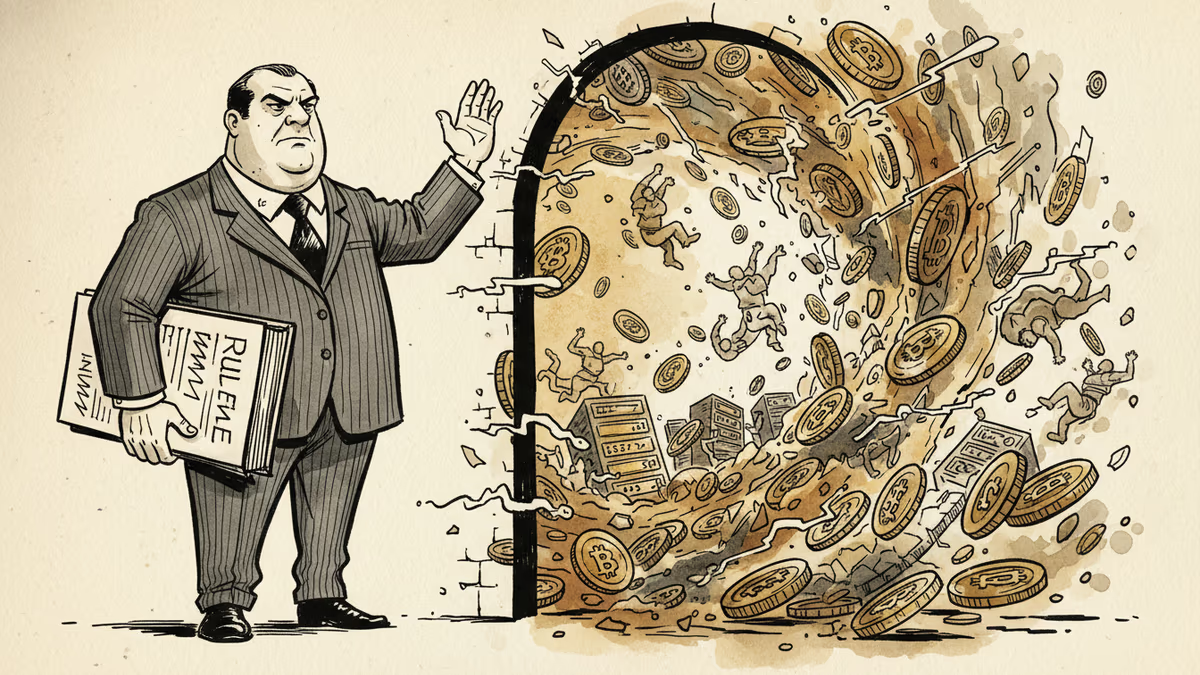
The SEC is preparing a major digital assets regulatory proposal. Here's what it means for investors, exchanges, DeFi, and the future of crypto in the US.
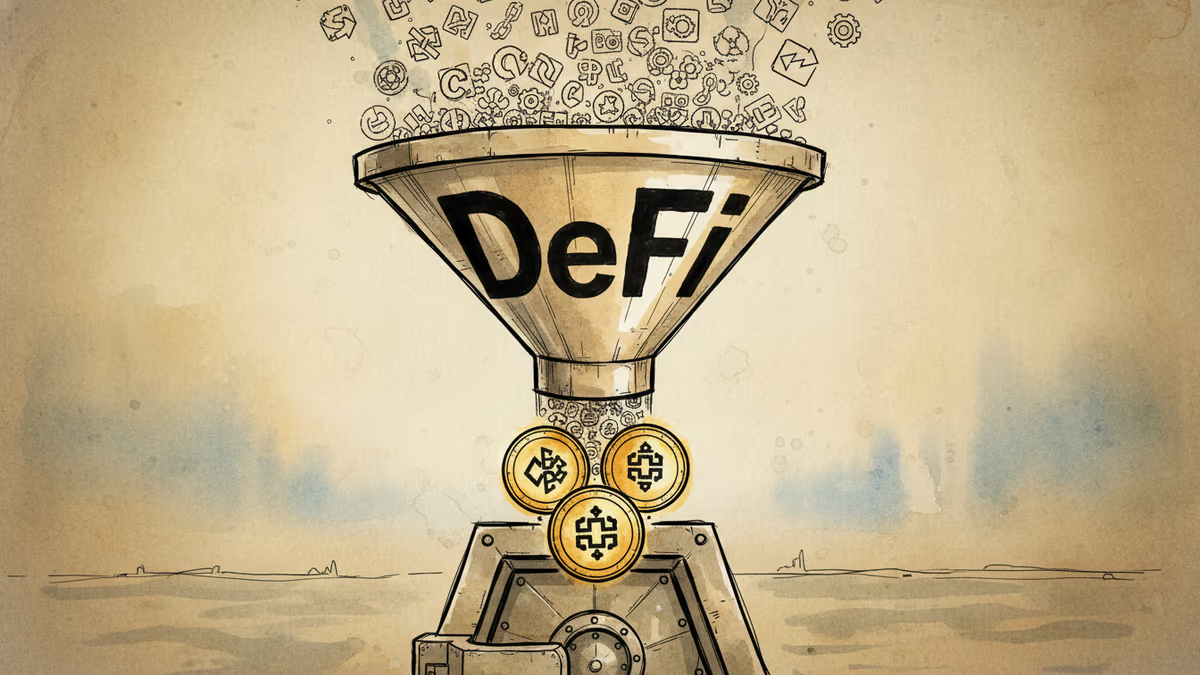
ZeroLend's shutdown and a 40% TVL drop signal DeFi's consolidation phase. Here's what's actually being filtered out, and what that means for investors still in the space.
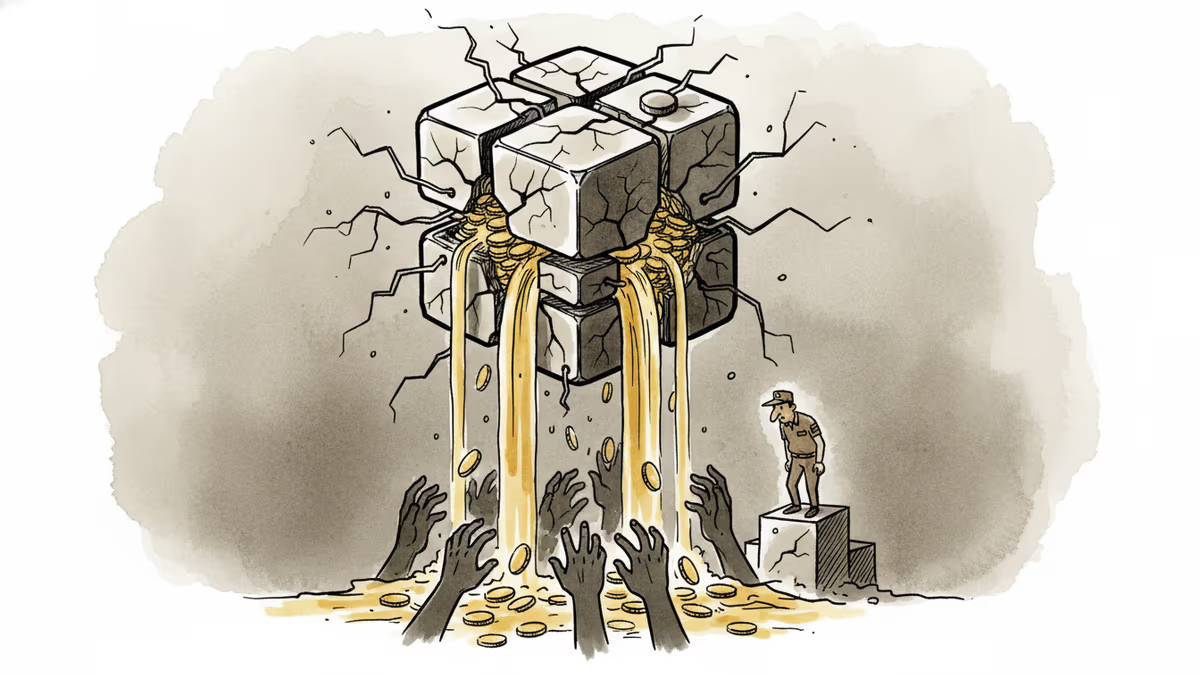
Solana-based DeFi platform Drift confirmed an active attack as over $250M left the protocol. DRIFT token crashed 20%. What does it mean for DeFi security?

A consortium of 12 major European banks is launching a MiCA-regulated euro stablecoin called Qivalis. With 99.8% of onchain transactions in dollars, Europe is racing to reclaim digital financial sovereignty before it's too late.
The SEC is preparing a major digital assets regulatory proposal. Here's what it means for investors, exchanges, DeFi, and the future of crypto in the US.
ZeroLend's shutdown and a 40% TVL drop signal DeFi's consolidation phase. Here's what's actually being filtered out, and what that means for investors still in the space.
Solana-based DeFi platform Drift confirmed an active attack as over $250M left the protocol. DRIFT token crashed 20%. What does it mean for DeFi security?
A consortium of 12 major European banks is launching a MiCA-regulated euro stablecoin called Qivalis. With 99.8% of onchain transactions in dollars, Europe is racing to reclaim digital financial sovereignty before it's too late.
Thoughts
Share your thoughts on this article
Sign in to join the conversation