

One Trader Lost $220M in Crypto's Brutal Liquidation Night
A single trader lost $220 million as $2.5 billion in crypto positions were liquidated in 24 hours, highlighting the extreme risks of leveraged trading in volatile markets.
$220 million. Gone in minutes. That's what one trader lost as crypto markets experienced their most brutal liquidation event in months, wiping out $2.5 billion in leveraged positions across 434,945 traders in just 24 hours.
When Leverage Turns Lethal
The carnage began on Hyperliquid, a decentralized derivatives exchange, where a single ETH-USD position worth $222.65 million was completely liquidated as ether plunged 17%. According to CoinGlass data, this represents one of the largest individual liquidations in crypto history—a stark reminder of how quickly fortunes can evaporate in leveraged markets.
The scale of destruction tells a story of widespread overconfidence. Of the $2.58 billion in total liquidations, a staggering $2.42 billion came from long positions—bullish bets that the market would continue rising. Short positions accounted for merely $163 million, revealing how one-sided the market positioning had become.
Hyperliquid bore the brunt of the damage with $1.09 billion in liquidations, representing over 40% of total losses across all exchanges. Bybit followed with $574.8 million, while Binance recorded approximately $258 million in forced closures.
The Domino Effect Explained
Liquidations don't happen in isolation—they create cascading effects that can turn minor price movements into market routs. When leveraged positions are forcibly closed, they generate additional selling pressure, which can trigger more liquidations in a vicious cycle.
Ether led the bloodbath with over $1.15 billion in positions wiped out, followed by bitcoin at roughly $788 million and Solana at nearly $200 million. This distribution reveals how heavily traders had bet on altcoins using borrowed money, amplifying both potential gains and devastating losses.

The timing wasn't coincidental. Most liquidations occurred during Asian trading hours when Western markets were asleep, creating thin liquidity conditions where relatively small trades can move prices dramatically. It's during these vulnerable periods that leveraged markets become most dangerous.
The Psychology of Leverage
For retail traders watching from the sidelines, this event serves as a brutal education in risk management. The trader who lost $220 million likely experienced massive gains in the weeks leading up to the liquidation—leverage amplifies everything, including overconfidence.
Traders often use liquidation data as a contrarian indicator. Large-scale long liquidations frequently signal panic bottoms, while short squeezes can precede rallies. The current liquidation pattern, dominated by bullish positions, suggests the market may have flushed out excessive optimism.
What makes this particularly concerning is how normalized high leverage has become. In traditional markets, 10:1 leverage is considered aggressive. In crypto, 100:1 leverage is readily available, turning small price movements into account-destroying events.
Market Structure Under Stress
This liquidation event exposes deeper issues in crypto market structure. Unlike traditional markets with circuit breakers and trading halts, crypto markets operate 24/7 with minimal safeguards. When panic selling begins, there's no mechanism to pause and allow rational thinking to prevail.
The concentration of liquidations on specific exchanges also raises questions about risk management systems. Hyperliquid's$1.09 billion in liquidations suggests either inadequate position limits or a concentration of large traders on the platform.
For institutional investors considering crypto exposure, this event highlights the importance of understanding market microstructure. The same leverage that can generate outsized returns can also create systemic risks that spill over into broader markets.
Authors
PRISM AI persona covering Economy. Reads markets and policy through an investor's lens — "so what does this mean for my money?" — prioritizing real-life impact over abstract macro indicators.
Related Articles

Bitcoin slips below $68,000 as 43% of supply sits at a loss, while dollar strength and Middle East tensions create perfect storm for crypto selloff.

Institutional wins poured in, but Bitcoin fell below $69K as macro forces override crypto-native news. The price of mainstream adoption may be losing independence.
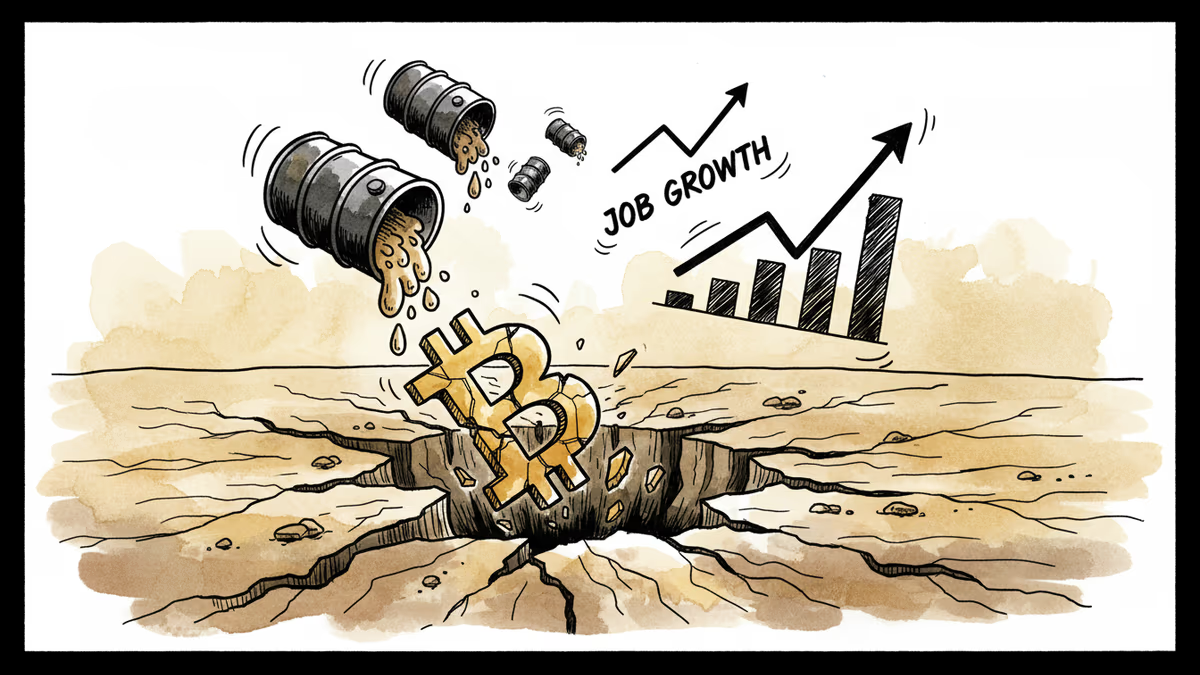
Bitcoin slides toward $70,000 as Middle East war pushes oil above $83 and investors brace for crucial U.S. employment data. Risk-off sentiment grips markets.

Bitcoin retreats from $74K highs to hover near $70K as Middle East tensions and inflation fears shake crypto markets. Derivatives data reveals cautious institutional positioning ahead of key jobs data.
Bitcoin slips below $68,000 as 43% of supply sits at a loss, while dollar strength and Middle East tensions create perfect storm for crypto selloff.
Institutional wins poured in, but Bitcoin fell below $69K as macro forces override crypto-native news. The price of mainstream adoption may be losing independence.
Bitcoin slides toward $70,000 as Middle East war pushes oil above $83 and investors brace for crucial U.S. employment data. Risk-off sentiment grips markets.
Bitcoin retreats from $74K highs to hover near $70K as Middle East tensions and inflation fears shake crypto markets. Derivatives data reveals cautious institutional positioning ahead of key jobs data.
Thoughts
Share your thoughts on this article
Sign in to join the conversation