

See You at Work Tomorrow: tvN's Bet on Burnout Romance
tvN's new rom-com See You at Work Tomorrow drops its first teaser with Seo In-guk and Park Ji-hyun. Why workplace romance keeps selling to exhausted Korean viewers — and what that says about the genre's limits.
The alarm goes off. You're already tired before the day begins. You go anyway.
That's the emotional premise tvN is betting on with See You at Work Tomorrow, its upcoming romantic comedy starring Seo In-guk and Park Ji-hyun. The first video teaser dropped in May 2026, showing Park Ji-hyun's character Cha Ji-yoon — a deeply burned-out office worker — navigating a workplace that also happens to include her boss, played by Seo In-guk. The setup is familiar. That familiarity is the point.
Where This Fits in the 2026 K-Drama Landscape
To understand what tvN is doing here, it helps to look at what it's not doing. Netflix's high-budget genre titles dominate the top of the market right now. tvN, operating in the middle tier, has long relied on a different formula: recognizable stars, emotionally legible premises, and contained romantic arcs that don't require the viewer to commit to a sprawling mythology.
Seo In-guk fits this model well. Since Boyfriend on Demand (2024), he's built credibility specifically within the rom-com genre — not through sheer fandom scale, but through genre fit. Park Ji-hyun, who expanded her range with You and Everything Else, takes on a burnout character here that puts her front and center. The pairing is designed to deliver stable fandom turnout while leaving room for on-screen chemistry to do the heavier lifting.
This is a deliberate positioning against the algorithm. In an OTT landscape where content is served rather than sought, dramas that viewers actively search for need either a strong star pull or an immediately legible premise. See You at Work Tomorrow has both.
Why Burnout Keeps Showing Up in Korean Drama

Cha Ji-yoon's exhaustion isn't incidental. Burnout has become a structural motif in Korean drama since My Liberation Notes (2022) made it the emotional core of a primetime hit. What's shifted since then is how different shows propose to resolve it.
My Liberation Notes offered quiet resignation and rural escape. Castaway Diva (2023) gave its burned-out protagonist a second shot at a dream she'd abandoned. Azure Spring (2026) sent its lead to the sea. See You at Work Tomorrow does something different: it keeps its protagonist inside the system entirely. The resolution isn't escape — it's finding something worth feeling inside the office walls.
That's a meaningful divergence. It speaks to a viewer who isn't fantasizing about quitting, but about making the daily grind bearable. Whether that's a more honest form of comfort or a more conservative one is a question the genre rarely asks of itself.
The boss-subordinate dynamic adds friction. Workplace power imbalances as romantic fuel have faced sustained criticism in Korean drama discourse since at least the mid-2010s. The genre hasn't abandoned the setup — it's learned to dress it differently. How See You at Work Tomorrow handles that asymmetry, whether it treats it as a tension to be examined or simply as a backdrop for chemistry, will likely define how the show lands with younger viewers who've grown up with a sharper vocabulary around workplace dynamics.
The Distribution Question Nobody's Asking Loudly
Rom-coms in this tier live or die by their overseas distribution deals. tvN dramas typically stream domestically via Tving simultaneously, with global rights negotiated separately. Netflix has been aggressive about locking in tvN titles for international distribution — a trend that quietly shifts where the real revenue gets made.
Romantic comedies have historically performed well in Southeast Asia and Japan, markets that have sustained demand for exactly this kind of contained, emotionally warm K-drama. If See You at Work Tomorrow lands a strong global distribution deal, the domestic ratings become almost secondary to the international streaming numbers. That's a structural shift in how Korean television measures success — and it's one the industry is still working out how to talk about.
This content is AI-generated based on source articles. While we strive for accuracy, errors may occur. We recommend verifying with the original source.
Related Articles

MBC's action-comedy Fifties Professionals introduces Kwon Yul as an unpredictable new antagonist. Here's why this drama's premise matters beyond the casting news.
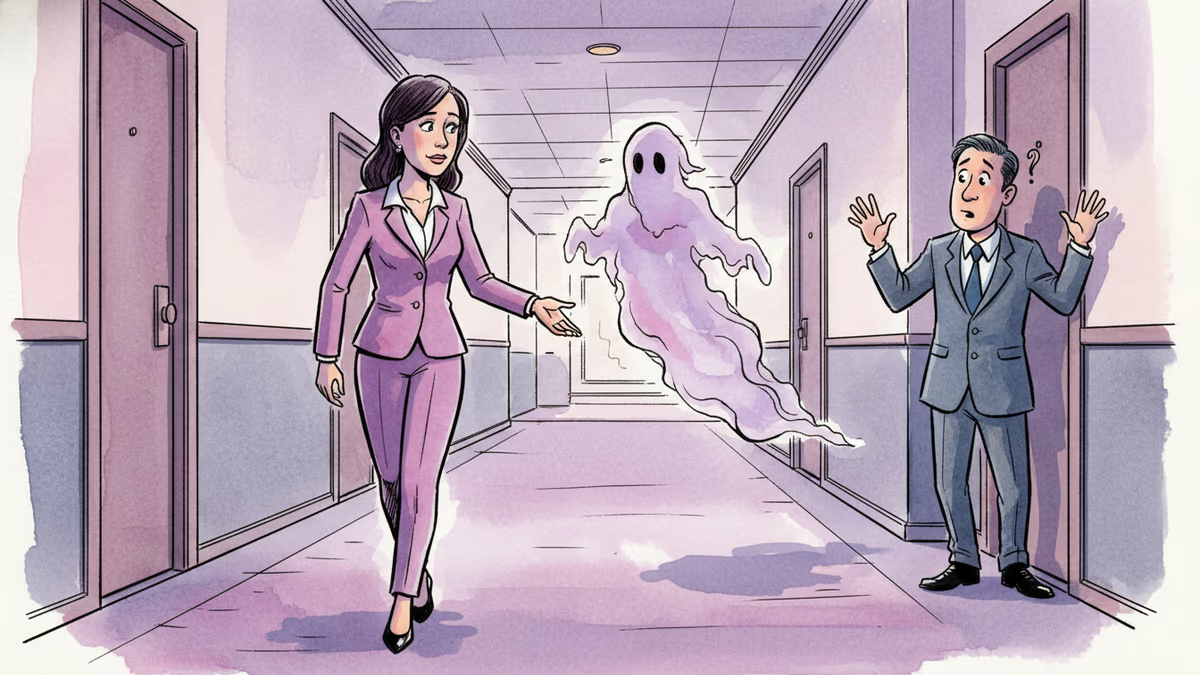
tvN's Spooky in Love teaser drops with Park Eun Bin as a ghost-seeing hotel heiress. Behind the occult romance lies a calculated industry strategy worth unpacking.
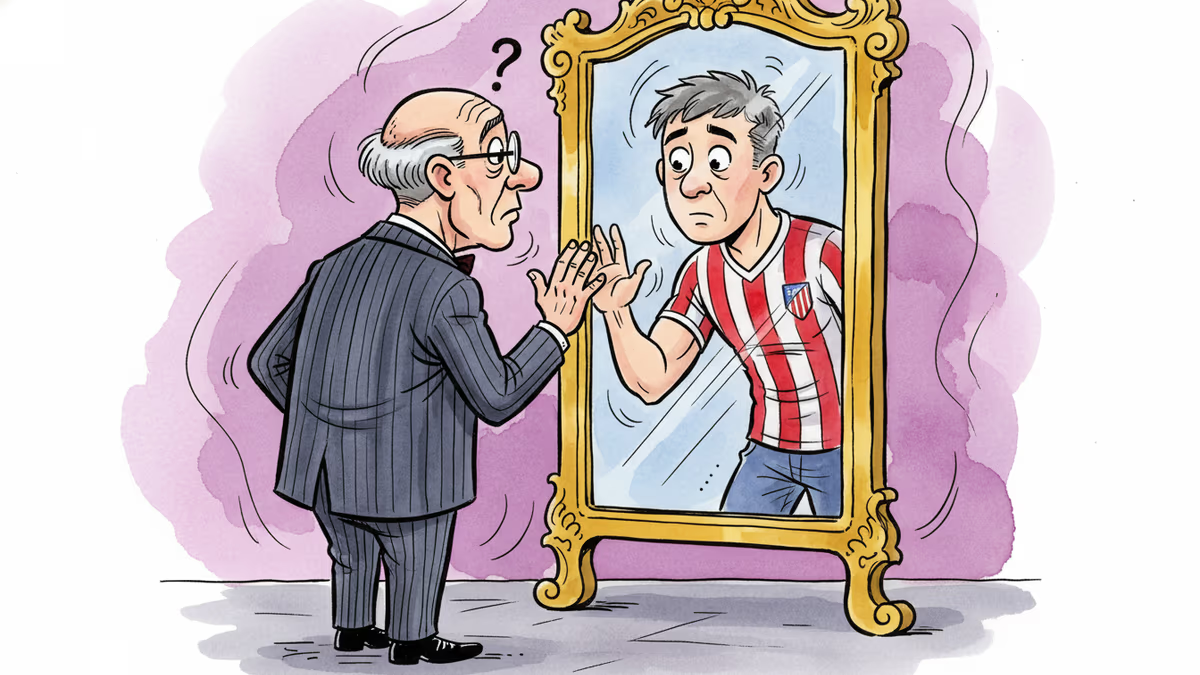
JTBC's Reborn Rookie pairs veteran actor Son Hyun Joo with idol-turned-actor Lee Jun Young in a body-swap drama. A look at the genre's industrial logic and what it signals about Korean TV's audience strategy.

JTBC's upcoming comedy crime drama Apartment casts Ji Sung, Ha Yoon-kyung, Park Byung-eun, and Moon Sori in a story where an ex-gangster enters a residents' committee election. What does the project reveal about JTBC's 2026 strategy?
MBC's action-comedy Fifties Professionals introduces Kwon Yul as an unpredictable new antagonist. Here's why this drama's premise matters beyond the casting news.
tvN's Spooky in Love teaser drops with Park Eun Bin as a ghost-seeing hotel heiress. Behind the occult romance lies a calculated industry strategy worth unpacking.
JTBC's Reborn Rookie pairs veteran actor Son Hyun Joo with idol-turned-actor Lee Jun Young in a body-swap drama. A look at the genre's industrial logic and what it signals about Korean TV's audience strategy.
JTBC's upcoming comedy crime drama Apartment casts Ji Sung, Ha Yoon-kyung, Park Byung-eun, and Moon Sori in a story where an ex-gangster enters a residents' committee election. What does the project reveal about JTBC's 2026 strategy?
Thoughts
Share your thoughts on this article
Sign in to join the conversation