
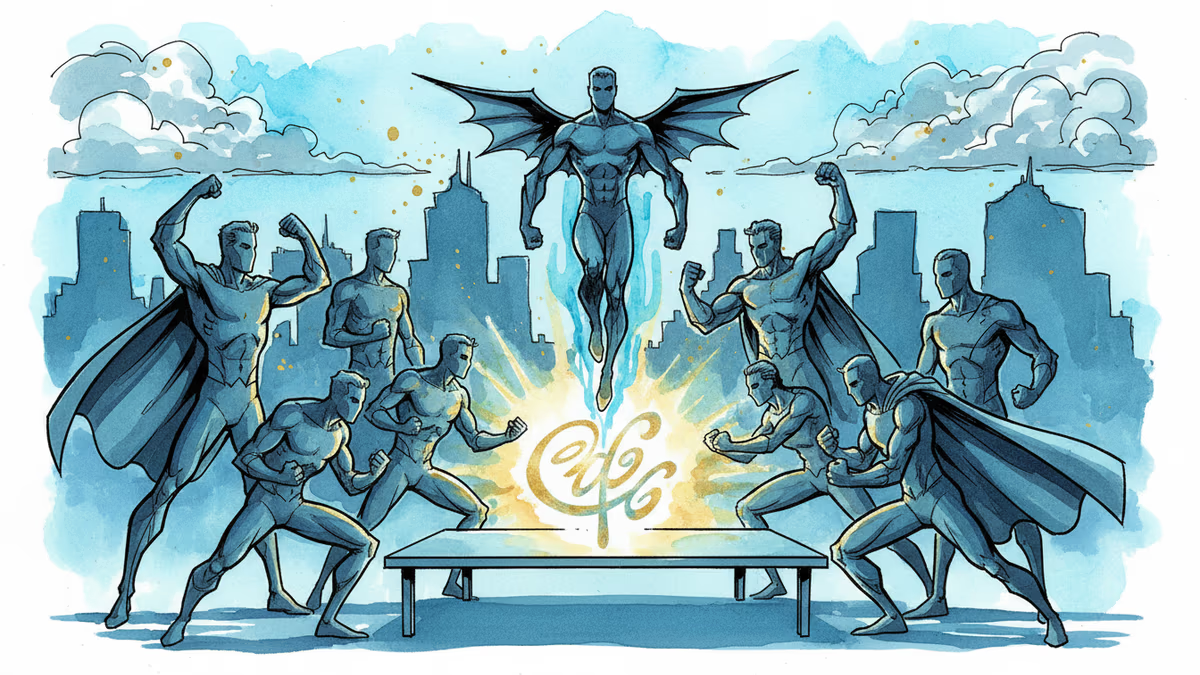
Moving 2 Begins: Can Disney+'s Biggest Korean Bet Pay Off Twice?
Disney+'s Moving Season 2 has kicked off script readings with Ryu Seung-ryong, Han Hyo-joo, and Jo In-sung. A new director, a recast lead, and a bigger ensemble—here's what's at stake.
The most expensive Korean drama Disney+ has ever produced is coming back. The question is whether the sequel can justify the price of admission—emotionally, not just financially.
On May 19, 2026, Moving Season 2 held its first script reading, confirming the return of the original trio: Ryu Seung-ryong, Han Hyo-joo, and Jo In-sung. The production also revealed a substantial roster of returning cast members alongside major new additions including Sol Kyung-gu, Lee Hee-joon, Ryu Hye-young, and Noh Yoon-seo. Original webtoon creator Kangfull returns to write the scripts, while director Kim Sung-hoon—known internationally for Kingdom—steps in to replace Season 1's Park In-je.
What Season 1 Actually Built
When Moving Season 1 dropped in 2023, it did something rare for a superhero story: it made the action secondary to grief. The 20-episode run was structured around Cold War-era state violence, parents carrying secrets, and children inheriting abilities they never asked for. That emotional architecture—not the flying or the regeneration—was why audiences sat through the runtime.
For Disney+, the series was a strategic statement. While Netflix had claimed the global K-drama conversation with Squid Game, Disney+ was betting that a prestige, high-budget Korean superhero franchise could carve out its own lane. By most measures, the bet worked. Moving became the platform's most-watched Korean original at the time of its release, and it demonstrated that Korean genre content could compete on production value with Western tentpole properties.
That success, however, is now the ceiling Season 2 has to clear.
Three Variables That Didn't Exist in Season 1

The script reading confirms production is underway, but the details already visible carry weight.
The most immediately noticeable change is the recasting of Kim Bong-seok, the son of Han Hyo-joo and Jo In-sung's characters. Original actor Lee Jung-ha is currently completing mandatory military service—a reality of South Korean life that has reshuffled countless productions. Won Kyu-bin steps into the role. In a standalone drama, recasting a supporting character is manageable. In a sequel where audience attachment to family dynamics was a core emotional engine, replacing the son mid-story asks viewers to do extra work.
The director switch is the second variable. Park In-je built Season 1's specific visual rhythm: slow-burn reveals, restrained action, long emotional silences before the spectacle. Kim Sung-hoon brings a different toolkit. Kingdom was precise, kinetic, and built for sustained tension—qualities that serve a different kind of story. Whether he can inhabit Moving's more introspective register, or whether Season 2 shifts toward his strengths, will define the season's identity.
The third variable is scale. Adding Sol Kyung-gu, Lee Hee-joon, and several other high-profile names to an already large ensemble is a double-edged move. It signals ambition and world-expansion. It also risks diluting the intimate character focus that distinguished Season 1 from generic superhero fare. Season 1 struggled with this balance in its later episodes—a common critique even among fans who loved the series overall.
The Streaming Economics Behind the Sequel
Moving Season 2 isn't just a creative project. It's a retention tool.
Across 2024 and 2025, Disney+ recalibrated its Korean content investment, pulling back from broad development and concentrating resources on proven IP. That shift mirrors a global OTT trend: subscriber growth has plateaued for most platforms, and the calculus has shifted from acquiring new viewers to keeping existing ones. A sequel to a beloved series is more cost-efficient for that purpose than launching an untested property.
Netflix has followed the same logic with Squid Game Season 2 and Hellbound Season 2. The pattern is consistent enough to read as industry-wide policy rather than individual platform choice. The risk, of course, is that sequels made primarily for retention rather than creative necessity tend to feel exactly like that.
What separates Moving from the more mechanical sequel pipeline is Kangfull's continued involvement. The original webtoon author writing both seasons provides a continuity of voice that most franchise extensions lack. Whether that's enough to sustain the emotional credibility of the first season—or whether the structural pressures of sequel-making override it—is genuinely open.
This content is AI-generated based on source articles. While we strive for accuracy, errors may occur. We recommend verifying with the original source.
Related Articles

MBC's action-comedy Fifties Professionals introduces Kwon Yul as an unpredictable new antagonist. Here's why this drama's premise matters beyond the casting news.
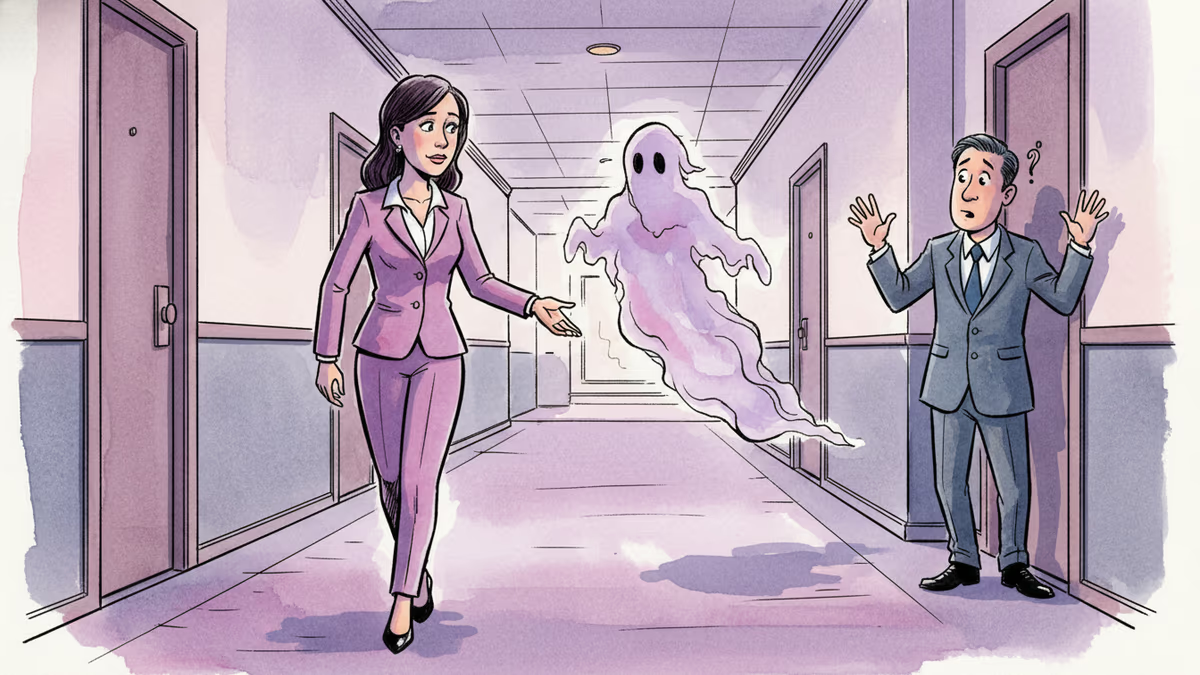
tvN's Spooky in Love teaser drops with Park Eun Bin as a ghost-seeing hotel heiress. Behind the occult romance lies a calculated industry strategy worth unpacking.
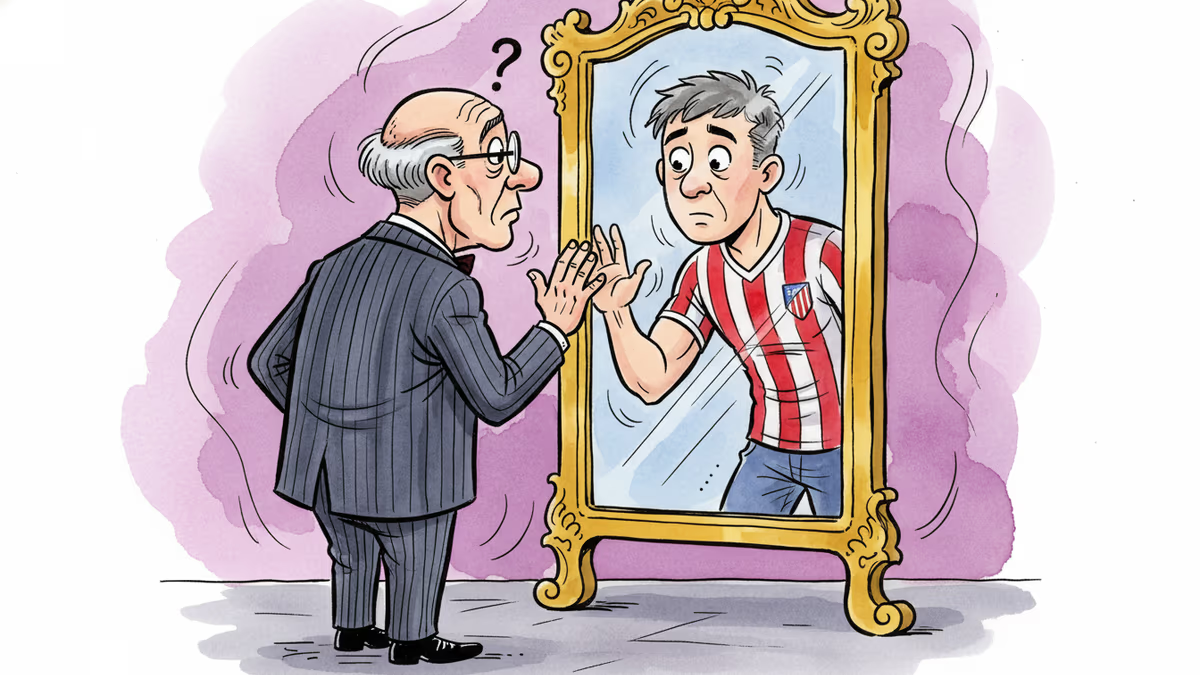
JTBC's Reborn Rookie pairs veteran actor Son Hyun Joo with idol-turned-actor Lee Jun Young in a body-swap drama. A look at the genre's industrial logic and what it signals about Korean TV's audience strategy.
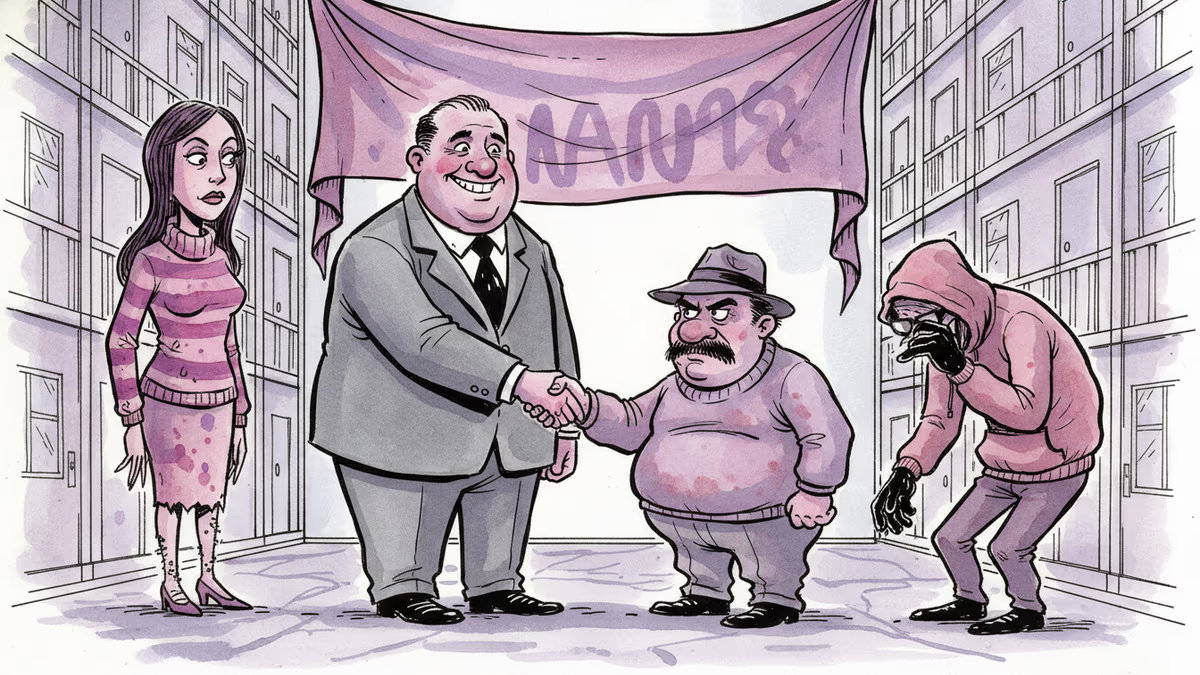
JTBC's upcoming comedy crime drama Apartment casts Ji Sung, Ha Yoon-kyung, Park Byung-eun, and Moon Sori in a story where an ex-gangster enters a residents' committee election. What does the project reveal about JTBC's 2026 strategy?
MBC's action-comedy Fifties Professionals introduces Kwon Yul as an unpredictable new antagonist. Here's why this drama's premise matters beyond the casting news.
tvN's Spooky in Love teaser drops with Park Eun Bin as a ghost-seeing hotel heiress. Behind the occult romance lies a calculated industry strategy worth unpacking.
JTBC's Reborn Rookie pairs veteran actor Son Hyun Joo with idol-turned-actor Lee Jun Young in a body-swap drama. A look at the genre's industrial logic and what it signals about Korean TV's audience strategy.
JTBC's upcoming comedy crime drama Apartment casts Ji Sung, Ha Yoon-kyung, Park Byung-eun, and Moon Sori in a story where an ex-gangster enters a residents' committee election. What does the project reveal about JTBC's 2026 strategy?
Thoughts
Share your thoughts on this article
Sign in to join the conversation