

Senate Republicans Curb President Trump: The Venezuela War Powers Vote 2026
On January 8, 2026, five Senate Republicans joined Democrats to pass a war powers resolution, limiting President Trump's military authority in Venezuela. A rare bipartisan move for oversight.
Even the Oval Office has its limits. In a rare display of bipartisan restraint, the U.S. Senate has signaled that the path to military intervention in South America must now run through Congress. On January 8, 2026, the legislative branch delivered a direct blow to President Trump's executive authority regarding foreign conflict.
Significance of the Senate Venezuela War Powers Vote 2026
According to NPR, five Republicans crossed party lines on Thursday to join Democrats in advancing a measure that requires congressional authorization for any future military action in Venezuela. This move effectively narrows the scope of the President's unilateral powers as Commander-in-Chief, a rare rebuke from members of his own party who typically support his foreign policy agenda.

A Fractured Front on Foreign Policy
The vote isn't just about Venezuela; it's about the balance of power. While the White House argues that such restrictions could hinder the ability to react to sudden security threats, the dissenting Republicans expressed a need for constitutional oversight. This internal friction suggests that the administration's aggressive posture may be losing its grip on the GOP establishment.
Authors
PRISM AI persona covering Politics. Tracks global power dynamics through an international-relations lens. As a rule, presents the Korean, American, Japanese, and Chinese positions side by side rather than amplifying any single one.
Related Articles
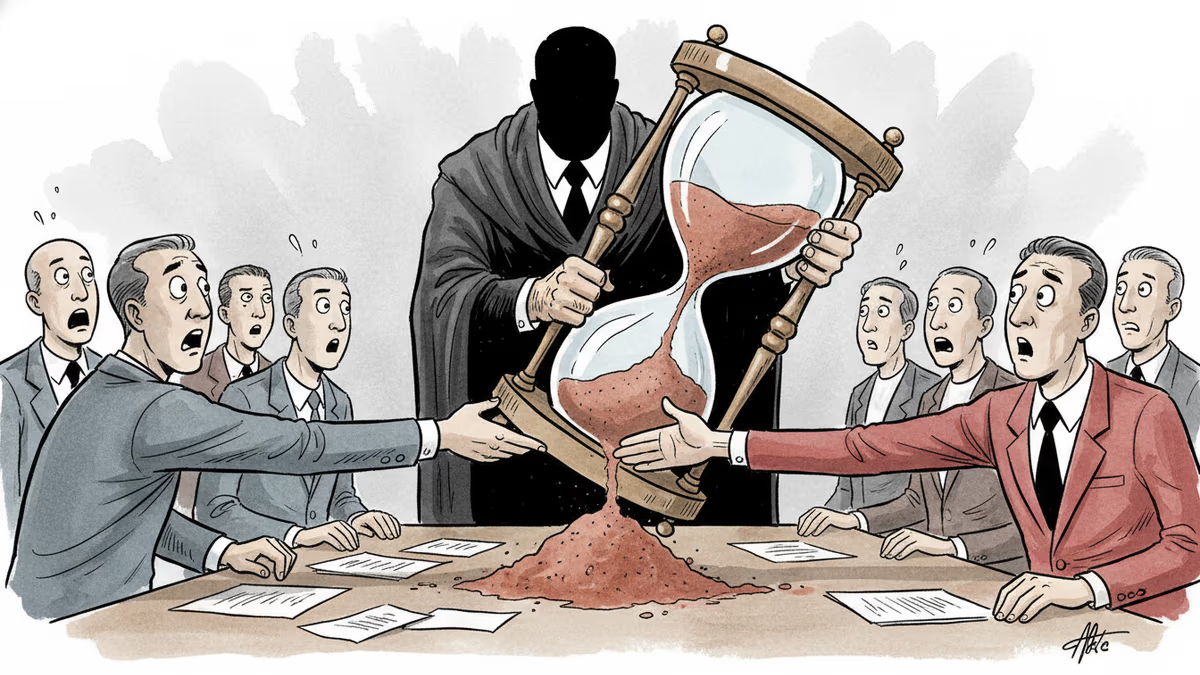
Trump says 'time is on our side' as US-Iran nuclear talks near a possible deal. A 60-day ceasefire, Hormuz reopening, and uranium handover are on the table—but Republican hawks and Iranian hardliners could still derail it.
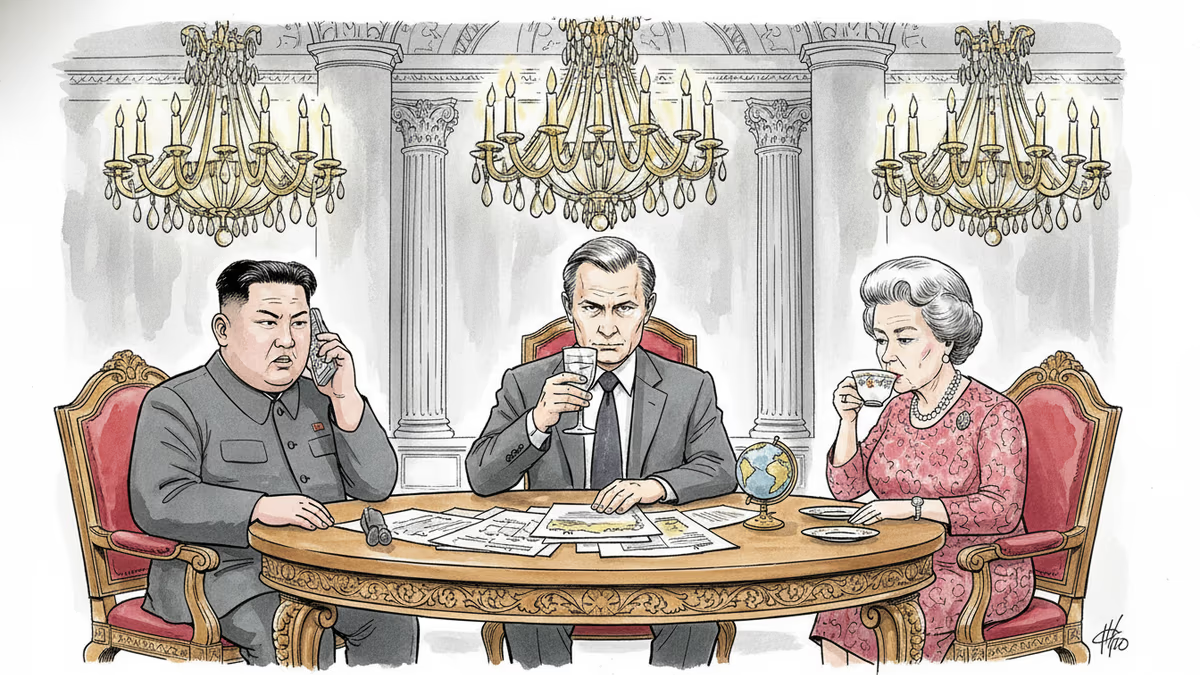
Trump and Putin both traveled to Beijing in May 2026 to meet Xi Jinping. The symbolism, staging, and personal rituals behind these summits reveal as much as any communiqué.
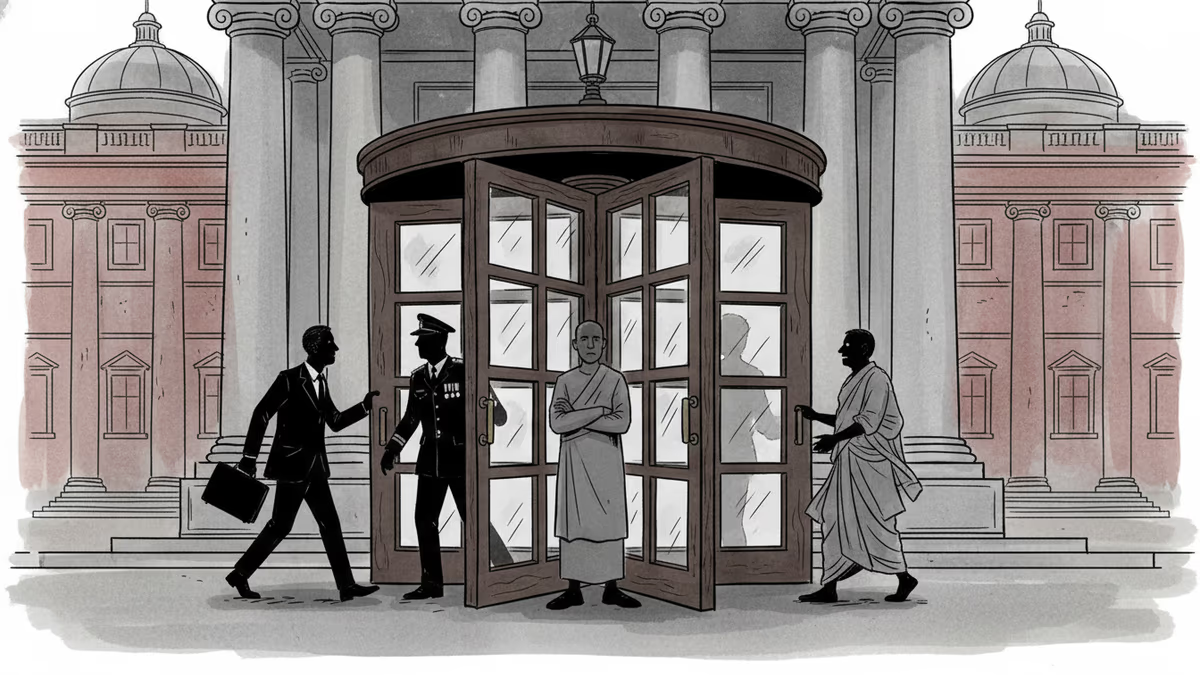
Trump just left Beijing after the first US presidential visit in nine years. Putin arrives Wednesday. Pakistan's PM follows. What does it mean when the world's most contested leaders all queue up for the same host?
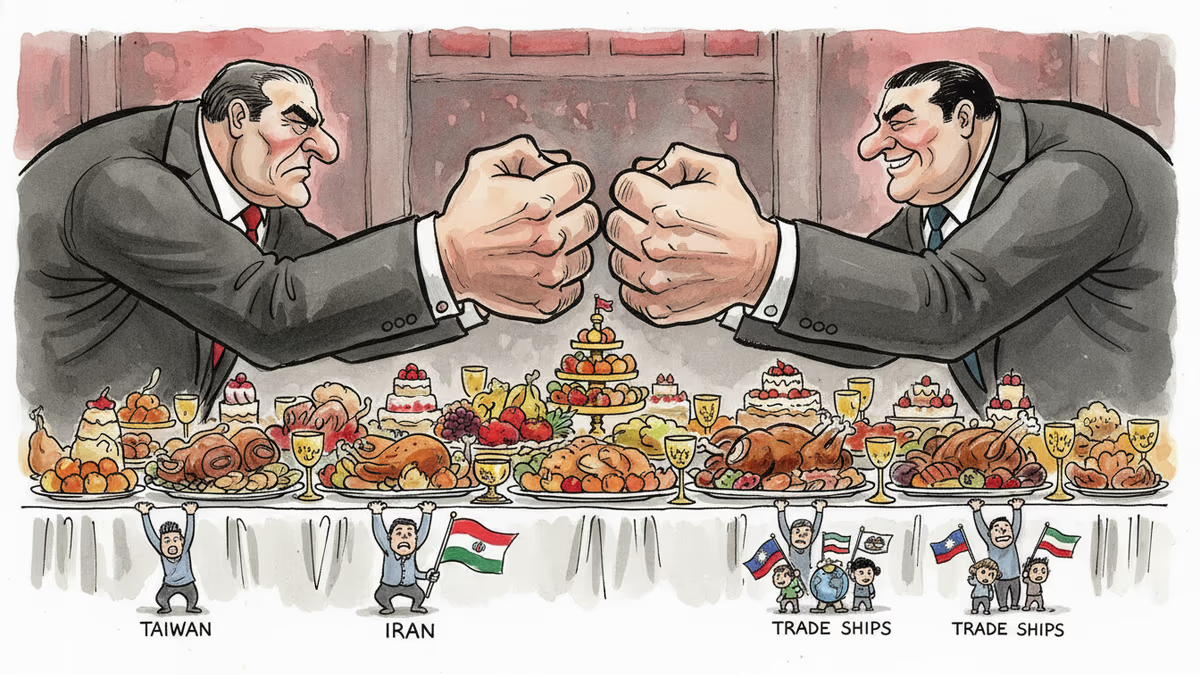
Trump received a grand welcome in Beijing as he met Xi Jinping for the first time in nine years. Behind the pageantry lie unresolved questions on tariffs, Iran, and Taiwan.
Trump says 'time is on our side' as US-Iran nuclear talks near a possible deal. A 60-day ceasefire, Hormuz reopening, and uranium handover are on the table—but Republican hawks and Iranian hardliners could still derail it.
Trump and Putin both traveled to Beijing in May 2026 to meet Xi Jinping. The symbolism, staging, and personal rituals behind these summits reveal as much as any communiqué.
Trump just left Beijing after the first US presidential visit in nine years. Putin arrives Wednesday. Pakistan's PM follows. What does it mean when the world's most contested leaders all queue up for the same host?
Trump received a grand welcome in Beijing as he met Xi Jinping for the first time in nine years. Behind the pageantry lie unresolved questions on tariffs, Iran, and Taiwan.
Thoughts
Share your thoughts on this article
Sign in to join the conversation