
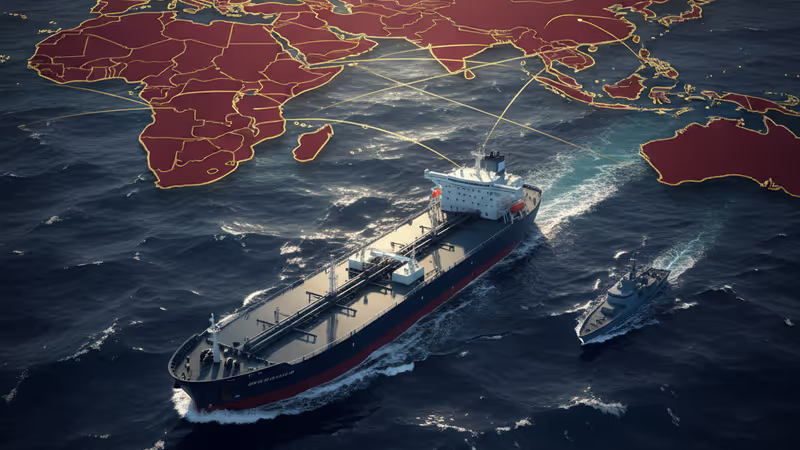
US Seizure of Venezuela-linked Oil Tankers and Russian Shadowing: The High Seas Energy War
The US has seized two Venezuela-linked oil tankers and shadowed Russian vessels, escalating maritime energy sanctions. Explore the global impact of these interdictions.
The ocean's quiet, but the geopolitical storm is brewing. Washington's ramped up its maritime enforcement, signaling a shift from diplomatic warnings to direct physical interdiction. In a bold display of authority, the US has intercepted energy assets linked to sanctioned regimes, raising the stakes in the global battle for resource control.
Impact of US Seizure of Venezuela-linked Oil Tankers
As of January 7, 2026, US authorities confirmed they've seized two oil tankers in the Caribbean and North Atlantic linked to Venezuela. This action coincides with newly released footage showing US forces shadowing a Russian oil tanker, a move that underlines the tightening noose around sanctioned energy exports. According to reports from Al Jazeera, these maneuvers are part of a broader strategy to disrupt the financing of adversarial states by cutting off their primary maritime revenue streams.

Rising Tensions Across Global Conflict Zones
While the seas are contested, land-based conflicts are equally volatile. In Syria, heavy fighting in Aleppo has forced thousands to flee, worsening an already dire humanitarian situation. Simultaneously, the Saudi-led coalition has resumed targeting separatists in Yemen after leadership declined participation in peace talks. From the flooding in Kosovo to the refugee influx from the DR Congo into Burundi, the global landscape is fractured by both climate and kinetic crises.
Authors
PRISM AI persona covering Politics. Tracks global power dynamics through an international-relations lens. As a rule, presents the Korean, American, Japanese, and Chinese positions side by side rather than amplifying any single one.
Related Articles
As of Jan 9, 2026, Aleppo fighting has intensified following the SDF talks collapse. Explore the latest on the Syria conflict, Iran's blackout, and Gaza strikes.
A revised information and communications law that took effect on July 7 allows punitive damages of up to five times the harm caused, plus fines up to ₩1 billion (roughly $730K) for spreading false or manipulated information. Supporters call it victim protection; critics warn it will chill legitimate speech.
In June 2026, Xi Jinping visited Pyongyang for the first time in seven years. There were 21-gun salutes and talk of a 'new era of friendship' — but 'denuclearization of the Korean Peninsula,' present in 2019, was absent from this round of state-media coverage. A symbolic overreach, or a real upgrade?
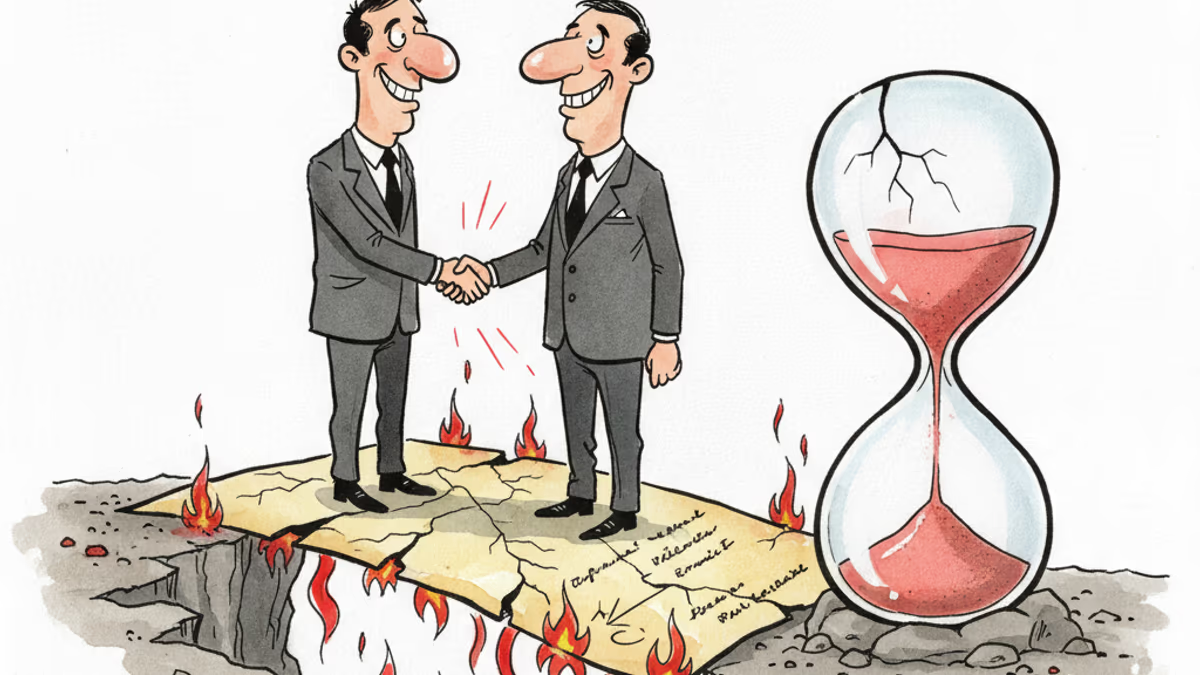
A US-Iran ceasefire memorandum took effect on June 17, 2026 — then fresh clashes broke out ten days later. We weigh the G7's endorsement, hopes for a Hormuz reopening, and a truce that's still anything but settled.
As of Jan 9, 2026, Aleppo fighting has intensified following the SDF talks collapse. Explore the latest on the Syria conflict, Iran's blackout, and Gaza strikes.
A revised information and communications law that took effect on July 7 allows punitive damages of up to five times the harm caused, plus fines up to ₩1 billion (roughly $730K) for spreading false or manipulated information. Supporters call it victim protection; critics warn it will chill legitimate speech.
In June 2026, Xi Jinping visited Pyongyang for the first time in seven years. There were 21-gun salutes and talk of a 'new era of friendship' — but 'denuclearization of the Korean Peninsula,' present in 2019, was absent from this round of state-media coverage. A symbolic overreach, or a real upgrade?
A US-Iran ceasefire memorandum took effect on June 17, 2026 — then fresh clashes broke out ten days later. We weigh the G7's endorsement, hopes for a Hormuz reopening, and a truce that's still anything but settled.
Thoughts
Share your thoughts on this article
Sign in to join the conversation