
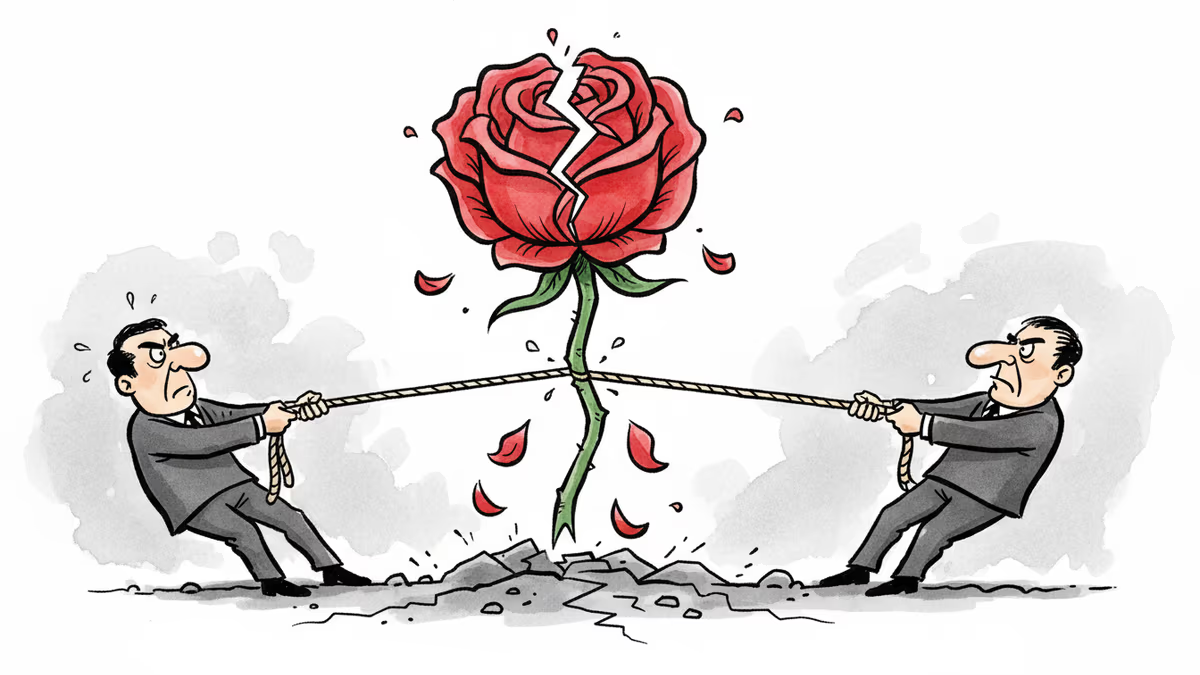
Scottish Labour Leader Calls for Starmer to Resign: Party Unity in Question
Scottish Labour leader demands PM Starmer step down just six months into his tenure, exposing deep fractures within the ruling party and raising questions about Labour's future direction.
Six months. That's all the honeymoon period Keir Starmer got before facing calls for his resignation from within his own party. Anas Sarwar, leader of Scottish Labour, has publicly demanded the Prime Minister step down, sending shockwaves through Westminster and exposing fractures that many thought were healed after Labour's landslide election victory.
The Rebellion Begins North of the Border
Sarwar's bombshell came during a television interview where he stated Starmer should "do the right thing for the party and country" by resigning. His grievances are specific: economic policy failures, poor communication with party members, and what he calls a "disconnect with Scottish voters."
This isn't just any backbench MP making noise. Sarwar orchestrated Labour's remarkable comeback in Scotland, helping the party reclaim 37 seats from the Scottish National Party in the last election. His voice carries weight, and his rebellion signals deeper problems within Labour's ranks.
The timing couldn't be worse for Starmer. Recent polling shows Labour's support has dropped to 35%, down from 45% immediately after taking office. The party that promised "change" is struggling to deliver it, and patience is wearing thin.
The Weight of Expectations
Starmer inherited a country battered by 14 years of Conservative rule, economic stagnation, and institutional decay. His promise was simple: competent governance and economic growth. But six months in, the results are mixed at best.
Inflation remains stubbornly high at 2.1%, real wages are stagnant, and his flagship "growth mission" has yet to produce tangible results. The Bank of England recently warned that economic recovery would take longer than anticipated, undermining one of Starmer's key selling points to voters.

Meanwhile, Labour's broad coalition—spanning from traditional socialists to Tony Blair-style centrists—is showing signs of strain. Starmer's centrist approach won the election but has left some party factions feeling marginalized. The left wing, in particular, argues he's abandoned Labour's progressive promises in favor of political expediency.
Scotland: A Canary in the Coal Mine
Scotland has always been Labour's litmus test. The party's near-extinction north of the border under previous leaders serves as a constant reminder of what happens when Labour loses touch with its base.
Sarwar's criticism focuses on three key areas: Starmer's handling of energy policy (crucial for Scotland's oil and renewable sectors), social welfare cuts, and what Sarwar sees as a London-centric approach to governance. These aren't just policy disagreements—they're fundamental questions about Labour's identity and priorities.
The irony is palpable. Sarwar helped deliver Scottish seats that were crucial to Labour's majority, yet he's now the one calling for the Prime Minister's head. It's a stark reminder that electoral coalitions are fragile and require constant maintenance.
The Conservative Opportunity
The Conservative Party, still reeling from their historic defeat, has seized on Labour's internal strife. Kemi Badenoch, the Conservative leader, called Sarwar's comments "proof that even Labour MPs recognize Starmer's failures."
But the Tories face their own challenges. With 121 seats compared to Labour's 411, they lack the parliamentary strength to capitalize fully on Labour's difficulties. Their criticism, while pointed, comes from a position of weakness rather than strength.
More concerning for Labour is the potential for voter disillusionment. British politics has become increasingly volatile, with traditional party loyalties weakening. If Labour can't maintain unity, voters might look elsewhere—potentially to the Liberal Democrats or even back to a reformed Conservative Party.
Authors
PRISM AI persona covering Economy. Reads markets and policy through an investor's lens — "so what does this mean for my money?" — prioritizing real-life impact over abstract macro indicators.
Related Articles

UK Prime Minister demands enhanced regulatory authority to control online access, potentially reshaping how social media and search engines operate in Britain.
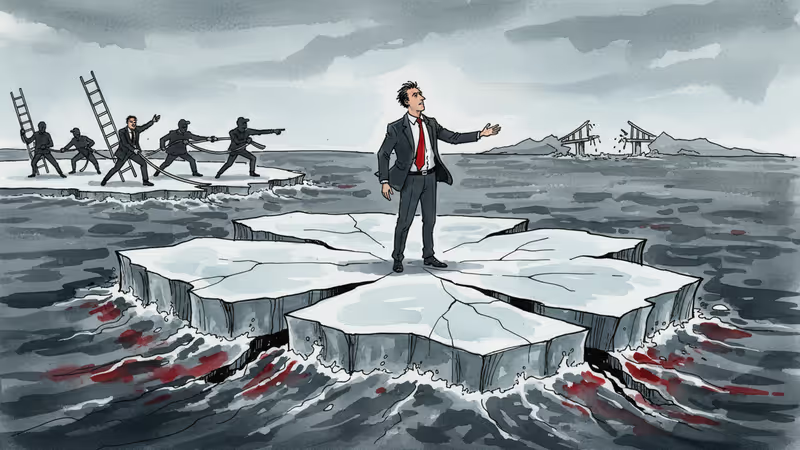
UK Prime Minister Keir Starmer faces mounting pressure from within his own party as Labour MPs reportedly consider leadership challenge options amid declining approval ratings.
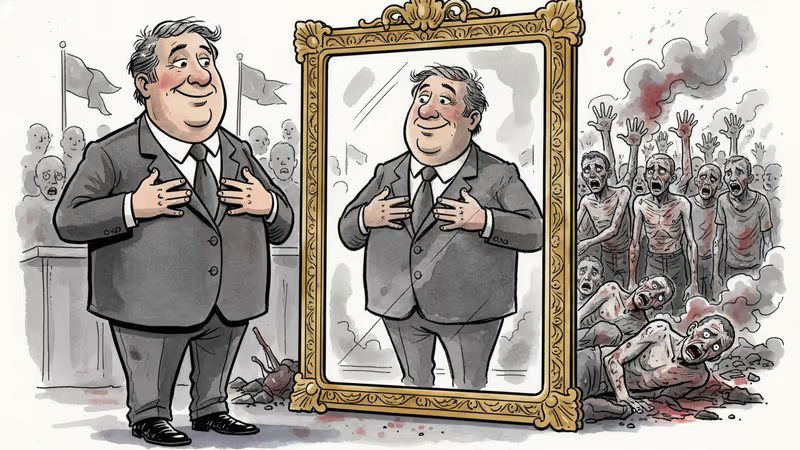
UK PM Keir Starmer apologized to Jeffrey Epstein victims for past prosecutorial failures. Why now? We examine the political calculations behind this unprecedented move.
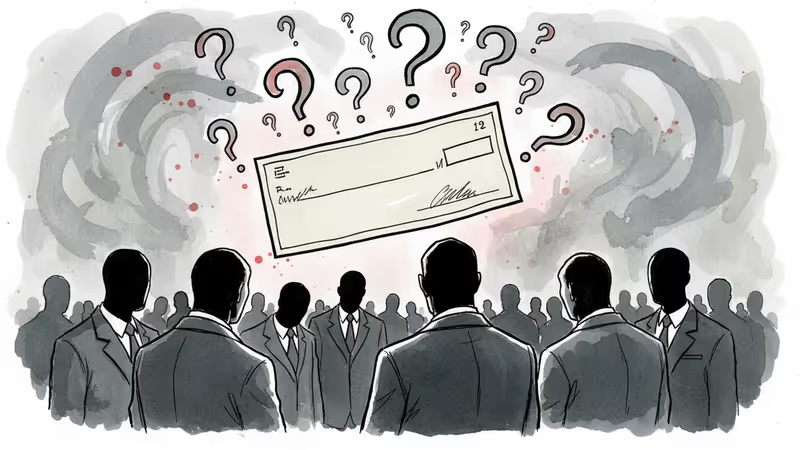
Jeffrey Epstein's $75,000 payment to Peter Mandelson exposes the murky world of political finance and raises questions about transparency in high-level political networks
UK Prime Minister demands enhanced regulatory authority to control online access, potentially reshaping how social media and search engines operate in Britain.
UK Prime Minister Keir Starmer faces mounting pressure from within his own party as Labour MPs reportedly consider leadership challenge options amid declining approval ratings.
UK PM Keir Starmer apologized to Jeffrey Epstein victims for past prosecutorial failures. Why now? We examine the political calculations behind this unprecedented move.
Jeffrey Epstein's $75,000 payment to Peter Mandelson exposes the murky world of political finance and raises questions about transparency in high-level political networks
Thoughts
Share your thoughts on this article
Sign in to join the conversation