
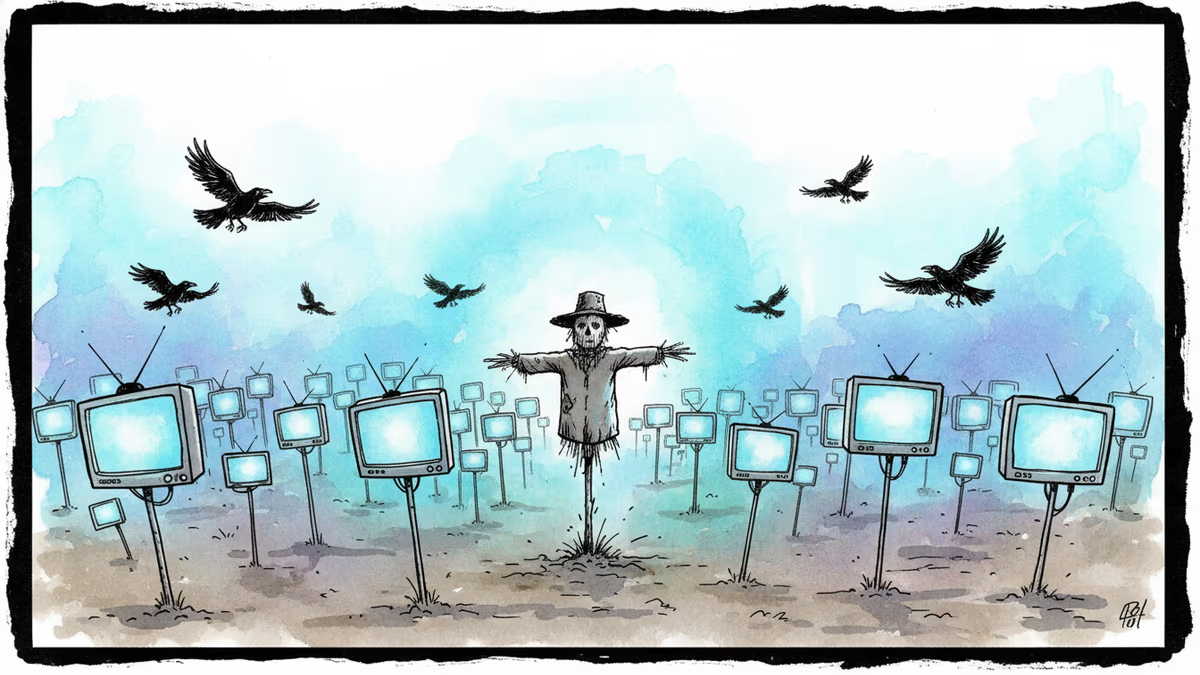
How 'The Scarecrow' Rewrote ENA's Playbook in Six Episodes
ENA's mystery thriller 'The Scarecrow' broke the channel's all-time ratings record in just six episodes, while 'Yumi's Cells 3' closed its run at a series high. What this double milestone reveals about Korean cable TV's survival strategy in the streaming era.
Six episodes. That's all it took for ENA to rewrite its own history.
What Happened — and Why the Numbers Matter
On May 5, the mystery thriller The Scarecrow claimed first place in its timeslot according to Nielsen Korea, setting an all-time viewership high for the ENA network. The record itself is notable. The pattern behind it is more interesting.
The Scarecrow has posted rising ratings with every single episode since its premiere — a clean upward curve that television producers rarely get to celebrate. That kind of trajectory doesn't come from a marketing push. It comes from word of mouth compounding week over week, which is a fundamentally different growth engine than the algorithmic recommendation that drives streaming platforms.
On the same evening, Yumi's Cells 3 wrapped its run at its own series-best ratings. Two shows on the same cable channel, both closing at personal highs on the same night. For a network that spent much of 2023 and 2024 searching for a follow-up to its breakout hit, that's a meaningful signal.
ENA's Unlikely Position in the Streaming Wars
To understand why this matters, it helps to know what ENA actually is. KT Studio Gini, the content arm of South Korean telecom giant KT, rebranded the channel in 2021. The following year, Extraordinary Attorney Woo — a legal drama about an autistic lawyer — became a genuine global phenomenon, hitting 17% ratings domestically and landing on Netflix's global top ten. For a cable channel in an era when streaming was supposed to make linear TV irrelevant, it was a remarkable moment.
What followed was quieter. The channel cycled through several projects that didn't replicate Woo's crossover appeal. Meanwhile, Netflix, Tving, and Wavve accelerated their investment in Korean originals, pulling audiences toward on-demand consumption. The structural headwinds facing cable drama weren't going away.

The Scarecrow's ascent suggests ENA found a partial answer to those headwinds: genre.
The Spoiler Economy and Why Mystery Still Drives Live Viewing
Mystery and thriller formats carry a built-in incentive for real-time viewing that romance or slice-of-life dramas don't. Spoiler anxiety is real, and it pushes audiences to watch as episodes drop rather than wait for a weekend binge. This is the same logic that keeps Game of Thrones-style appointment television alive even as streaming dominates — the social experience of watching together, of speculating before the next episode, is part of the product.
The Scarecrow's week-over-week ratings growth is a textbook illustration of this dynamic. Each episode ending on unresolved tension converts casual viewers into committed ones. The show isn't just being watched; it's being discussed, which pulls in new viewers who don't want to be left out of the conversation.
This is a structural advantage cable can still claim over streaming in specific genres. Netflix releases full seasons at once, collapsing the week-long tension window. For a mystery thriller, that's not necessarily a better experience — it's just a different one. ENA is betting that the weekly wait is a feature, not a limitation.
Yumi's Cells 3 and the IP Durability Question
Yumi's Cells operates on different logic. The webtoon-adapted series reached its third season and closed at a series high — a relatively rare achievement in Korean television, where sequel fatigue tends to set in quickly. Most Korean dramas are conceived as standalone stories, and the industry has been slow to build the kind of franchise infrastructure that American or British television takes for granted.
The fact that Yumi's Cells 3 held and grew its audience through three seasons suggests the IP has genuine staying power beyond the original webtoon fanbase. That matters for KT Studio Gini's broader content strategy, which relies on platform integration across KT's telecom and streaming ecosystem. An IP that sustains across seasons is worth more than a single hit — it's a recurring content asset.
The harder question is whether Yumi's Cells represents a repeatable model or an exception. The Korean market has produced very few serialized franchise dramas. The economics of building one — higher per-season investment, longer audience cultivation timelines — run against the short-cycle logic that most cable networks operate on.
This content is AI-generated based on source articles. While we strive for accuracy, errors may occur. We recommend verifying with the original source.
Related Articles

MBC's action-comedy Fifties Professionals introduces Kwon Yul as an unpredictable new antagonist. Here's why this drama's premise matters beyond the casting news.
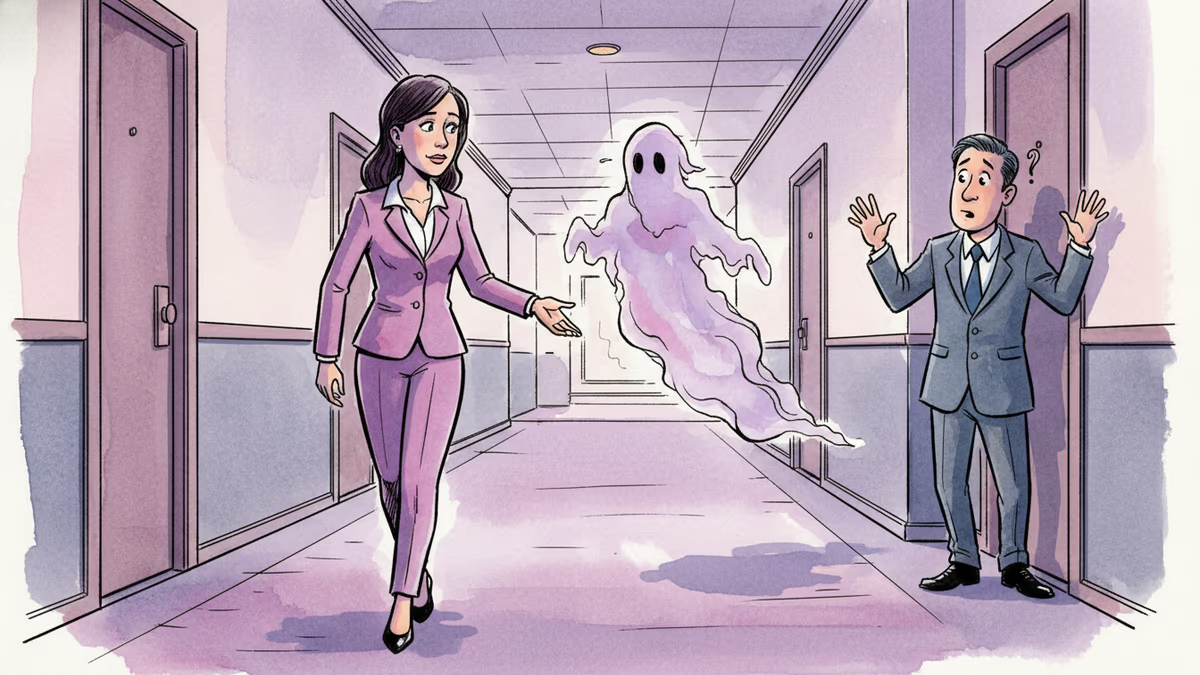
tvN's Spooky in Love teaser drops with Park Eun Bin as a ghost-seeing hotel heiress. Behind the occult romance lies a calculated industry strategy worth unpacking.
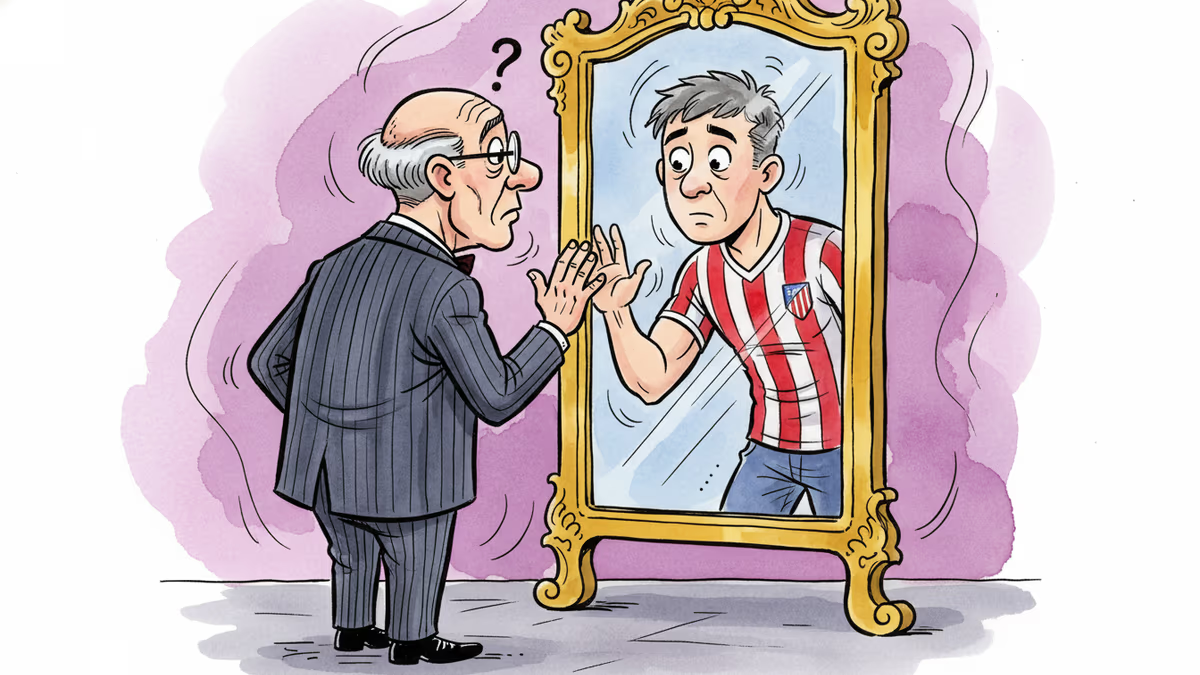
JTBC's Reborn Rookie pairs veteran actor Son Hyun Joo with idol-turned-actor Lee Jun Young in a body-swap drama. A look at the genre's industrial logic and what it signals about Korean TV's audience strategy.
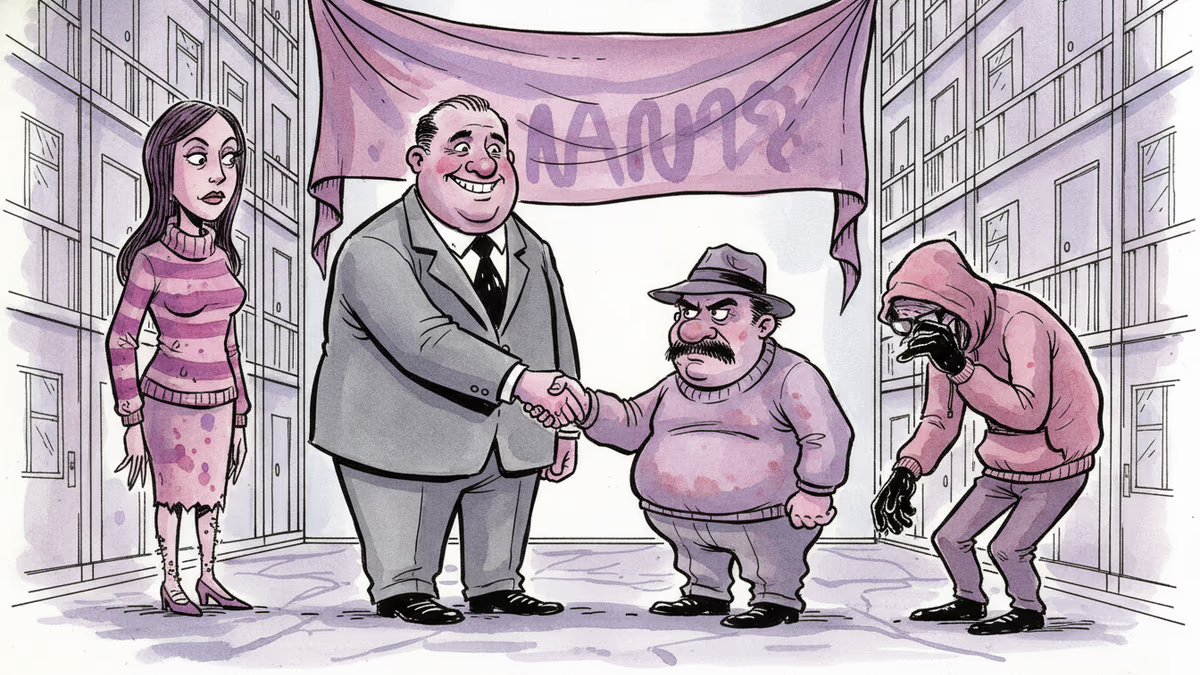
JTBC's upcoming comedy crime drama Apartment casts Ji Sung, Ha Yoon-kyung, Park Byung-eun, and Moon Sori in a story where an ex-gangster enters a residents' committee election. What does the project reveal about JTBC's 2026 strategy?
MBC's action-comedy Fifties Professionals introduces Kwon Yul as an unpredictable new antagonist. Here's why this drama's premise matters beyond the casting news.
tvN's Spooky in Love teaser drops with Park Eun Bin as a ghost-seeing hotel heiress. Behind the occult romance lies a calculated industry strategy worth unpacking.
JTBC's Reborn Rookie pairs veteran actor Son Hyun Joo with idol-turned-actor Lee Jun Young in a body-swap drama. A look at the genre's industrial logic and what it signals about Korean TV's audience strategy.
JTBC's upcoming comedy crime drama Apartment casts Ji Sung, Ha Yoon-kyung, Park Byung-eun, and Moon Sori in a story where an ex-gangster enters a residents' committee election. What does the project reveal about JTBC's 2026 strategy?
Thoughts
Share your thoughts on this article
Sign in to join the conversation