
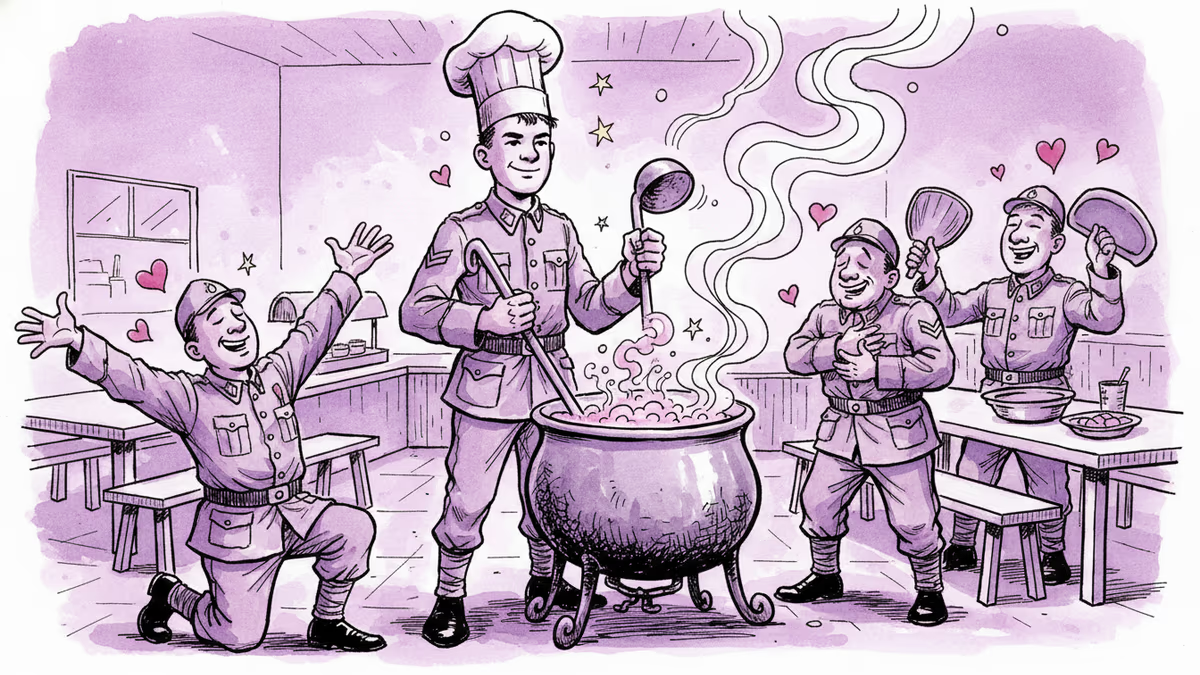
When Army Mess Hall Becomes Fantasy
Park Ji-hoon's TVING series The Legend of Kitchen Soldier premieres May 11. Why military food is K-drama's newest fantasy frontier — and what it says about the platform war.
What if the most dangerous weapon on a military base was a perfectly seasoned stew?
TVING's new 12-episode series The Legend of Kitchen Soldier premieres May 11, and it's betting that Korean audiences — and global viewers through Viki — are hungry for exactly that premise. Starring Park Ji-hoon (Weak Hero Class 2), the show follows soldier Kang Sung-jae, whose unexpected assignment to the base kitchen transforms a culinary disaster zone into something close to paradise. Directed by Jo Nam-hyung (Tale of the Nine Tailed, A Superior Day) and written by Choi Ryong (Sorry Not Sorry), it inherits the coveted tvN Monday-Tuesday slot from Yumi's Cells 3.
The Setup: A Battlefield of Bad Food
The premise doesn't ask for subtlety. Sung-jae arrives at his new posting only to be immediately redirected to the kitchens by senior officer Lee Sang-yi — played by actor Lee Sang-yi of Bloodhounds 2. The reason? Current cook Yoon Dong-hyun (Lee Hong-nae) is, by all accounts, a menace to military morale. Meal times are depicted as literal battlegrounds. Once Sung-jae ties on an apron, commanding officers including Yoon Kyung-ho (The Trauma Code), Jung Woong-in (Confidence Queen), and Ahn Gil-kang (Aema) are practically levitating with satisfaction.
The emotional core, though, isn't the food itself. It's the unlikely bond that forms between Sung-jae and the initially resentful Dong-hyun — cemented, charmingly, by a shared terror of live chickens. It's a classic buddy-comedy setup transplanted into one of Korean drama's least-explored spaces: the military kitchen.
TVING's Strategic Play
The platform context here matters. In the first half of 2026, Netflix Korea has dominated the prestige lane with long-form series like Polsak Sokassuda and season extensions of Trauma Code. Rather than compete directly, TVING is running a different play: pairing OTT original content with linear TV's Monday-Tuesday scheduling, capturing both traditional tvN viewers and streaming subscribers simultaneously. It's a hybrid distribution model that platforms like Disney+ have largely abandoned in favor of pure streaming drops.

Inheriting the Yumi's Cells slot is also a deliberate brand signal. That franchise built audience loyalty around warmth, quirky fantasy logic, and emotional accessibility — exactly the register The Legend of Kitchen Soldier appears to be targeting.
Park Ji-hoon and the Idol-Actor Trajectory
For Park Ji-hoon, this is a calculated next step. Weak Hero Class 2 (2024) gave him credibility as a dramatic actor capable of physical intensity. This role shifts the palette toward comic timing and ensemble warmth — expanding his range rather than repeating it. The idol-to-actor pipeline in K-drama has a recognizable shape since IU's Hotel del Luna (2019) proved the model: deploy fandom loyalty to drive initial viewership, then let performance quality determine longevity.
What's different here is the genre choice. Most idol-actor transitions lean into romance as the safest vehicle. Park Ji-hoon is going buddy-comedy-meets-growth-narrative, which carries higher risk but potentially broader appeal beyond the core fanbase.
Why Military Food, Why Now
The choice of setting isn't accidental. Military service is a near-universal shared experience for Korean men, and army food has been a cultural touchstone — and punchline — for decades. Since the 2010s, real debates about improving military meal quality have surfaced in Korean public discourse, and YouTube channels dedicated to army food reviews have amassed hundreds of thousands of subscribers. The mess hall, in other words, is already culturally loaded before a single frame is shot.
More broadly, food-as-community has been one of K-drama's most durable storytelling devices. What The Legend of Kitchen Soldier adds is the military hierarchy as a pressure cooker: a space defined entirely by rank and performance, where a soldier who cooks well becomes the unlikely agent of transformation. The drama's warmth seems to come precisely from that inversion — recognition earned through feeding people rather than outranking them.
Whether 12 episodes can sustain that premise without deflating into pure comfort-food television is the open question. The show's tonal predecessors range from the breezy (What the Heck, My Lord) to the genuinely sharp (D.P.), and where Kitchen Soldier lands on that spectrum will determine whether it's a one-season diversion or something that actually sticks.
This content is AI-generated based on source articles. While we strive for accuracy, errors may occur. We recommend verifying with the original source.
Related Articles

MBC's action-comedy Fifties Professionals introduces Kwon Yul as an unpredictable new antagonist. Here's why this drama's premise matters beyond the casting news.
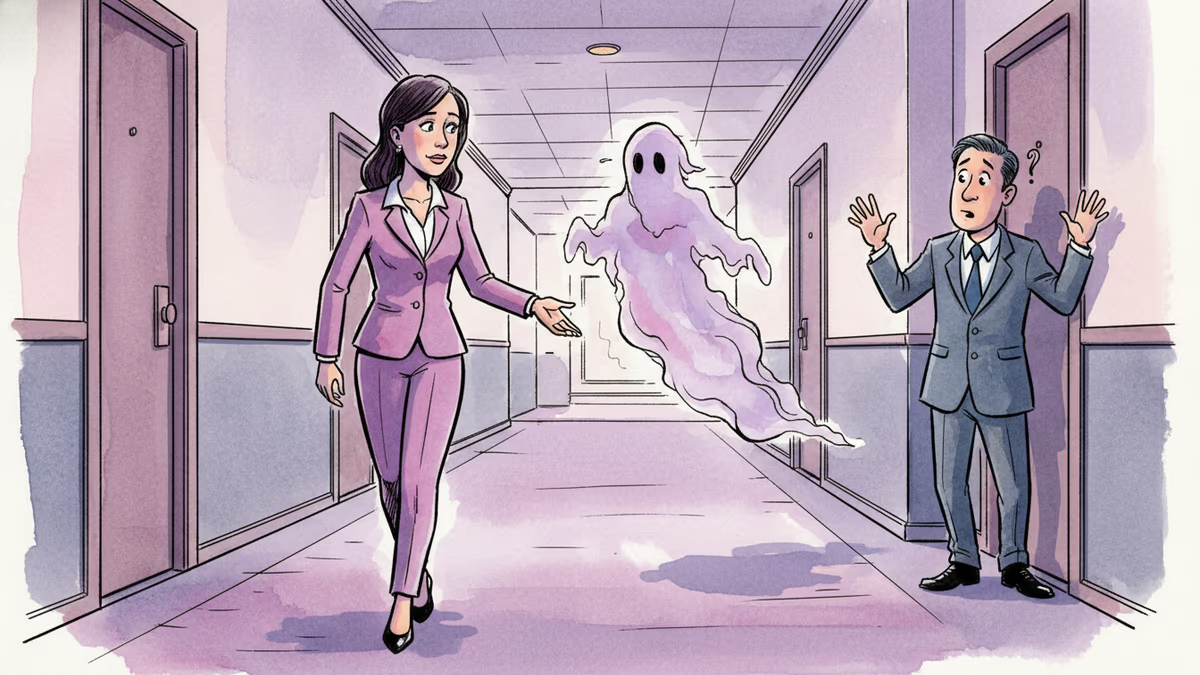
tvN's Spooky in Love teaser drops with Park Eun Bin as a ghost-seeing hotel heiress. Behind the occult romance lies a calculated industry strategy worth unpacking.
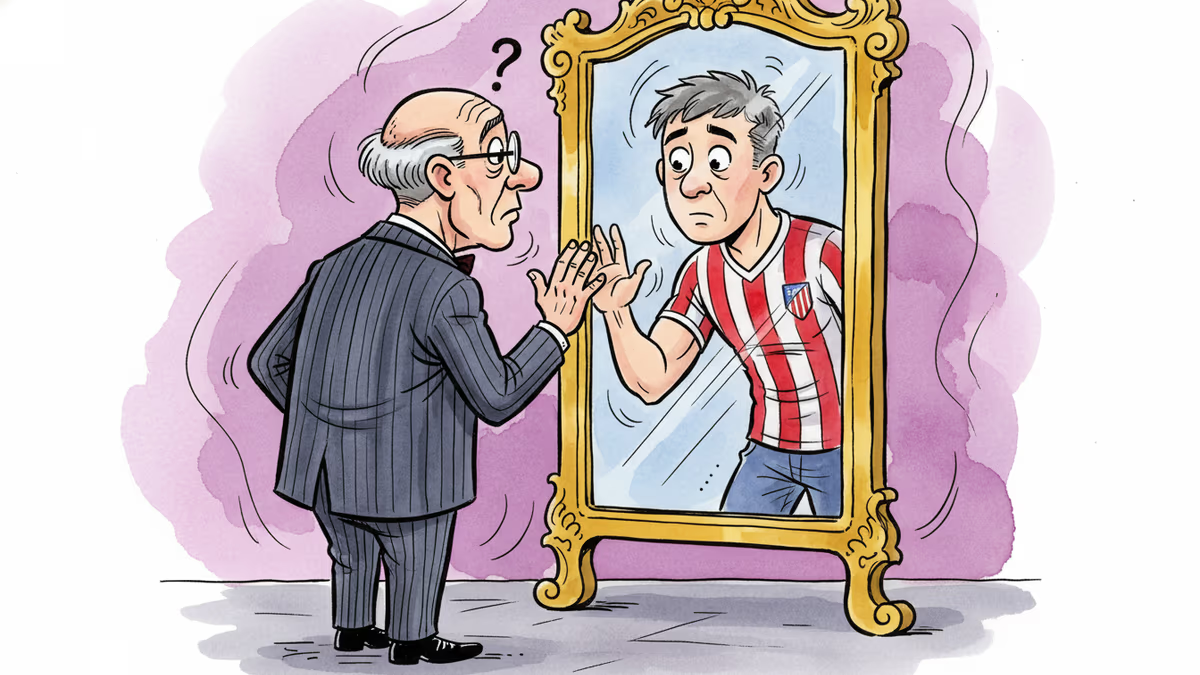
JTBC's Reborn Rookie pairs veteran actor Son Hyun Joo with idol-turned-actor Lee Jun Young in a body-swap drama. A look at the genre's industrial logic and what it signals about Korean TV's audience strategy.
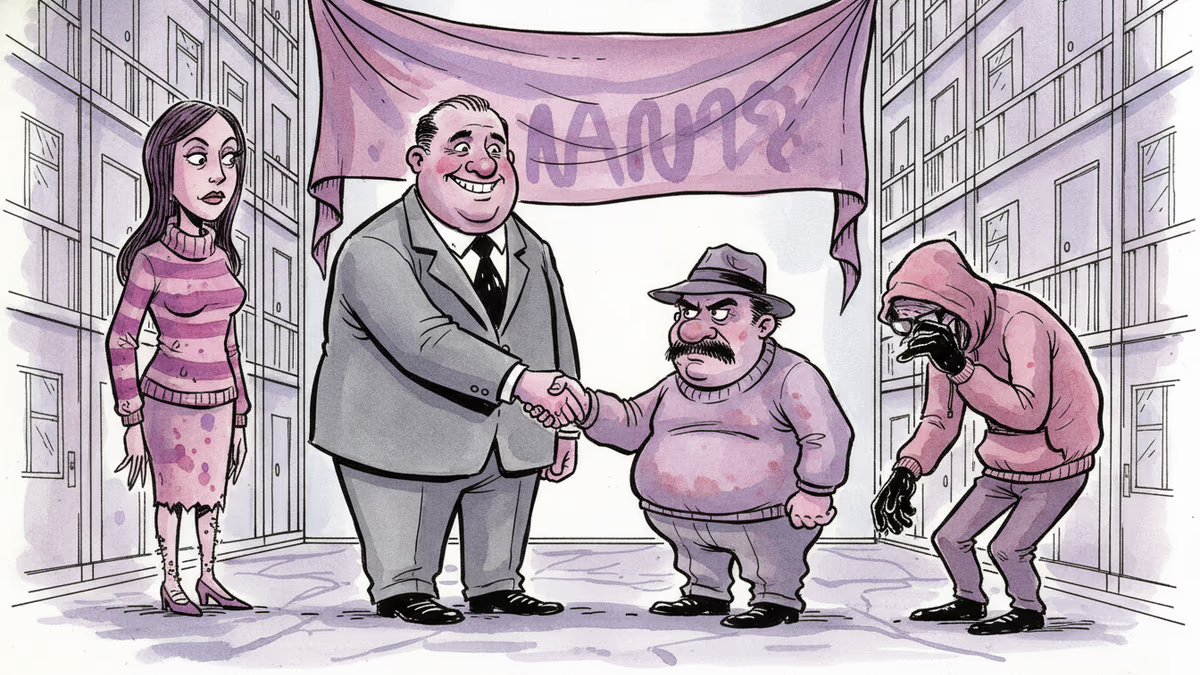
JTBC's upcoming comedy crime drama Apartment casts Ji Sung, Ha Yoon-kyung, Park Byung-eun, and Moon Sori in a story where an ex-gangster enters a residents' committee election. What does the project reveal about JTBC's 2026 strategy?
MBC's action-comedy Fifties Professionals introduces Kwon Yul as an unpredictable new antagonist. Here's why this drama's premise matters beyond the casting news.
tvN's Spooky in Love teaser drops with Park Eun Bin as a ghost-seeing hotel heiress. Behind the occult romance lies a calculated industry strategy worth unpacking.
JTBC's Reborn Rookie pairs veteran actor Son Hyun Joo with idol-turned-actor Lee Jun Young in a body-swap drama. A look at the genre's industrial logic and what it signals about Korean TV's audience strategy.
JTBC's upcoming comedy crime drama Apartment casts Ji Sung, Ha Yoon-kyung, Park Byung-eun, and Moon Sori in a story where an ex-gangster enters a residents' committee election. What does the project reveal about JTBC's 2026 strategy?
Thoughts
Share your thoughts on this article
Sign in to join the conversation