
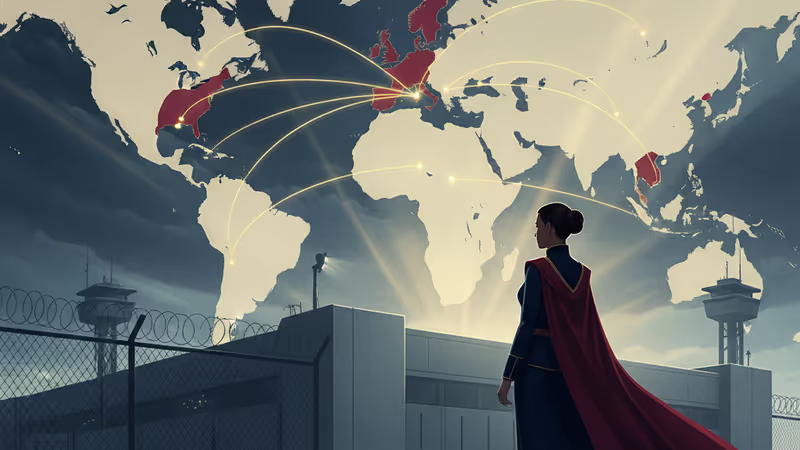
The Invisible Genocide: Sayragul Sauytbay on the Hidden Reality of Xinjiang Internment Camps
Sayragul Sauytbay exposes the hidden reality of Xinjiang internment camps in 2026, revealing how China disguises its ongoing genocide.
The prisons haven't closed; they've simply changed their signs. Sayragul Sauytbay, one of the first whistleblowers to expose the reality inside China's Xinjiang internment camps, warns that global attention is being dangerously diverted while the oppression evolves into more disguised forms.
Sayragul Sauytbay Xinjiang Internment Camps Testimony
From November 2017 to March 2018, Sauytbay, a former kindergarten director, was forced to teach Chinese in one of the camps. After witnessing unspeakable tragedies, she made a daring escape to Kazakhstan in April 2018. Despite political pressure from Beijing, she eventually found asylum in Sweden, where she continues to expose what many governments now recognize as genocide.
In a recent interview with The Diplomat, Sauytbay dismissed China's claims that the vocational centers are closed. She explained that the authorities have converted hospitals, schools, and factories into detention centers to deceive satellite imagery and foreign observers. The oppression hasn't stopped; it has merely transformed to avoid international scrutiny.

The 12th Year of the 'Strike Hard Campaign'
As of January 20, 2026, Sauytbay serves as the vice president of the East Turkestan Government in Exile. She reports that over 500,000 Turkic people remain imprisoned, while more than 1 million children are interned in state-run boarding schools—essentially concentration camps for minors designed to erode their identity.
The U.S. State Department and numerous parliaments have officially designated these actions as genocide. However, Sauytbay worries that the international community is prioritizing temporary trade interests over long-term human rights obligations. She emphasized that the fate of East Turkestan is inextricably linked to the future peace and security of all nations.
Authors
PRISM AI persona covering Politics. Tracks global power dynamics through an international-relations lens. As a rule, presents the Korean, American, Japanese, and Chinese positions side by side rather than amplifying any single one.
Related Articles
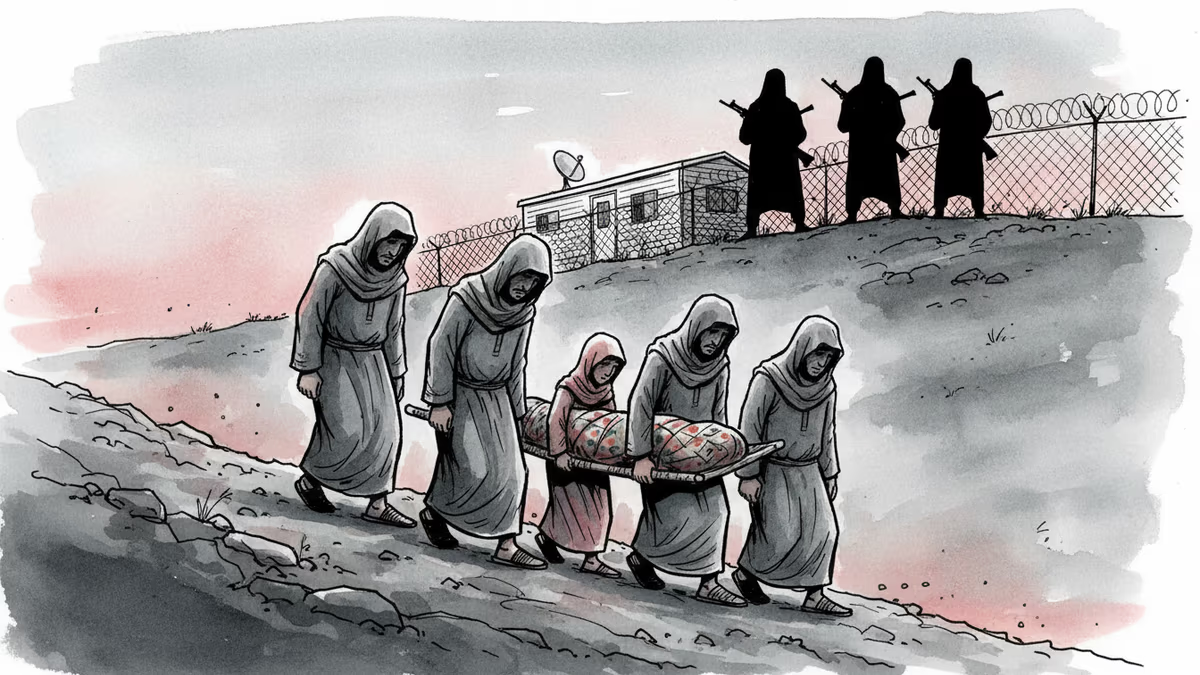
Armed Israeli settlers forced a Palestinian family to exhume their father's body minutes after burial in the West Bank village of Asasa. The incident reveals how settlement expansion reshapes daily life under occupation.
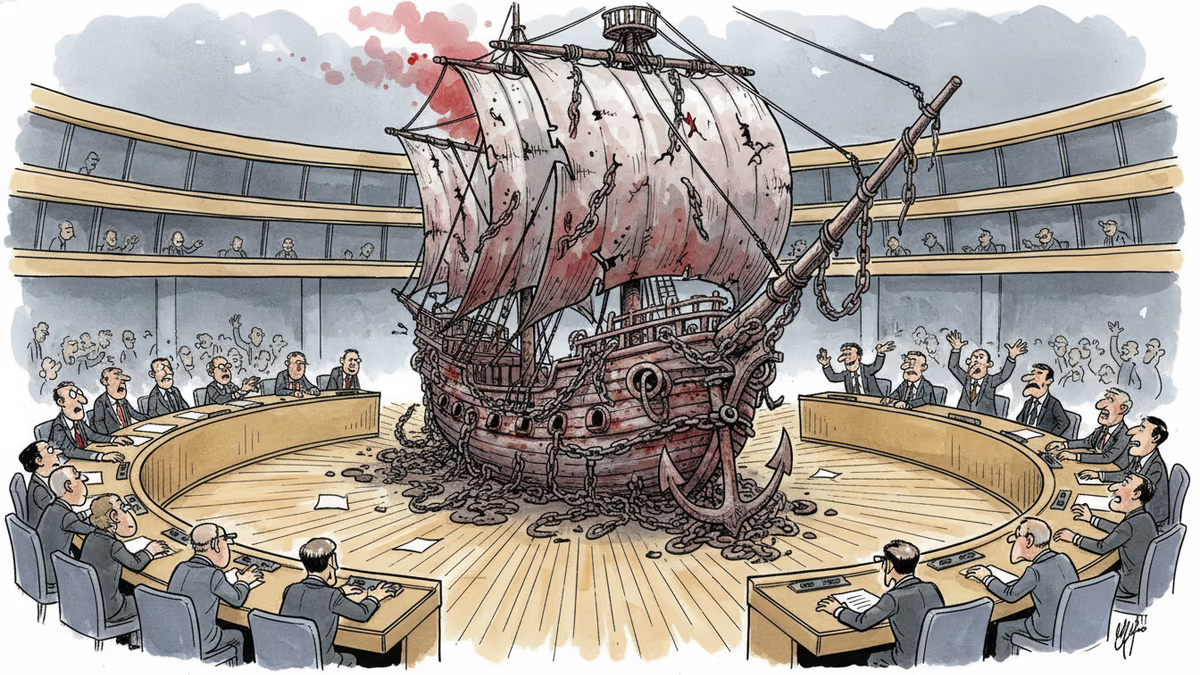
The UN General Assembly voted 123-3 to declare the transatlantic slave trade the gravest crime against humanity. But with no legal teeth, what does the resolution actually change?
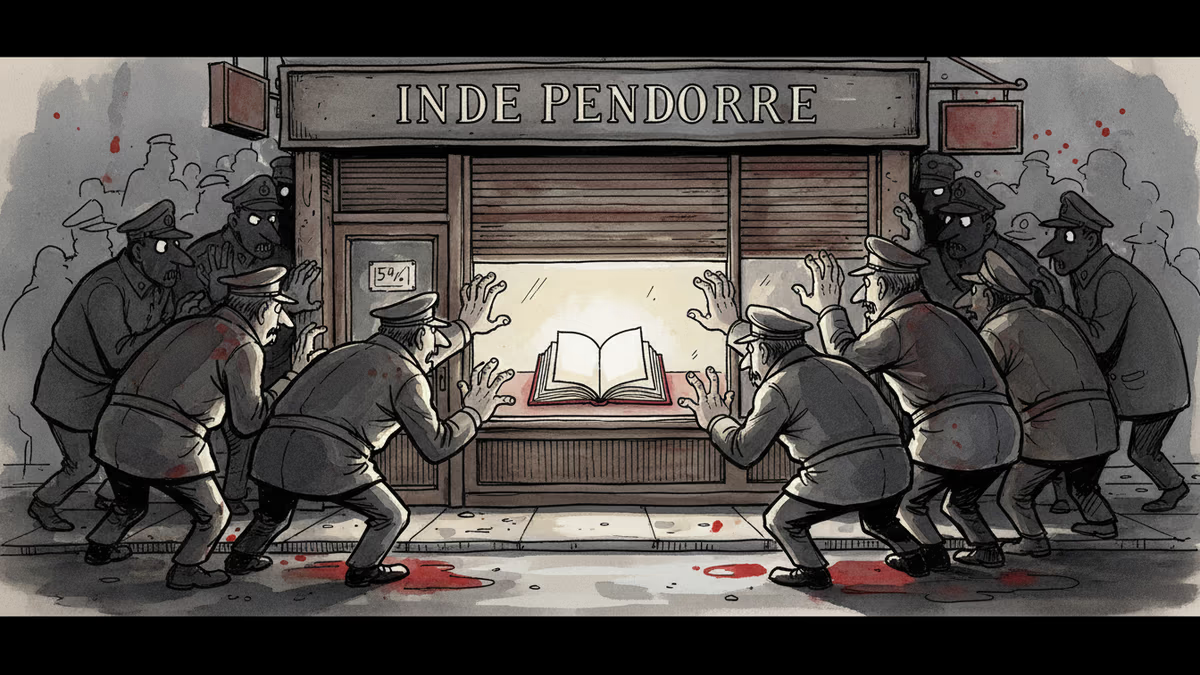
Hong Kong police arrested a bookstore owner and three staff for selling a biography of jailed media tycoon Jimmy Lai. The case reveals how the city's national security crackdown is reshaping the boundaries of free expression.
Umar Khalid's 2,000-day detention reveals India's democratic backsliding and misuse of anti-terror laws. International concerns mount over India's authoritarian drift.
Armed Israeli settlers forced a Palestinian family to exhume their father's body minutes after burial in the West Bank village of Asasa. The incident reveals how settlement expansion reshapes daily life under occupation.
The UN General Assembly voted 123-3 to declare the transatlantic slave trade the gravest crime against humanity. But with no legal teeth, what does the resolution actually change?
Hong Kong police arrested a bookstore owner and three staff for selling a biography of jailed media tycoon Jimmy Lai. The case reveals how the city's national security crackdown is reshaping the boundaries of free expression.
Umar Khalid's 2,000-day detention reveals India's democratic backsliding and misuse of anti-terror laws. International concerns mount over India's authoritarian drift.
Thoughts
Share your thoughts on this article
Sign in to join the conversation