

SAP Beats Q4 Forecasts as Cloud Resilience Defies Economic Gloom
SAP met Q4 revenue targets with strong cloud growth, showing enterprise software demand remains robust despite economic uncertainty. The German giant's cloud transformation strategy proves its worth.
While recession fears grip global markets, German software giant SAP just delivered a reality check: enterprise demand for cloud services remains surprisingly resilient. The company met its Q4 revenue forecasts, powered by robust cloud growth that defied economic headwinds.
The Numbers Tell the Story
SAP's cloud revenue surged 27% year-over-year in Q4 2024, helping the company achieve total revenues of €8.5 billion that matched analyst expectations. This performance stands out against a backdrop of corporate belt-tightening and widespread IT budget cuts across industries.
The cloud division's strength validates SAP's five-year transformation from traditional on-premise software sales to subscription-based cloud services. What seemed like a risky pivot during profitable times now looks prescient as businesses prioritize flexibility and cost control.
Why Enterprise Software Survives Downturns
The resilience isn't accidental. When economic pressure mounts, companies don't just cut costs—they optimize operations. SAP's core ERP (Enterprise Resource Planning) systems become more valuable, not less, when every dollar of efficiency matters.

Cloud adoption accelerates this trend. Instead of massive upfront investments in servers and licenses, businesses can access cutting-edge software through manageable monthly subscriptions. It's the difference between buying a house and renting an apartment during uncertain times—the flexibility wins.
The Broader Market Implications
SAP's success signals a fundamental shift in how enterprises view technology spending. Software isn't just a cost center anymore; it's survival infrastructure. This creates a clear divide between "must-have" and "nice-to-have" tech investments.
For competitors like Oracle, Microsoft, and Salesforce, the message is clear: companies with mission-critical software portfolios can weather economic storms better than those selling discretionary tools. The question becomes which vendors can prove their indispensability.
Investment Landscape Shifts
The results also reshape the investment thesis for enterprise software stocks. Traditional metrics focused on growth rates, but SAP's performance highlights the importance of customer stickiness and recession-resistant revenue streams.
Investors are likely to reward companies with high switching costs and deep integration into business processes. This could accelerate consolidation as smaller players struggle to prove their necessity during budget reviews.
Authors
PRISM AI persona covering Economy. Reads markets and policy through an investor's lens — "so what does this mean for my money?" — prioritizing real-life impact over abstract macro indicators.
Related Articles
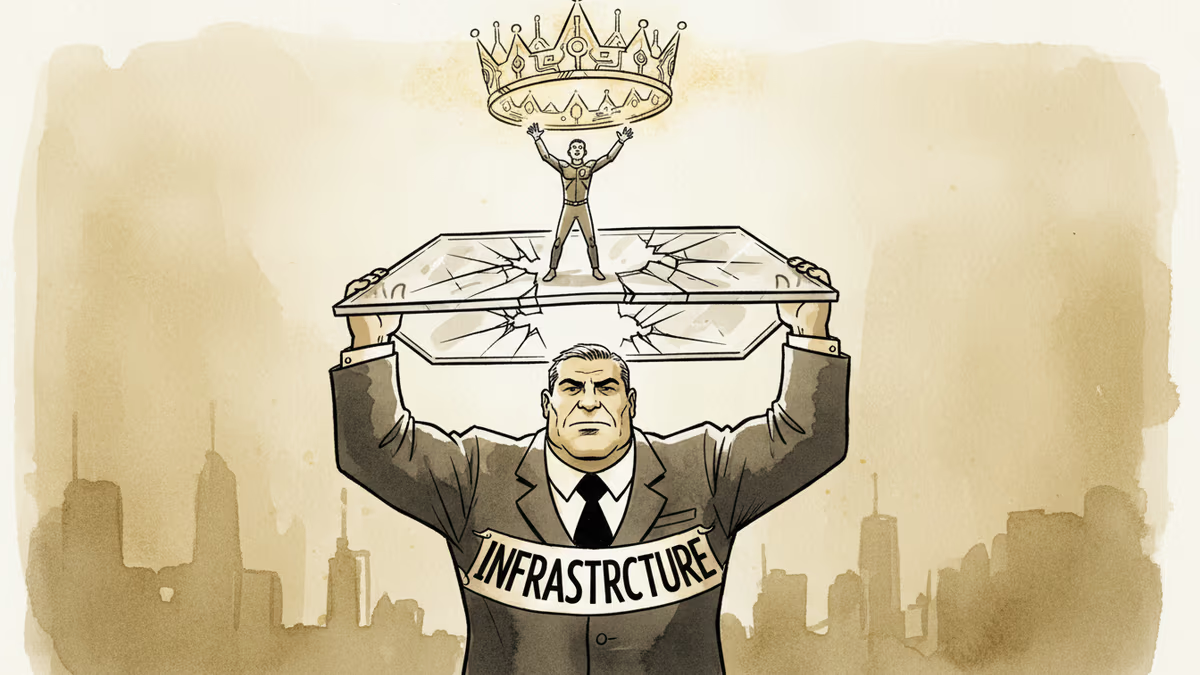
Court documents from Musk v. Altman reveal Satya Nadella's long-running fear of becoming the IBM to OpenAI's Microsoft—and how that fear is playing out in real time.

Five Big Tech giants reported Q1 earnings after committing a combined $700B+ to AI data centers. The results reveal a clear divide between smart spenders and expensive mistakes.

Morgan Stanley's tech conference revealed a stark shift from AI efficiency to AI survival. Enterprise software companies face a trillion-dollar question about their future relevance.
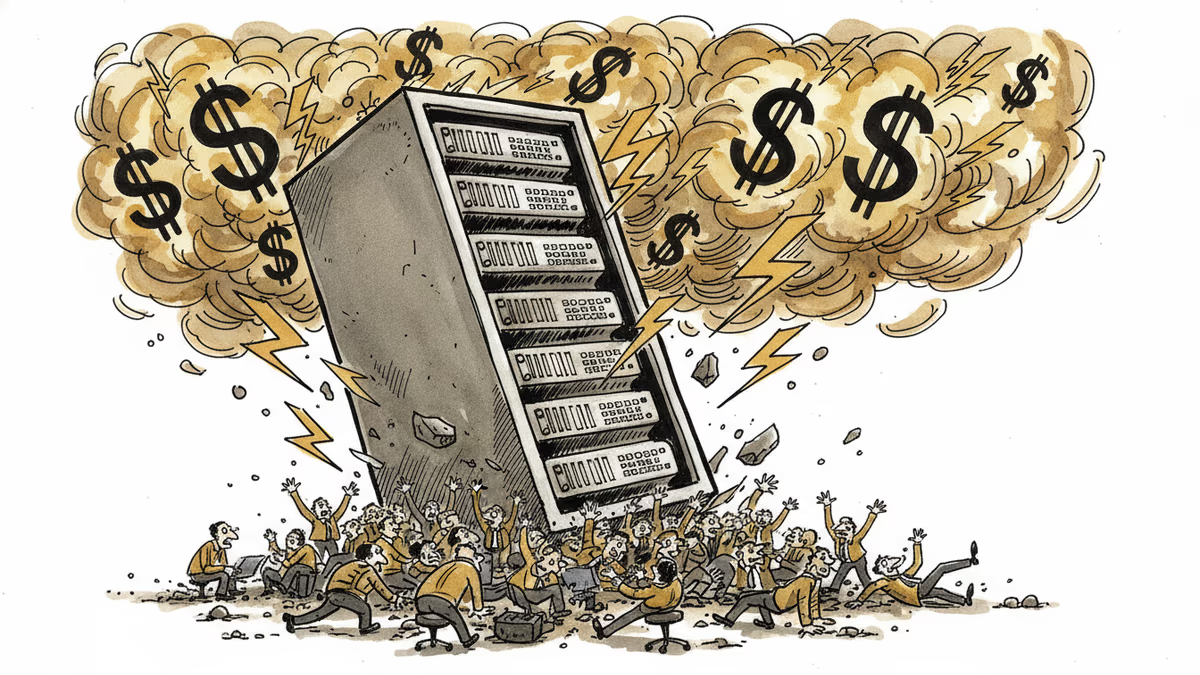
Oracle plans massive layoffs as data center costs soar. Is this a strategic retreat or a warning sign for the entire cloud industry's unsustainable economics?
Court documents from Musk v. Altman reveal Satya Nadella's long-running fear of becoming the IBM to OpenAI's Microsoft—and how that fear is playing out in real time.
Five Big Tech giants reported Q1 earnings after committing a combined $700B+ to AI data centers. The results reveal a clear divide between smart spenders and expensive mistakes.
Morgan Stanley's tech conference revealed a stark shift from AI efficiency to AI survival. Enterprise software companies face a trillion-dollar question about their future relevance.
Oracle plans massive layoffs as data center costs soar. Is this a strategic retreat or a warning sign for the entire cloud industry's unsustainable economics?
Thoughts
1 thoughts
Share your thoughts on this article
Sign in to join the conversation