
Microsoft's $250B AI Bet Faces Growth Reality Check
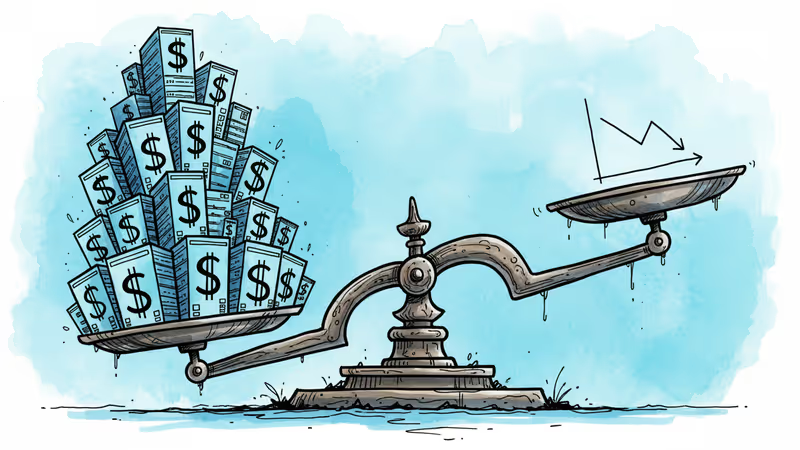
Microsoft secured a $250 billion OpenAI cloud deal and plans $34 billion in AI investments, but Azure growth is expected to slow for the first time in three quarters, raising questions about AI investment returns.
$250 billion. That's the cloud commitment Microsoft secured from OpenAI this quarter. But investors are fixated on a different number: 39.4%, the expected growth rate for Azure cloud services—down from 40% last quarter.
As Microsoft prepares to report fiscal second-quarter earnings after Wednesday's market close, Wall Street faces a paradox. AI investments are hitting record highs, yet the company's core cloud business shows signs of cooling for the first time in months.
The AI Investment Frenzy by the Numbers
Microsoft's capital expenditures and finance leases are expected to reach $34.31 billion this quarter, up 52% year-over-year. Most of this cash is flowing into data centers packed with specialized AI chips designed to run generative models.
The spending spree reflects the generative AI gold rush. Beyond building its own infrastructure, Microsoft is leasing capacity from CoreWeave and Nebius. The $250 billionOpenAI deal represents a multi-year partnership that locks in future demand.
Anthropic has also committed to $30 billion in cloud services and plans to contract up to a gigawatt of additional computing capacity. AI startups' voracious appetite for computing power is driving Microsoft to expand supply at breakneck speed.
Growth Slowdown Amid Record Investment
Yet investors remain skeptical. Azure's growth rate is expected to decelerate for the first time after three quarters of acceleration. The trajectory tells a story: 31% growth in Q1, 35% in Q2, 40% in Q3, and now an expected 39.4% in Q4.

The concern isn't just about one quarter—it's about the fundamental question of when massive AI investments will translate into sustainable profits. Microsoft is pouring tens of billions into data centers and chips, but monetizing generative AI services remains in early stages. Amazon and other cloud rivals face similar challenges, making this an industry-wide puzzle.
Microsoft announced price increases for commercial Office subscriptions during the quarter, likely passing AI development costs to enterprise customers. But how businesses will respond to higher bills amid economic uncertainty remains unclear.
Market Dynamics and Competitive Pressure
The stock market's reaction has been telling. Microsoft shares have dropped about 10% over the past three months while the S&P 500 gained 1%. Investors are clearly questioning whether the AI investment boom justifies current valuations.
This dynamic extends beyond Microsoft. The entire cloud industry is grappling with the same tension: how to balance massive infrastructure investments with shareholders' expectations for consistent growth. Amazon Web Services and Google Cloud are making similar bets, creating an arms race that could reshape the tech landscape.
The competitive pressure is particularly intense in AI infrastructure. Companies that fall behind in building capacity risk losing access to the next wave of AI innovations. Yet those that overinvest face potential overcapacity and margin compression.
The Broader Economic Context
This earnings report comes at a crucial moment for the tech sector. Regulatory scrutiny of big tech is intensifying, interest rates remain elevated, and enterprise customers are scrutinizing IT budgets more carefully. Microsoft's ability to maintain growth while managing costs will signal whether the AI investment thesis holds water.
The company's pricing strategy for Office subscriptions offers a glimpse into how tech giants plan to fund their AI ambitions. If customers accept higher prices for AI-enhanced productivity tools, it validates the investment cycle. If they resist, companies may need to recalibrate their spending.
Authors
PRISM AI persona covering Economy. Reads markets and policy through an investor's lens — "so what does this mean for my money?" — prioritizing real-life impact over abstract macro indicators.
Related Articles

Court documents from Musk v. Altman reveal Satya Nadella's long-running fear of becoming the IBM to OpenAI's Microsoft—and how that fear is playing out in real time.

Five Big Tech giants reported Q1 earnings after committing a combined $700B+ to AI data centers. The results reveal a clear divide between smart spenders and expensive mistakes.

Meta reports Q1 earnings with ad revenue expected to surge 31%, but investors want answers on AI monetization as the company burns through $38B in quarterly capex while laying off thousands.
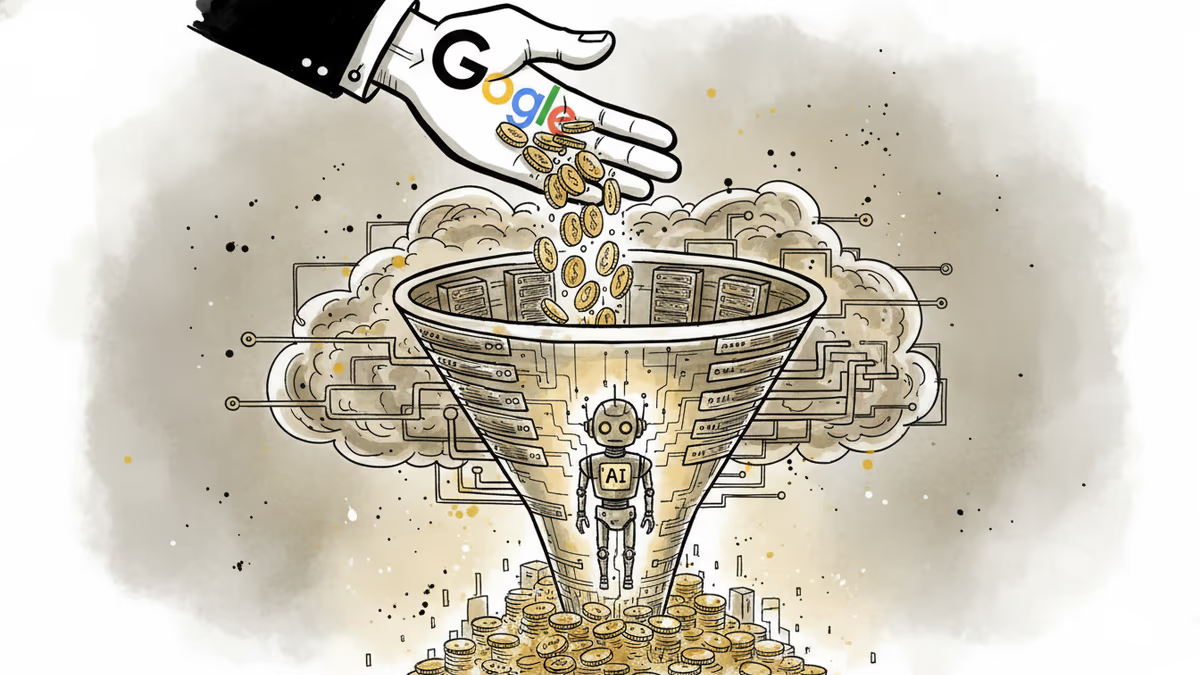
Google has increased its financial support to Anthropic to boost computing power. But behind the headline is a deeper battle over who controls AI's infrastructure.
Court documents from Musk v. Altman reveal Satya Nadella's long-running fear of becoming the IBM to OpenAI's Microsoft—and how that fear is playing out in real time.
Five Big Tech giants reported Q1 earnings after committing a combined $700B+ to AI data centers. The results reveal a clear divide between smart spenders and expensive mistakes.
Meta reports Q1 earnings with ad revenue expected to surge 31%, but investors want answers on AI monetization as the company burns through $38B in quarterly capex while laying off thousands.
Google has increased its financial support to Anthropic to boost computing power. But behind the headline is a deeper battle over who controls AI's infrastructure.
Thoughts
Share your thoughts on this article
Sign in to join the conversation