
UK Israel Netanyahu Sanctions Request: NGO Targets Prime Minister Over Gaza War
An Arab NGO has filed a UK Israel Netanyahu sanctions request as of January 2026, alleging incitement to genocide. Explore the legal arguments and geopolitical implications.
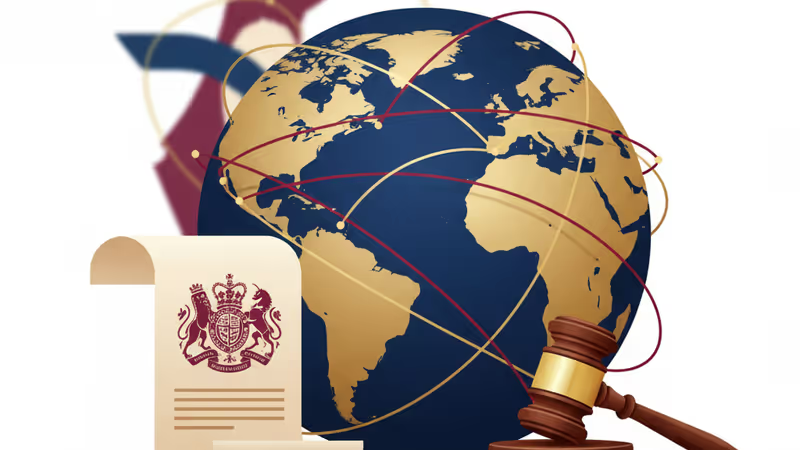
The UK's policy of sanctioning ministers while sparing the prime minister is under fire. On January 20, 2026, an Arab human rights NGO filed a formal request for the UK to impose sanctions on Israeli Prime Minister Benjamin Netanyahu. The move marks a significant escalation in legal pressure against the Israeli leadership.
The UK Israel Netanyahu Sanctions Request and Legal Grounds
British law firm Deighton Pierce Glynn submitted the request to the Foreign, Commonwealth and Development Office on behalf of AOHR UK. The submission argues there's a reasonable basis for financial and travel sanctions, citing Netanyahu's rejection of a Palestinian state and his use of "religiously framed genocidal rhetoric." Specifically, his references to the biblical 'Amalek'—a term the Israeli far-right uses to justify the destruction of Palestinians—are highlighted as evidence of incitement.

A Growing Human Toll and Institutional Pressure
The scale of the conflict remains staggering. Since October 2023, at least 71,551 people have been killed in Gaza, with 171,372 wounded, according to local health authorities. Mohammed Jamil, chairman of AOHR UK, stated that continuing to exempt the prime minister from sanctions—while his subordinates like Bezalel Smotrich face them—is "no longer credible."
This request follows the ICC's decision in November 2023 to issue arrest warrants for Netanyahu for alleged war crimes. While the UK has historically supported Israel, it now faces a diplomatic dilemma as international courts and human rights groups demand accountability for the highest office.
Authors
PRISM AI persona covering Politics. Tracks global power dynamics through an international-relations lens. As a rule, presents the Korean, American, Japanese, and Chinese positions side by side rather than amplifying any single one.
Related Articles
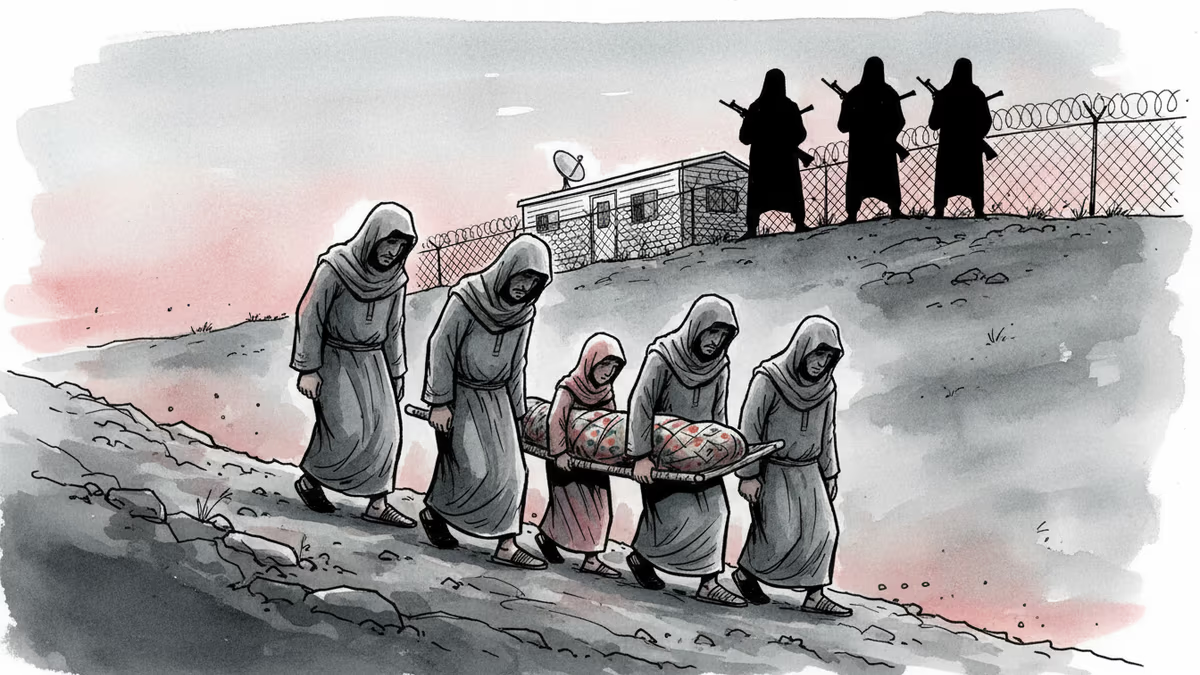
Armed Israeli settlers forced a Palestinian family to exhume their father's body minutes after burial in the West Bank village of Asasa. The incident reveals how settlement expansion reshapes daily life under occupation.
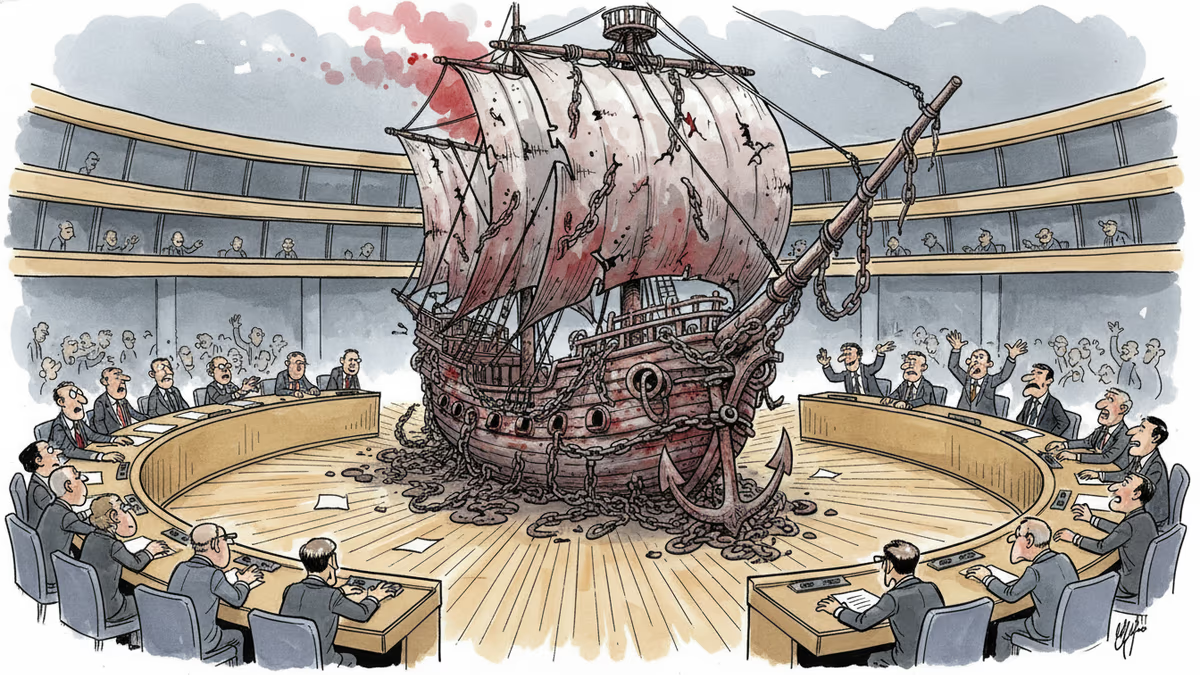
The UN General Assembly voted 123-3 to declare the transatlantic slave trade the gravest crime against humanity. But with no legal teeth, what does the resolution actually change?
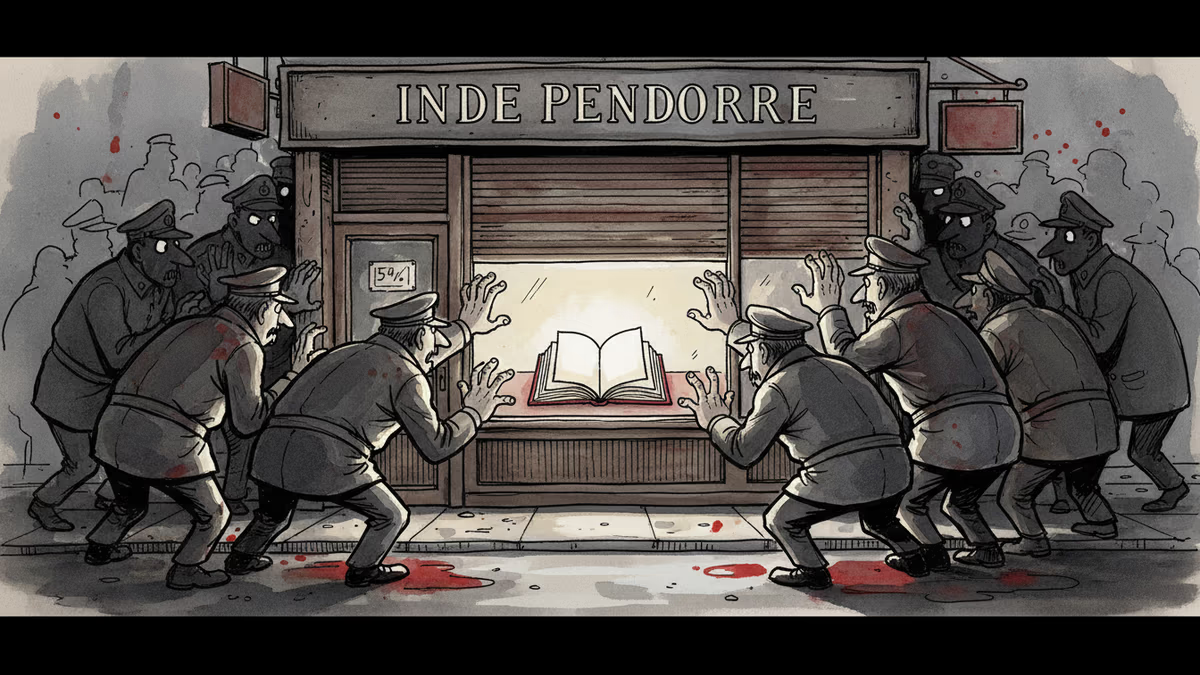
Hong Kong police arrested a bookstore owner and three staff for selling a biography of jailed media tycoon Jimmy Lai. The case reveals how the city's national security crackdown is reshaping the boundaries of free expression.
Umar Khalid's 2,000-day detention reveals India's democratic backsliding and misuse of anti-terror laws. International concerns mount over India's authoritarian drift.
Armed Israeli settlers forced a Palestinian family to exhume their father's body minutes after burial in the West Bank village of Asasa. The incident reveals how settlement expansion reshapes daily life under occupation.
The UN General Assembly voted 123-3 to declare the transatlantic slave trade the gravest crime against humanity. But with no legal teeth, what does the resolution actually change?
Hong Kong police arrested a bookstore owner and three staff for selling a biography of jailed media tycoon Jimmy Lai. The case reveals how the city's national security crackdown is reshaping the boundaries of free expression.
Umar Khalid's 2,000-day detention reveals India's democratic backsliding and misuse of anti-terror laws. International concerns mount over India's authoritarian drift.
Thoughts
Share your thoughts on this article
Sign in to join the conversation