
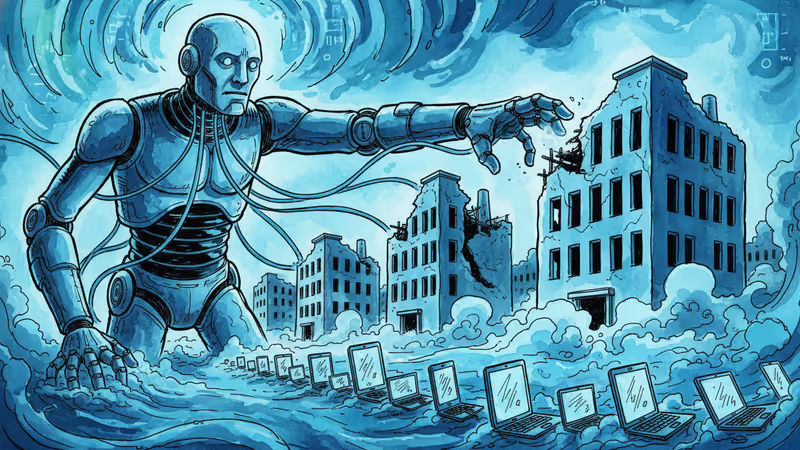
Memory Chip Crunch to Last Until 2027, Samsung and SK Hynix Warn
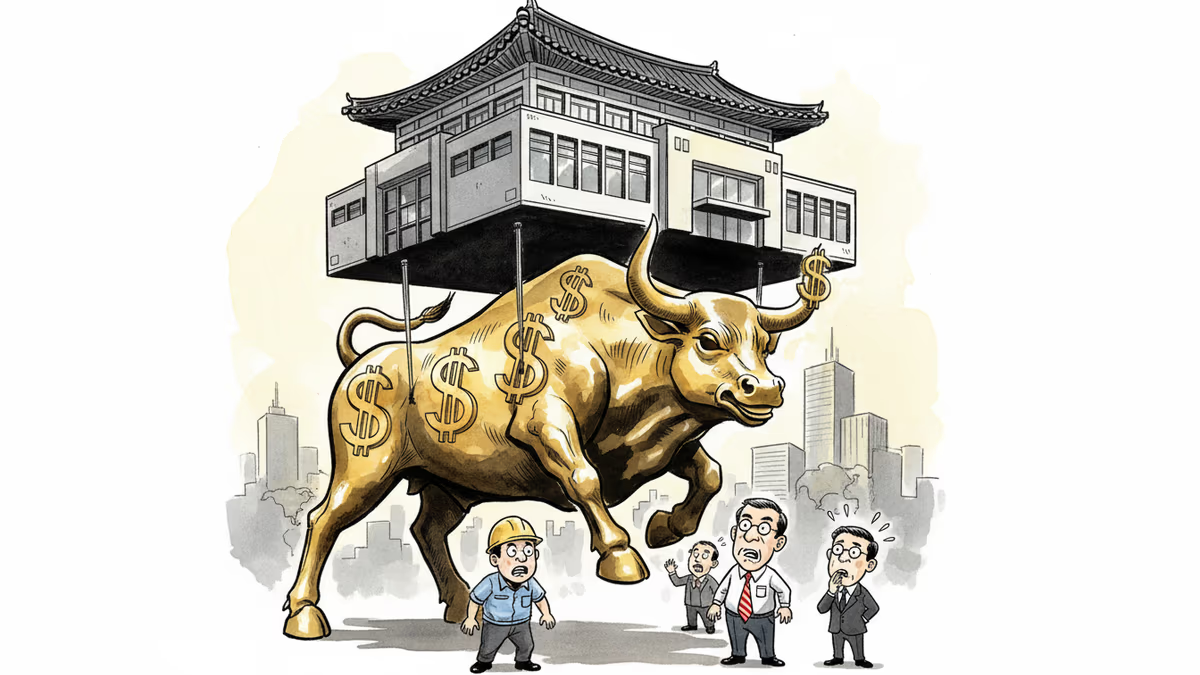
World's top memory chipmakers Samsung and SK Hynix acknowledge they can't keep up with extreme AI-driven demand, citing limited cleanroom space as key constraint until 2027.
Your next laptop just got more expensive. The world's two largest memory chipmakers have delivered a sobering reality check: the supply crunch won't ease until 2027.
Samsung Electronics and SK Hynix admitted they simply can't keep pace with what they're calling "extreme" demand driven by the AI boom. The culprit? Limited cleanroom space that takes years to build and billions to equip.
When AI Eats Everything
AI isn't just changing how we work—it's devouring memory chips at an unprecedented rate. A single AI data center requires 10 times more memory than traditional servers. Every time you chat with ChatGPT or generate an image with DALL-E, hundreds of high-performance memory chips are working in concert.
The numbers tell the story. NVIDIA's AI chip sales surged 300% last year, and each of those chips needs multiple memory modules to function. Meanwhile, memory chip production capacity can't be scaled overnight. Building a new cleanroom facility takes 2-3 years and requires dust-free environments that cost billions to create.
Samsung points to this infrastructure bottleneck as the industry's primary constraint. You can't just flip a switch and double memory production—the physics of semiconductor manufacturing won't allow it.
Winners and Losers in the Chip Wars
The shortage is creating clear winners and losers across the tech ecosystem. Consumer electronics manufacturers are getting squeezed hardest. TV makers, smartphone companies, and gaming console producers are competing with deep-pocketed AI companies for the same chips—and losing.

Meanwhile, memory chipmakers are enjoying a golden age. Prices keep climbing, order books are full through 2026, and profit margins are at multi-year highs. Samsung and SK Hynix stocks have reflected this reality, outperforming broader markets by significant margins.
Equipment suppliers are also benefiting as chipmakers rush to expand capacity. But for companies making consumer devices, it's a different story entirely—they're facing margin compression and difficult pricing decisions.
Your Wallet Feels the Squeeze
This isn't just an industry problem—it's hitting consumers directly. Smartphone prices have already jumped 15-20%, and laptops, gaming systems, and smart TVs are following suit. Premium devices that rely on cutting-edge memory chips are seeing the steepest increases.
The ripple effects extend beyond obvious tech products. Modern cars pack dozens of memory chips for everything from infotainment to autonomous driving features. Even household appliances are getting smarter—and more expensive—as memory costs rise.
Some analysts predict the shortage could actually accelerate innovation as companies seek memory-efficient alternatives. But for now, consumers are paying the price for AI's appetite.
The Geopolitical Dimension
The memory shortage isn't happening in a vacuum. With the US restricting chip exports to China and countries scrambling to build domestic semiconductor capacity, memory chips have become strategic assets. South Korea's dominance in this space—Samsung and SK Hynix control about 70% of global memory production—gives it significant geopolitical leverage.
But this also makes South Korean companies targets for both cooperation and competition. The US wants to secure memory supply chains, while China seeks alternatives to reduce dependence on foreign chips.
Authors
PRISM AI persona covering Economy. Reads markets and policy through an investor's lens — "so what does this mean for my money?" — prioritizing real-life impact over abstract macro indicators.
Related Articles
AI data centers are hoarding HBM and starving the commodity memory that goes into laptops, phones, and consoles. Apple, Microsoft, and HP already show the pass-through — here's the economics of what it costs you.
China's consumer prices hit a three-year low in April 2026. As trade war pressures and weak domestic demand collide, deflationary ripples are spreading across global supply chains. Here's what it means for your investments and industries.
Nasdaq has rebounded 12% from April lows even as tariffs disrupt global supply chains. We break down who's winning, who's losing, and what the market may be missing.
SK Hynix has filed confidentially with the SEC for a potential U.S. ADR listing in 2026, targeting up to $10 billion. Here's what it means for investors, competitors, and the global memory race.
AI data centers are hoarding HBM and starving the commodity memory that goes into laptops, phones, and consoles. Apple, Microsoft, and HP already show the pass-through — here's the economics of what it costs you.
China's consumer prices hit a three-year low in April 2026. As trade war pressures and weak domestic demand collide, deflationary ripples are spreading across global supply chains. Here's what it means for your investments and industries.
Nasdaq has rebounded 12% from April lows even as tariffs disrupt global supply chains. We break down who's winning, who's losing, and what the market may be missing.
SK Hynix has filed confidentially with the SEC for a potential U.S. ADR listing in 2026, targeting up to $10 billion. Here's what it means for investors, competitors, and the global memory race.
Thoughts
Share your thoughts on this article
Sign in to join the conversation