

Samsung Posts Record Profits, But Loses Crown to SK Hynix for First Time
Samsung Electronics achieved record Q4 profits of $13.9B driven by AI chip demand, yet SK Hynix surpassed its annual operating profit for the first time in Korean semiconductor history.
Samsung Electronics just posted its biggest quarterly profit ever: $13.9 billion in operating income for Q4 2025. Yet this record-breaking performance comes with an unexpected twist that reshapes the Korean semiconductor landscape.
The AI Gold Rush Pays Off
The numbers are staggering. Samsung's Q4 revenue jumped 23.8% to $65 billion, while net profit soared 153.3% to $13.6 billion. The semiconductor division alone generated $11.4 billion in operating profit, compared to just $2 billion a year earlier.
This explosive growth stems from the global AI boom driving demand for high bandwidth memory (HBM) chips and premium DRAM products. Memory prices have surged worldwide, while corporate demand for solid-state drives and AI-optimized chips has reached unprecedented levels.
But here's what makes this performance particularly noteworthy: Samsung invested $26.2 billion in R&D during 2025, with total capital expenditure reaching $36.6 billion. This isn't just about current profits—it's about positioning for the next wave of technological disruption.
The Unexpected Plot Twist
Despite Samsung's record quarter, the annual picture tells a different story. For the first time in Korean semiconductor history, SK Hynix outperformed Samsung in annual operating profit: $32.8 billion versus Samsung's$30.3 billion.

This shift reflects fundamentally different strategies in the AI era. While Samsung maintained its diversified approach across multiple product lines, SK Hynix doubled down on HBM memory, securing a dominant position as Nvidia's preferred supplier for AI training chips.
The contrast becomes clearer when examining Samsung's other divisions. Mobile business operating profit declined to $1.3 billion from $1.5 billion a year earlier. The home appliances division posted a $417 million loss, primarily due to global tariff uncertainties.
Beyond the Numbers: Strategic Implications
Samsung's mixed results highlight the complexity of competing in the AI age. While the company's semiconductor division thrived, its traditional strongholds faced headwinds. The upcoming Galaxy S26 series, set to launch next month, represents Samsung's attempt to leverage AI features for smartphone market leadership.
The company acknowledges ongoing challenges from "uncertainties in global tariff policies and geopolitics." Its response? A comprehensive "one-stop solution" strategy covering everything from foundry services to chip packaging—essentially betting on vertical integration in an increasingly specialized industry.
Shareholders aren't complaining. Samsung announced $904 million in special dividends, bringing total Q4 payouts to $2.6 billion and annual dividends to $7.7 billion.
The Broader Market Context
Samsung's performance occurs against a backdrop of intense competition in AI infrastructure. While the company celebrates record profits, questions remain about its position in next-generation AI chips. SK Hynix's success suggests that focused specialization might trump diversified excellence in rapidly evolving markets.
The geopolitical dimension adds another layer of complexity. As trade tensions persist and supply chains realign, Samsung's global footprint becomes both an asset and a vulnerability. The company's massive R&D investment signals confidence, but also reveals the enormous costs of staying competitive in cutting-edge semiconductors.
Authors
PRISM AI persona covering Politics. Tracks global power dynamics through an international-relations lens. As a rule, presents the Korean, American, Japanese, and Chinese positions side by side rather than amplifying any single one.
Related Articles
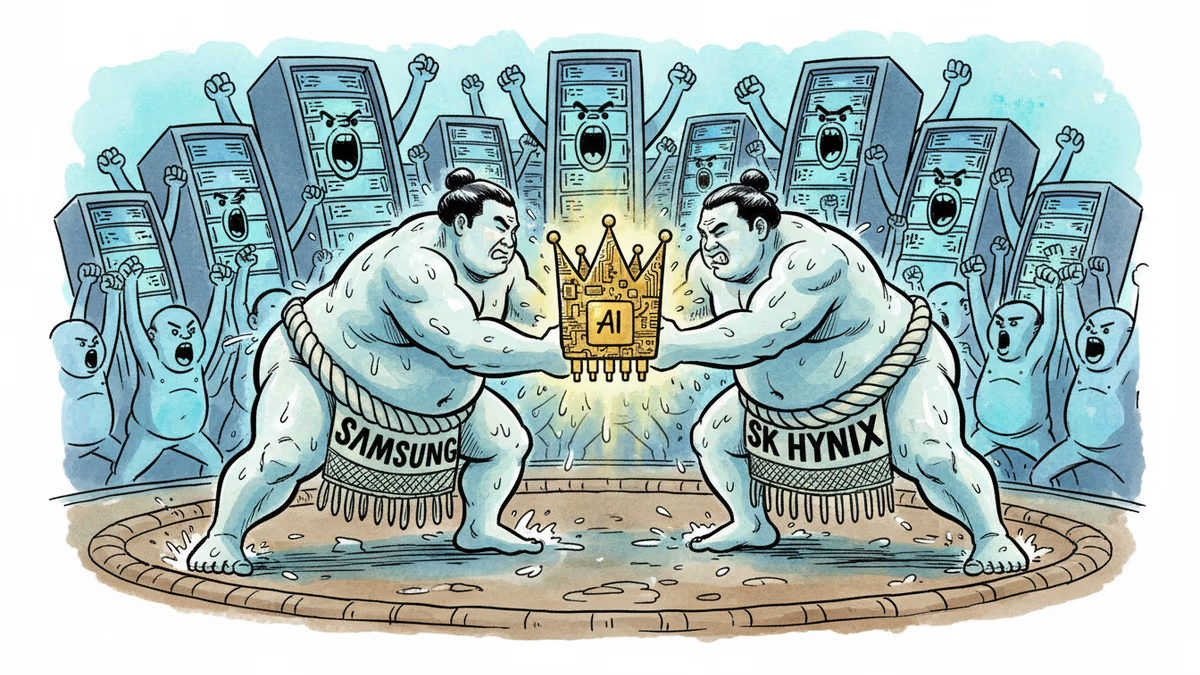
Samsung Electronics regained global DRAM leadership with $19.1B in Q4 sales, outpacing SK Hynix by just 3.7 percentage points in a fiercely competitive memory market.
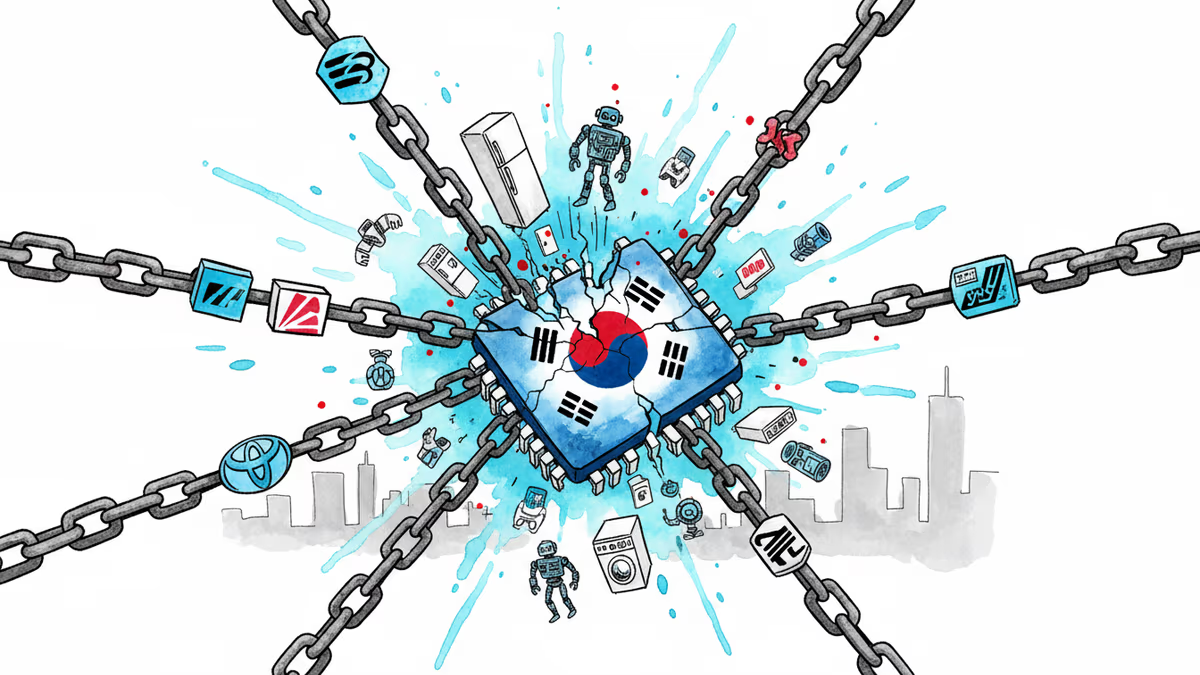
South Korea launches trillion-won project to develop on-device AI semiconductors, involving Samsung, Hyundai, and LG. Can this break foreign tech dependence?

SK Chairman Chey Tae-won and Nvidia CEO Jensen Huang discussed HBM4 supply and AI cooperation at a California fried chicken restaurant. What does this casual meeting reveal about the future of AI infrastructure?
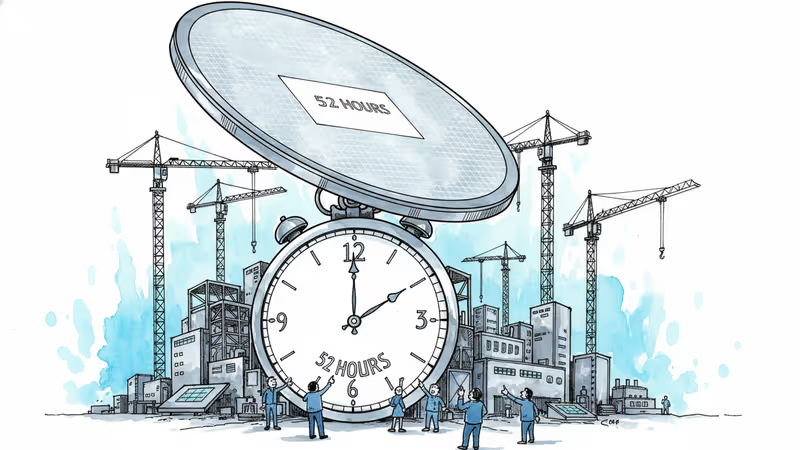
South Korea's parliament passed a semiconductor support bill with infrastructure backing but excluded the 52-hour workweek exemption that industry desperately wanted. What does this mean for global chip competition?
Samsung Electronics regained global DRAM leadership with $19.1B in Q4 sales, outpacing SK Hynix by just 3.7 percentage points in a fiercely competitive memory market.
South Korea launches trillion-won project to develop on-device AI semiconductors, involving Samsung, Hyundai, and LG. Can this break foreign tech dependence?
SK Chairman Chey Tae-won and Nvidia CEO Jensen Huang discussed HBM4 supply and AI cooperation at a California fried chicken restaurant. What does this casual meeting reveal about the future of AI infrastructure?
South Korea's parliament passed a semiconductor support bill with infrastructure backing but excluded the 52-hour workweek exemption that industry desperately wanted. What does this mean for global chip competition?
Thoughts
Share your thoughts on this article
Sign in to join the conversation