
Sam Altman's BCI Play: Why 'Merge Labs' Ultrasound Bet Is a Direct Challenge to Musk's Neuralink
Sam Altman's new BCI startup, Merge Labs, isn't just a Neuralink rival. Its ultrasound tech signals a strategic bet on non-invasive, scalable human-AI interfaces.
The Lede: Altman's Next Frontier
While the world remains fixated on OpenAI's next model, Sam Altman is quietly architecting the next human-computer interface. The spin-out of Merge Labs from the non-profit Forest Neurotech isn't just another startup; it's a strategic declaration. For executives and investors, this is the critical signal: the race to own the link between human cognition and artificial intelligence is entering a new, more pragmatic phase, and Altman is betting on a completely different technological path than his primary rival, Elon Musk.
Why It Matters: The Scalpel vs. The Stethoscope
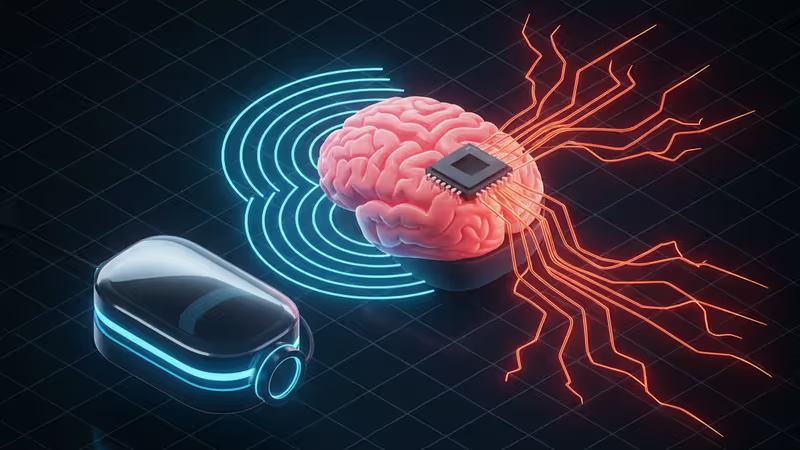
The core divergence lies in the technology. While Elon Musk’s Neuralink pursues a high-risk, high-reward strategy with invasive surgical implants measuring direct electrical signals (the scalpel), Merge Labs is commercializing a non-invasive ultrasound approach. This matters for three key reasons:
- Path to Market: Ultrasound-based BCIs, which measure changes in blood flow, could face a significantly lower regulatory and ethical barrier to entry. This could unlock consumer and commercial applications decades before invasive implants become mainstream, moving BCI from a purely medical device to a potential productivity tool.
- Scalability: A non-surgical approach is inherently more scalable. The Total Addressable Market (TAM) for a device that doesn't require brain surgery is exponentially larger, appealing to a broader investor base and a public wary of implants.
- Data Strategy: This approach generates a fundamentally different type of data—metabolic activity rather than direct neural firing. This could be a treasure trove for training AI models to understand human intent, focus, and cognitive load in a less granular but more holistic way.
The Analysis: An Ecosystem in the Making
Merge Labs doesn't exist in a vacuum. Its emergence from the Forest Neurotech non-profit, backed by patient capital from figures like Eric Schmidt and Ken Griffin, reveals a sophisticated new model for deep-tech innovation. The non-profit incubates the high-risk, foundational science, de-risking it before a for-profit entity like Merge is spun out to commercialize the technology. This is strategic capital at its finest.
The involvement of Worldcoin CEO Alex Blania is the other critical dot to connect. Altman's interests now form a cohesive stack for the future of human-AI interaction:
- OpenAI: The core AI intelligence layer.
- Worldcoin: The identity and economic layer for a world with AI.
- Merge Labs: The high-bandwidth interface layer to connect the human brain to it all.
This isn't a series of disconnected ventures; it's the blueprint for an end-to-end ecosystem. While Neuralink is building a powerful but isolated product, Altman is building the integrated infrastructure for what he has long called "the merge"—the seamless melding of human and machine intelligence.
PRISM Insight: The Ultimate Training Data
The long-term play for Merge Labs may not be the hardware itself, but the data it generates. An accessible, ultrasound-based BCI could become the ultimate data collection platform for training next-generation AIs. Imagine AI models trained not just on text and images from the internet, but on real-time, large-scale data of human cognitive response. This dataset—correlating brain activity with tasks, intentions, and emotions—would be an unparalleled competitive moat. For Altman, building a better AI requires better data, and Merge Labs is poised to tap into the most valuable dataset of all: the human brain at work.
PRISM's Take: A Pragmatic Bet to Win the Future
Sam Altman's investment in Neuralink was an education; Merge Labs is the application of his learnings. He is sidestepping a direct, capital-intensive war with Musk on the invasive front. Instead, he’s executing a classic strategic maneuver by changing the rules of the game. By betting on non-invasive ultrasound, Altman is prioritizing speed-to-market, scalability, and data acquisition over raw signal fidelity. It’s a pragmatic bet that the first company to put a safe, useful BCI into the hands of millions will own the market, even if it’s not the most technologically powerful on a neuron-by-neuron basis. This isn't just about reading thoughts; it's about leading the race to define the next paradigm of work, creativity, and human potential.
Related Articles

A global memory shortage driven by AI is set to increase MacBook prices. PRISM analyzes the market forces and why your next laptop purchase will be different.

Microsoft's $1.5B investment in G42 is not a simple deal. It's a new US foreign policy model using tech giants to fight the AI war against China.

Trump Media's merger with fusion firm TAE Technologies is more than a deal; it's a new model for funding deep tech using political power to solve AI's energy crisis.

While Neuralink focuses on implant tech, China's BCI leapfrog shows the real race is in building an integrated ecosystem of robotics, AI, and wireless.