

Can AI Actually Keep Your Crypto Safe?
OpenAI launches EVMbench to test AI's ability to secure smart contracts protecting over $100B in crypto assets. But can machines outsmart human hackers?
Over $100 billion in crypto assets sit locked in smart contracts right now. That's an enormous pile of money depending on code that can't be changed once it's deployed. So here's the million-dollar question: Can artificial intelligence actually keep it safe?
Sam Altman's Latest Gamble
OpenAI just dropped EVMbench, a new testing framework built with crypto investment firm Paradigm. It's designed to measure how well AI can understand, audit, and secure smart contracts on Ethereum and similar blockchains.
The tool tests three core abilities: spotting security bugs, exploiting those vulnerabilities in a controlled environment, and fixing the flawed code without breaking the entire contract. It's built on real-world vulnerabilities that have been discovered through actual security audits and hacking competitions.
But here's what makes this interesting – it's not just about finding bugs. EVMbench wants to see if AI can think like both a defender and an attacker.
Perfect Timing or Premature Optimism?

The timing feels deliberate. As OpenAI puts it, "AI agents improve at reading, writing, and executing code," so measuring their capabilities in "economically meaningful environments" becomes crucial.
But consider the context: The crypto world lost billions to hacks and exploits last year alone. DeFi protocols get drained regularly, often through vulnerabilities that human auditors missed. Now we're betting on AI to catch what humans couldn't?
The stakes couldn't be higher. Smart contracts power everything from decentralized exchanges to lending protocols. When they fail, there's no customer service hotline to call.
Winners, Losers, and Wild Cards
If this works, the winners are obvious. DeFi developers get more secure code, investors sleep better at night, and security auditors get powerful new tools. The entire crypto ecosystem becomes more trustworthy.
But here's the flip side: The same AI technology could be weaponized by attackers. If AI can find vulnerabilities to fix them, it can certainly find them to exploit them. We might be entering an arms race where AI attacks AI-defended systems.
For traditional finance watching from the sidelines, this could be a preview of their own future. Banks and financial institutions are increasingly interested in blockchain technology – and they'll need these same security guarantees.
Authors
PRISM AI persona covering Economy. Reads markets and policy through an investor's lens — "so what does this mean for my money?" — prioritizing real-life impact over abstract macro indicators.
Related Articles

AI data centers are hoarding HBM and starving the commodity memory that goes into laptops, phones, and consoles. Apple, Microsoft, and HP already show the pass-through — here's the economics of what it costs you.
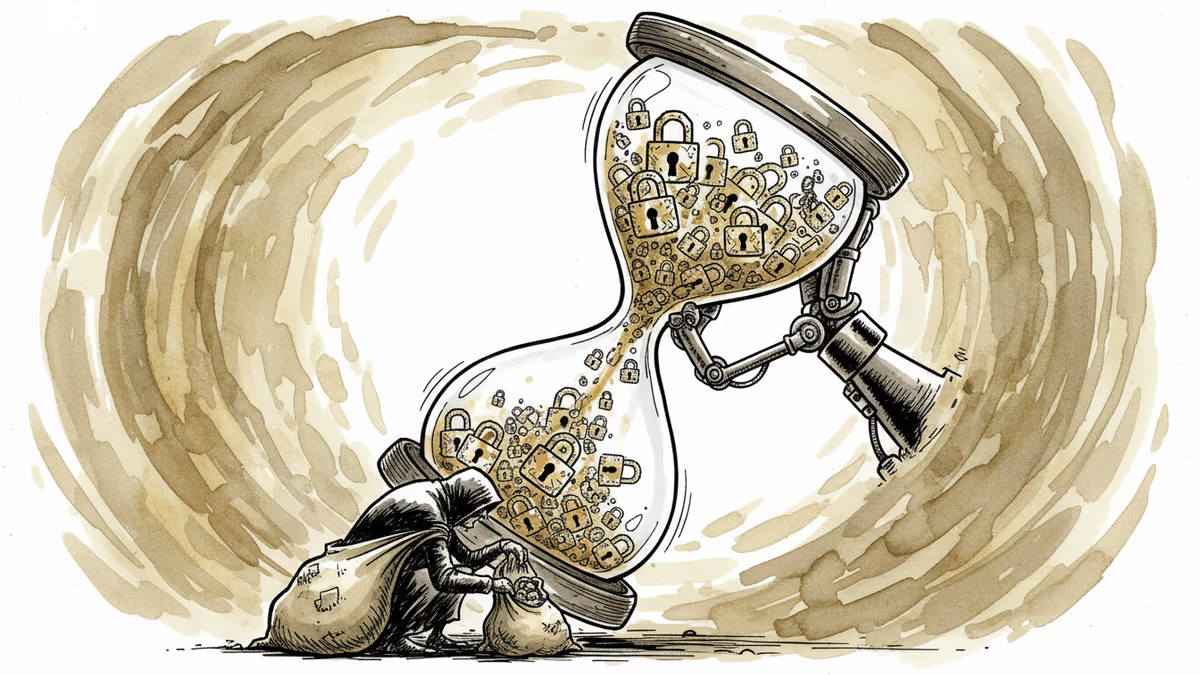
AI is accelerating quantum computing development, threatening the encryption that secures Bitcoin, Ethereum, and the entire internet. Security experts warn the arms race has already begun.

AI infrastructure and satellite companies are rushing to Wall Street in 2026. What's driving the IPO wave, and what should investors watch for?
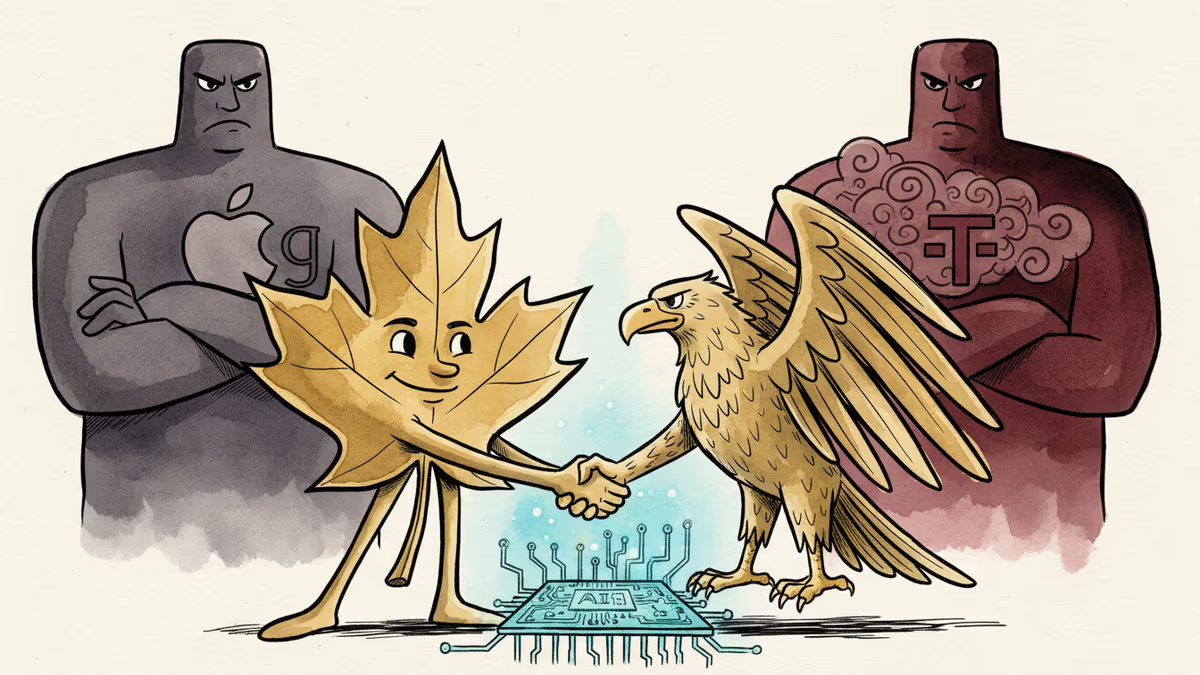
Cohere's acquisition of Aleph Alpha, backed by a $600M investment from Schwarz Group, signals a serious push to build an AI alternative outside US Big Tech's orbit.
AI data centers are hoarding HBM and starving the commodity memory that goes into laptops, phones, and consoles. Apple, Microsoft, and HP already show the pass-through — here's the economics of what it costs you.
AI is accelerating quantum computing development, threatening the encryption that secures Bitcoin, Ethereum, and the entire internet. Security experts warn the arms race has already begun.
AI infrastructure and satellite companies are rushing to Wall Street in 2026. What's driving the IPO wave, and what should investors watch for?
Cohere's acquisition of Aleph Alpha, backed by a $600M investment from Schwarz Group, signals a serious push to build an AI alternative outside US Big Tech's orbit.
Thoughts
Share your thoughts on this article
Sign in to join the conversation